Urban Form: Traveler in a Woodland Landscape
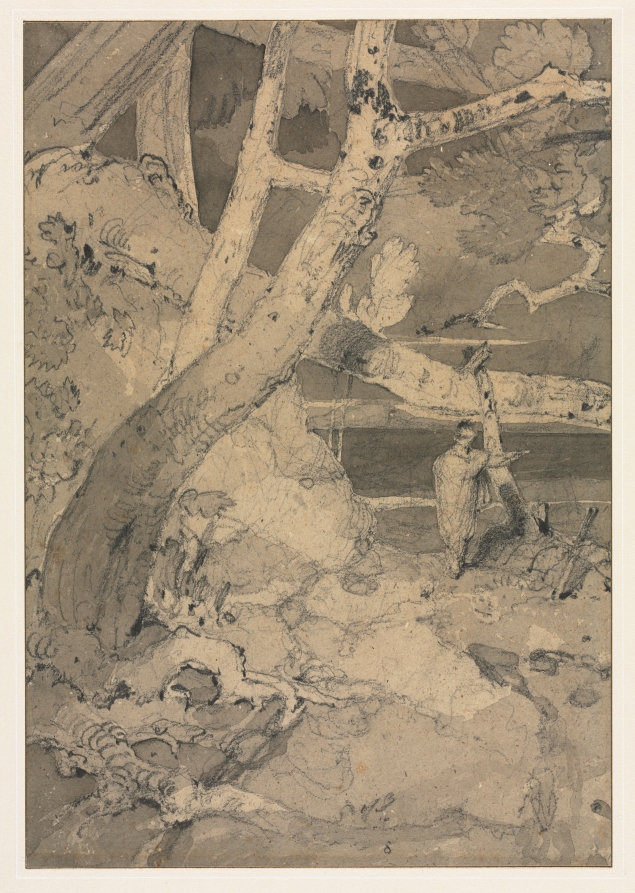
Urban Silhouette Research: The Traveler in a Woodland Landscape
I. The Dialectic of Subtraction and Mass
The Addison Fashion design intelligence for the 2026 executive wardrobe begins with a rigorous interrogation of two artifacts separated by geography yet unified by philosophical intent: the pierced ceramic bowl signed by Hasan al-Qashani and the Chinese roundback armchair of the Lohan type. These objects constitute a binary operating system for silhouette construction—one predicated on negative space as structural agent, the other on positive volume as ethical posture. For the urban executive traversing the woodland landscape of metropolitan contingency, this dialectic is not academic. It is operational.
The pierced bowl performs an act of calculated erasure. Its latticework is not ornamentation but aperture engineering—each void functions as a calibrated conduit through which light becomes a secondary material. The ceramic body, reduced to a skeletal armature, achieves what I term diaphanous load-bearing: the object retains its functional integrity while surrendering visual mass. This is the logic of the modern executive blazer in slate wool crepe—a garment that appears weightless yet carries the gravitational authority of tailored structure. The perforations in al-Qashani's vessel correspond to the strategic reveals in a minimalist wardrobe: the unbuttoned cuff, the open collar channel, the single vent that permits motion without compromising line.
II. The Roundback Armchair as Postural Architecture
Conversely, the Lohan chair operates through accumulative dignity. Its crescent back—a continuous curve without seam or interruption—encloses the sitter in a gesture of containment that is neither restrictive nor indulgent. The wood is thick, the seat broad, the stance grounded. This is furniture as institutional memory: it remembers every body that has occupied it, every conversation conducted within its embrace. The curve does not pierce; it receives.
For the 2026 executive silhouette, this translates into the sculpted shoulder and the columnar trouser. Where the pierced bowl suggests ventilation, the Lohan chair suggests thermal mass—the capacity to absorb and radiate authority without ostentation. The Addison design directive for the coming season is not to choose between these poles but to synthesize them within a single garment system. The slate palette is the chromatic bridge: cool enough to evoke the bowl's intellectual detachment, deep enough to echo the chair's material gravity.
III. The Traveler as Syntactic Operator
The subject—Traveler in a Woodland Landscape—is not a romantic figure but a syntactic operator moving through variable densities. The woodland is the urban grid: vertical trunks as architectural columns, canopy as ceiling plane, undergrowth as the friction of daily negotiation. The traveler's wardrobe must perform both functions simultaneously: the pierced bowl's breathability and the Lohan chair's composure.
This demands a modular layering protocol. The base layer—a fine-gauge merino in slate—functions as the pierced vessel: light, permeable, responsive to thermal shifts. The mid-layer—a double-faced wool vest with raw-edge seams—echoes the Lohan back: curved, self-supporting, resistant to compression. The outer layer—a technical trench in bonded cotton—is the synthesis: its storm flap and vent system are apertures (bowl logic), while its shoulder yoke and storm shield are mass (chair logic).
IV. Color as Structural Argument
Slate is not a neutral. It is a philosophical position. Unlike black, which absorbs and terminates light, slate reflects and modulates it—precisely as the pierced bowl's interior receives and redistributes illumination. In the woodland context, slate operates as camouflage without erasure: it belongs to the environment while remaining legible as intentional form. The 2026 executive palette will deploy slate across three values—graphite for structural pieces, ash for transitional layers, mist for intimate garments—creating a tonal gradient that mirrors the bowl's light-play and the chair's material depth.
V. Form as Ethical Proposition
The ultimate lesson of these two artifacts is that form is never merely visual. The pierced bowl's voids are ethical: they admit that material is insufficient, that emptiness is generative. The Lohan chair's curves are ethical: they assert that support is a form of respect, that enclosure need not be confinement. The Addison 2026 executive wardrobe, therefore, is not a collection of garments but a portable architecture of negotiation—between visibility and privacy, between motion and stillness, between the self as project and the self as presence.
The traveler in the woodland landscape does not conquer the terrain. The traveler calibrates to it. The slate silhouette—pierced where necessary, massive where required—is the instrument of that calibration. It is the bowl and the chair, worn on the body, moving through the trees.