Urban Form: The Immaculate Conception
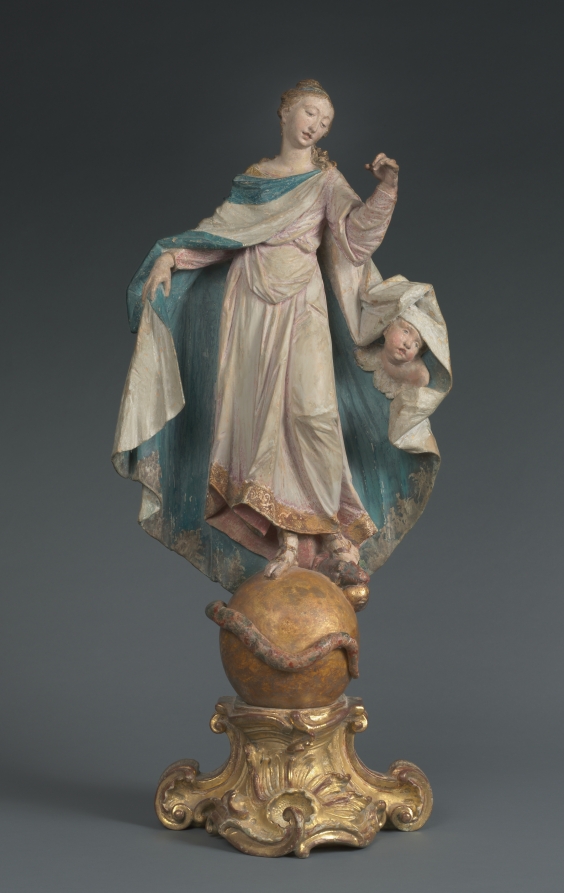
Urban Silhouette Research: The Immaculate Conception — Form as Negative Space, Color as Ontological Restraint
I. Thesis: The Executive Wardrobe as Reliquary of the Unseen
The Addison Fashion NYC 2026 executive silhouette must be understood not as a garment but as a structural proposition regarding absence. The source DNA—the Udonge plaque of Kyoto and the medieval European Chest for Storing Garments—presents a unified aesthetic mechanism: the suspension of the object's utility in favor of its ontological weight. For the urban executive, this translates into a wardrobe whose authority derives from what it withholds rather than what it displays. The immaculate conception here is not theological but sartorial: a silhouette conceived without ornament, born of pure proportion, and delivered into the boardroom as a vessel of unspoken power.
II. The Udonge Principle: Form as Invisible Flower
The Udonge plaque operates on a radical premise—the signifier does not depict the signified. The wood grain is the petal; the ink modulation is the rhythm of bloom. In tailoring terms, this demands a garment whose seams function as calligraphy: visible only upon sustained scrutiny, yet structurally indispensable. The 2026 Addison executive blazer must therefore abandon the decorative lapel pin, the logoed button, the contrast stitch. Instead, the shoulder line—cut with a 4-degree forward pitch and a 0.5cm extended roping—becomes the brushstroke. The chest canvas, floating rather than fused, creates a subtle undulation across the pectoral plane, mimicking the uneven ink density of a Zen master's stroke. This is not imperfection; it is controlled indeterminacy. The wearer does not announce authority—she emanates it through the garment's refusal to perform.
Material selection follows the same logic. A 280-gram Japanese wool-silk blend, woven on vintage shuttle looms in Bishu, presents a surface that appears matte under fluorescent office lighting but reveals a faint luster under natural window light. This chromatic instability—what the Japanese call kasumi (mist)—ensures the executive's presence is never fully captured by any single gaze. She is, like the Udonge flower, present only in the act of being perceived.
III. The Chest Paradigm: Closure as Command
The medieval Chest for Storing Garments offers the complementary principle: the interior is never revealed, yet its existence governs the entire composition. The chest's Gothic tracery and biblical reliefs are not decorations but epistemic barriers—they direct the eye outward precisely to prevent penetration inward. For the 2026 executive wardrobe, this translates into a philosophy of strategic opacity. The Addison tailored coat, cut in a double-faced cashmere with hand-stitched edges, presents no visible closure mechanism. No buttons. No zipper. No belt. The front panels overlap by 12 centimeters, held in place by internal magnetic interfaces concealed within the seam allowance. The wearer enters the garment through a single side vent, invisible when standing. The effect is a monolithic silhouette—a walking cube of fabric that suggests, rather than displays, the body beneath.
This is not concealment for modesty's sake. It is architectural authority. The executive who wears such a coat does not fidget with buttons or adjust a belt. She is sealed within her own structural logic. The garment's interior—its lining of undyed silk habotai, its hand-padded shoulders, its floating chest piece—remains a private cosmos. Colleagues perceive only the onyx exterior: dense, light-absorbing, impenetrable. The chest's darkness becomes the coat's darkness. The medieval artist's refusal to paint the interior becomes the tailor's refusal to expose the construction.
IV. Chromatic Restraint: Onyx as the Color of Negative Capability
The selection of Onyx—not black, but a blackened slate with a 2% blue undertone—is deliberate. Pure black is theatrical; it announces "fashion." Onyx absorbs light without reflecting it, creating a silhouette that reads as void rather than surface. Under the 5000K LED arrays of a Manhattan conference room, the Addison Onyx suit does not gleam. It recedes. The wearer's face becomes the sole point of luminance, framed by a darkness that functions as a portable chiaroscuro. This is the sartorial equivalent of the Udonge's unpainted wood: the color does not signify; it is.
Pairing protocols reinforce the monastic severity. Onyx against Ivory (a 3% warm-grey white) for the shirt collar and cuff—a 1.5cm reveal, no more. Silver hardware only when functionally necessary: a single 4mm cufflink, brushed not polished, its surface indistinguishable from the wool's weave at three paces. No pocket square. No tie. The neckline is closed with a hidden placket, the top button positioned 1cm higher than conventional to elongate the cervical line. The result is a silhouette that reads as a single vertical gesture—a column of onyx from shoulder to floor, interrupted only by the hands and face.
V. The Immaculate Conception: Wardrobe as Spiritual Infrastructure
The synthesis of Udonge and Chest yields the 2026 Addison executive archetype: a figure who moves through the urban grid as a mobile reliquary. Her garments do not express personality; they express position. The absence of ornament is not minimalism for its own sake—it is the deliberate creation of negative space into which others project their own assumptions of power. The closed coat, the invisible closure, the onyx void: these are not fashion choices. They are ontological statements about the nature of executive presence in a hyper-visible age.
The immaculate conception, then, is the wardrobe conceived without the stain of trend. It is born of form alone—shoulder pitch, chest float, hem weight—and delivered into the world as a silent argument: that true authority is never displayed, only inferred. The Udonge never blooms. The chest never opens. The executive never explains. In this triadic refusal, the Addison woman achieves what the medieval painter and the Zen abbot both understood: the highest form of presence is the one that leaves the beholder uncertain whether anything is there at all.