Urban Form: Geometric Abstraction
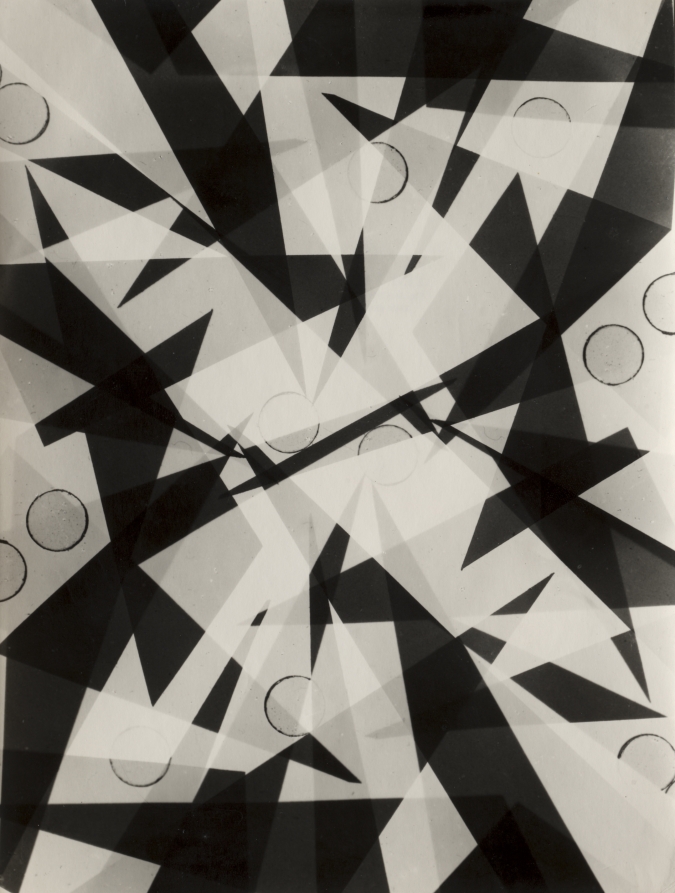
Urban Silhouette Research: Geometric Abstraction in the Addison 2026 Executive Wardrobe
I. The Instrument as Silhouette: From Vessel to Vestment
The Addison 2026 executive silhouette does not begin with the body. It begins with the object—specifically, the two artifacts under examination: the ceramic vessel inscribed with Landscapes with poems and the roundback armchair of the Lohan type. These are not decorative references. They are structural precedents. The vessel establishes the principle of the continuous surface—a single unbroken plane upon which narrative, material, and function converge. The armchair establishes the principle of the architectural curve—a geometry that encloses the body without imprisoning it. Together, they define a silhouette that is neither rigid nor fluid, but architecturally tensile: a form that holds its shape through internal tension rather than external reinforcement.
The 2026 executive does not wear clothing. The executive inhabits a spatial proposition. The vessel's cylindrical integrity—its refusal to break its own surface with unnecessary seams—translates directly into the Addison approach to tailoring: the elimination of the superfluous seam. Where conventional suiting relies on darts, panels, and structural interventions to approximate the body, the Addison silhouette relies on the inherent geometry of the textile itself. The cloth is not forced into shape. It is allowed to assume its natural architectural posture. This is the vessel's lesson: a form is most powerful when its integrity is uncompromised.
II. The Roundback Principle: Curve as Structural Armature
The Lohan-type armchair presents a more complex proposition. Its roundback is not a decorative flourish. It is a load-bearing curve—a continuous arc that distributes stress evenly across its span, eliminating the need for the right angles that would otherwise fracture the visual field. In the Addison 2026 silhouette, this principle manifests as the continuous shoulder line: a single unbroken trajectory from collar to cuff, unpunctuated by the conventional break at the shoulder seam. The result is a garment that reads as a single gesture rather than an assembly of parts.
This is not softness. This is structural poetics. The curve of the roundback armchair is the curve of a suspension bridge—it derives its strength from its willingness to flex. The Addison executive jacket, similarly, does not resist movement. It channels it. The fabric—a dense, matte wool in Slate, with a dry hand and a subtle mineral cast—possesses sufficient body to maintain the architectural line while yielding enough to accommodate the body's dynamic range. The shoulder is not padded into a rigid triangle. It is shaped into a curve that echoes the armchair's back: a geometry that is simultaneously protective and permeable.
III. Materiality as Urban Surface: The Vessel's Skin
The vessel's surface—its glaze, its inscribed landscape, its poetic text—is not ornament. It is information architecture. The landscape does not decorate the vessel; it organizes it. The poem does not embellish the image; it annotates it. This is the model for the Addison approach to urban materiality: every surface must carry meaning, every texture must perform a structural function.
The Slate palette is not a color choice. It is a material condition. Slate is the color of wet stone, of overcast skies, of the urban grid at dusk. It is the color of surfaces that have been shaped by pressure and time. In the Addison 2026 collection, Slate appears in three registers: matte (the primary suiting), satin (the lining and trim), and mineral (the hardware and accessories). The interplay of these registers creates a surface that is neither flat nor reflective, but responsive—it shifts with the wearer's movement, revealing and concealing its own depth.
This is the vessel's final lesson: the surface is not a boundary. It is a membrane. The landscape inscribed upon the ceramic is not on the vessel; it is of the vessel. The poem is not added to the image; it is integral to it. In the Addison silhouette, the textile is not a covering. It is a medium—a substance that carries the body's geometry, the urban environment's pressure, and the wearer's intention in a single continuous field.
IV. The 2026 Executive: A Silhouette of Inhabited Space
The definitive Addison 2026 silhouette is not a shape. It is a spatial condition. It is the space between the body and the world—a space that is structured, intentional, and poetic. The vessel and the armchair are its ancestors: objects that transform use into meaning, function into philosophy. The executive who wears this silhouette does not simply dress. The executive occupies a geometry. And in that occupation—in the precise calibration of curve, surface, and material—the Addison silhouette achieves its final objective: to make the urban environment itself a habitable poem.
The geometric integrity of this artwork is not a matter of angles and lines. It is a matter of coherence—the refusal to allow any element to exist in isolation. The vessel, the armchair, the poem, the landscape, the body, the city: these are not separate entities. They are a single continuous surface, folded and refolded into the shape of a life. The Addison 2026 executive silhouette is the garment that makes this continuity visible. It is not clothing. It is architecture for the moving body. And it is, in the most precise sense, inevitable.