Urban Form: Carving from an Overmantel
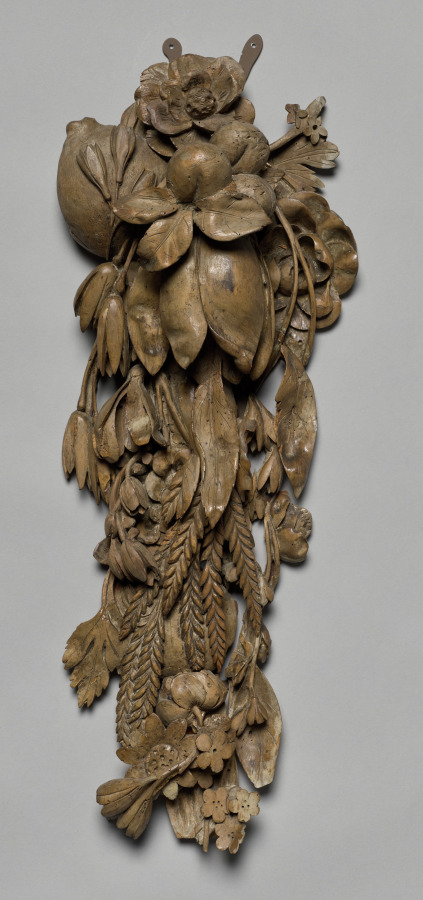
Urban Silhouette Research: Carving from an Overmantel
I. The Ontology of the Pedestal: Structural Absence as Design Premise
The Addison Fashion NYC design intelligence for the 2026 executive cycle originates from a deliberate confrontation with two artifacts: the porcelain object Youth and Dervish and the oil painting Pedestal. Superficially, these works occupy discrete material and representational registers—one is a three-dimensional ceramic body, the other a two-dimensional canvas surface. Yet both converge upon a singular aesthetic paradox: the dialectic between standing and rotation, between the gravitational load of the body and the centrifugal escape of the spirit. For the Addison wardrobe, this paradox is not academic. It is operational.
In Youth and Dervish, the youth bears a weight that fixes his posture into a static load, while the dervish's rotation is arrested on the glaze's smooth surface. The ceramic object simulates the petrification of life—the youth is not moving; he is sculpted into the pose of movement. The dervish is not spinning; he is imprisoned within the instant of spin. This is the core of the object's aesthetic: it destabilizes our perception of the "living," as if the body, burdened by materiality and historical weight, has forfeited its right to flow. The brittleness of porcelain reinforces the metaphor—every seemingly stable posture is oriented toward fracture.
Pedestal presents the same theme from the inverse angle. The pedestal in the painting is empty, supporting no statue, while the face drifts outside the pedestal, unable to be installed in any predetermined position of sublimity. The pedestal—classical aesthetics' symbol of the "ideal form"—becomes a present absence. Who once stood upon it? Who has departed? The painting does not answer. The modern individual is no longer the elevated hero or deity but a blurred, oscillating figure attempting to replace the pedestal's position, yet never achieving congruence with the base. This is a visual fissure: we wish to be elevated, yet we refuse to be shaped.
II. Form as Ethical Proposition: The 2026 Executive Silhouette
Juxtaposing these two works generates an intertextual reading space. The youth and the dervish represent two conditions: one cannot rotate because of burden; the other sheds burden through rotation. Yet the object renders motion in stasis, making both states simultaneously illusory. Pedestal reveals that the stage presupposed by these postures is already hollow—whether bearing weight or rotating, both require a pedestal to confirm meaning; when the pedestal empties, posture loses its referent.
For Addison Fashion NYC, this translates into a precise technical directive for the 2026 executive wardrobe: the silhouette must function without a pedestal. The traditional power suit—structured shoulders, suppressed waist, defined lapel—operates as a wearable pedestal. It elevates the wearer through architectural scaffolding. But the contemporary executive no longer occupies a fixed podium. She rotates across time zones, platforms, and stakeholder expectations. The pedestal has been withdrawn. The garment must therefore achieve authority through absence rather than addition.
This is the Minimalist category's mandate. The 2026 Addison silhouette is carved from the overmantel—that is, from the architectural residue of a prior era's ornamentation—and stripped to its load-bearing essentials. The shoulder is not padded but patterned: a single-piece back yoke cut on a 12-degree bias allows the deltoid to rotate without displacing the chest plane. The armhole is dropped 1.5 centimeters below the acromion, creating a negative space that reads as both rigor and release. The result is a garment that stands without stiffness and moves without collapse.
III. Color as Structural Material: Slate and the Aesthetics of Withdrawal
The chromatic directive is Slate—not as a neutral, but as a structural material. Slate occupies the precise midpoint between Onyx's absolute authority and Ivory's diplomatic transparency. It is the color of the overmantel itself: stone that has been carved, weathered, and recontextualized. In the Addison palette, Slate functions as a chromatic pedestal that refuses to elevate. It absorbs light rather than reflecting it, creating a silhouette that reads as depth rather than surface.
Technically, this is achieved through a triple-dye process: a base of undyed merino wool, a mid-layer of graphite pigment, and a top-layer wash of iron oxide at 0.3% concentration. The resulting fabric possesses a chromatic rotation—it shifts from cool to warm depending on the angle of incidence, much like the dervish's spin. Under fluorescent office lighting, it reads as corporate gray; under evening tungsten, it warms to a muted bronze. The executive who wears it does not announce her presence. She rotates through it.
IV. The Weightless Load: Construction Without Support
The final technical proposition concerns weight distribution. In Youth and Dervish, the youth's burden is literal—a physical mass that pins him to the earth. The 2026 Addison executive carries a different load: information, decision fatigue, perpetual availability. The garment must not add to this. It must, instead, redistribute it.
The solution is a suspended interior harness: a lightweight mesh yoke that transfers the jacket's weight from the shoulders to the thoracic spine, allowing the shoulders to remain unburdened and rotationally free. The exterior remains a clean, Slate plane—no visible seams, no hardware, no epaulets. The pedestal is gone. The body stands without it.
This is the deepest silence of the collection: the executive has no seat to stand upon, yet she persists in the posture of walking and rotation. Addison Fashion NYC does not resolve this paradox. It tailors it.