Urban Form: Bell (Lai Zhong)
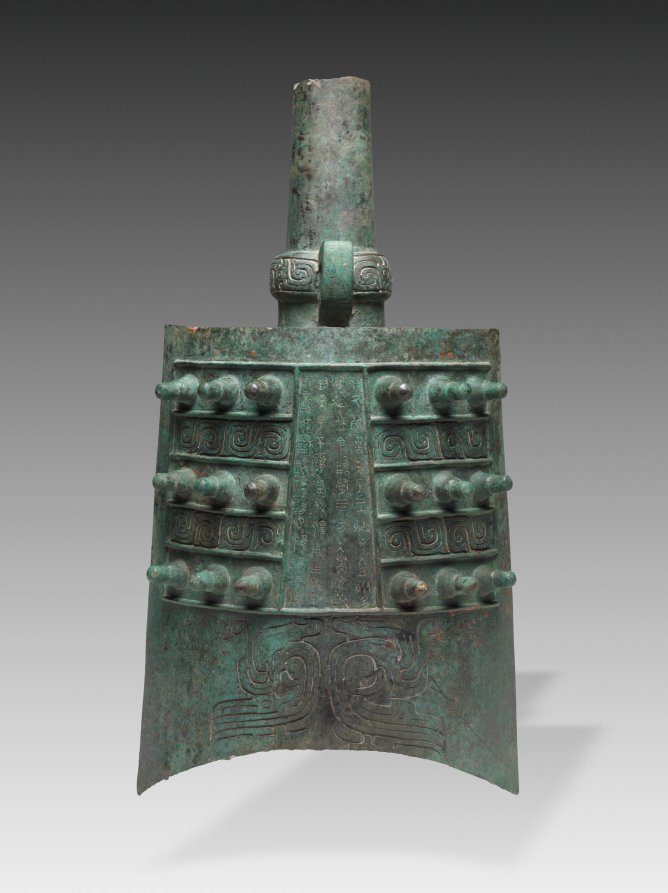
Urban Silhouette Research: The Bell Protocol
I. Geometric Integrity as Existential Armor
The Addison 2026 executive silhouette does not negotiate with the body; it architects it. The Bell (Lai Zhong) reference establishes a foundational tension between two civilizational grammars of form—the Attic vessel’s severe geometric reduction and the Indian stele’s fluid mineral cascades—and resolves them into a single wearable proposition: the body as a site of philosophical resistance.
Consider the Death of Socrates vessel. Its lines are not decorative; they are load-bearing. Every contour performs structural work. The philosopher’s upward gesture—a finger indexing the invisible realm of Forms—translates in Addison’s vocabulary to the vertical shoulder line, a clean, unbroken seam that extends from clavicle to hem without interruption. This is not ornament. This is teleology. The garment points somewhere. It refuses the body’s natural slump toward entropy.
The 2026 silhouette adopts this principle with surgical precision. Shoulders are squared but not padded—the geometry emerges from pattern-cutting, not foam. The result is a shoulder that reads as inevitable rather than constructed. The armhole sits high and forward, creating a negative space beneath the axilla that allows the fabric to fall in a single, unbroken plane. This is the Attic line: reduction to essence.
II. The Stele Principle: Mineral Weight and Chromatic Restraint
Now pivot to the Stele with Sakyamuni and Bodhisattvas. The Indian relief does not reduce; it sediments. Mineral pigments—malachite, cinnabar, lapis—are applied in layers that accumulate density without losing luminosity. The Buddha’s reclining form is not a line but a field, a chromatic mass that absorbs light rather than reflecting it.
Addison’s 2026 materiality draws directly from this logic. The Onyx palette is not black; it is compressed time. A matte wool-silk blend with a mineral-dyed finish that shifts between charcoal and deep umber depending on the angle of incidence. The fabric does not shine. It withholds. This is the stele’s lesson: opacity as spiritual technology.
The silhouette accommodates this density through controlled volume. Where the Attic line is vertical and severe, the stele influence introduces a horizontal drape across the torso—a single fold that travels from the sternum to the hip, echoing the Buddha’s robe as it falls across the reclining body. This fold is not soft. It is engineered, achieved through a bias-cut panel that introduces a calculated asymmetry. The garment appears to be in motion, yet it is perfectly still. This is the nirvana of tailoring: cessation without collapse.
III. The Dialectic of the Hem
The hem is where the two traditions collide. The Attic vessel terminates in a clean, circular base—a boundary that declares: this is the limit of the form. The stele, by contrast, bleeds into its architectural frame, the figures’ feet and lotus pedestals dissolving into the stone’s lower register.
Addison resolves this through a dual-hem construction. The outer layer—cut in the Onyx mineral wool—falls to a precise mid-calf break, its edge finished with a hand-rolled hem that creates a subtle ridge, a horizon line. Beneath it, a second layer in Ivory silk crepe extends two inches further, its edge raw and unfurled. The effect is a garment that is simultaneously finished and unfinished, bounded and boundless. The executive who wears it occupies both positions: the philosopher who knows the limit, and the bodhisattva who transcends it.
IV. Urban Materiality: Stone, Pigment, and the City
The Bell reference is not merely art-historical; it is urban. The Attic vessel belongs to the agora—the public square where Socrates drank the hemlock. The stele belongs to the chaitya—the rock-cut sanctuary where the faithful circumambulated. Both are architectural in scale. Both are public.
The 2026 Addison executive moves through the city as a mobile monument. The Onyx palette absorbs the gray of concrete, the silver of glass, the sodium glare of streetlights. The silhouette does not compete with the urban environment; it indexes it. The squared shoulder echoes the cornice line of a mid-century tower. The horizontal torso fold mirrors the shadow cast by a bridge. The dual hem—finished and raw—corresponds to the city’s own condition: perpetually under construction, perpetually complete.
V. Conclusion: The Executive as Philosopher-King
The Addison 2026 silhouette is not designed for comfort. It is designed for bearing. The Bell protocol demands that the wearer accept the weight of two civilizations—the Greek commitment to form and the Indian dissolution of form—and carry them without complaint. The garment does not flatter. It frames. It does not follow the body. It precedes it.
This is the final lesson of the Death of Socrates and the Stele with Sakyamuni: that the highest form of beauty is the beauty of a position held under pressure. The 2026 executive does not dress for success. The 2026 executive dresses for the inevitable—and does so with the cold, mineral elegance of stone that has already outlasted the hand that carved it.