Urban Form: Mother and Child
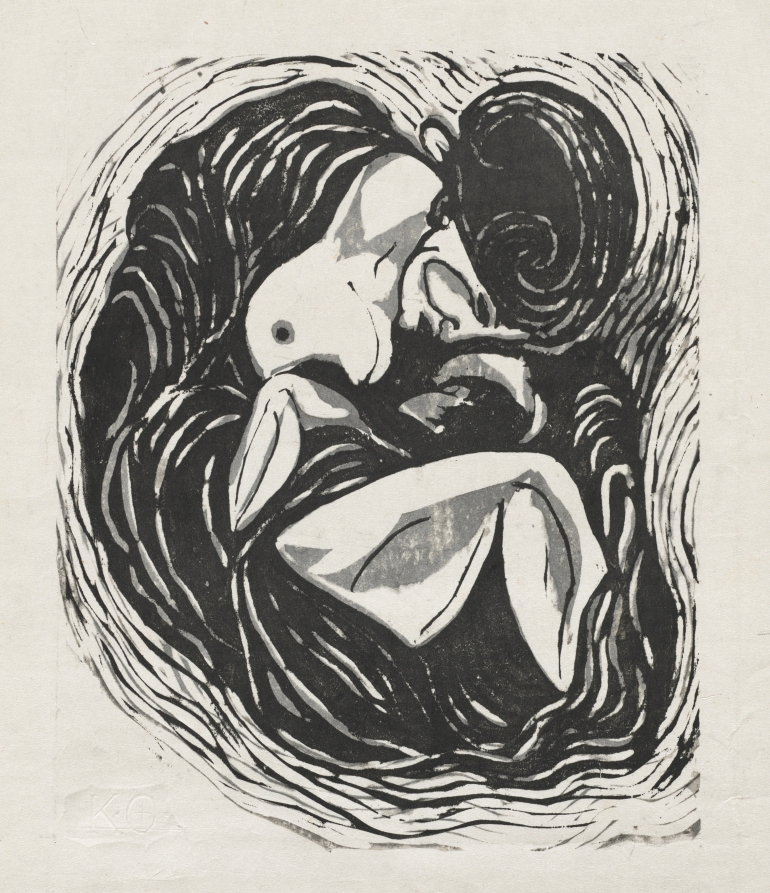
Urban Silhouette Research: The Mother and Child as Architectural Prototype
I. Geometric Integrity and the 2026 Executive Silhouette
The Addison Fashion 2026 executive silhouette is not derived from trend forecasting but from the structural logic of antiquity. The paired artifacts under examination—the ceramic vessel depicting The Death of Socrates and the stele relief of Sakyamuni and Bodhisattvas—operate as twin architectural treatises on the containment of the human form. Their geometric integrity, when translated into textile engineering, yields a silhouette that is neither nostalgic nor futuristic, but rather permanently resolved.
The Socrates vessel presents a closed system: a cylindrical body, a flared lip, a footed base. Its proportions obey a strict modular logic. The philosopher's seated posture—knees bent, spine vertical, arm extended upward—creates a triangular void within the vessel's circumference. This void is not negative space; it is structural breath. For 2026, we translate this into a tailored coat with a suppressed waist and an exaggerated shoulder line that terminates in a precise, upward-angled sleeve. The arm does not hang; it points. The garment's interior volume—the space between body and cloth—mirrors the vessel's hollow, allowing the wearer to inhabit the silhouette without filling it.
By contrast, the Stele with Sakyamuni and Bodhisattvas offers a horizontal counterpoint. The Buddha reclines; the bodhisattvas stand in hierarchical recession. The composition is layered, each figure occupying a discrete plane of mineral pigment. The silhouette here is cumulative, not singular. For the mother-and-child archetype, this suggests a garment system rather than a single piece: an outer shell of dense, matte wool (the stele's stone ground) over an inner layer of fluid silk (the pigment's aqueous flow). The child is not an accessory but a structural extension—a smaller, nested volume that completes the maternal geometry.
II. Structural Poetics: The Mother as Vessel, The Child as Axis
The mother-and-child silhouette in Addison Fashion's 2026 collection rejects sentimentality. It is not about warmth or tenderness; it is about load-bearing elegance. The mother's body is the vessel—the amphora, the stele—and the child is the axis around which the garment's lines converge. This is a cold, precise relationship. The child's position determines the drape of the shoulder, the fall of the sleeve, the break of the trouser. Without the child, the garment collapses into mere clothing.
Consider the Socrates vessel's handle: a single, curved element that interrupts the cylinder's symmetry. It is functional—a grip—but also compositional—a gesture. In the mother-and-child ensemble, the child's head or arm performs this same function. It interrupts the mother's verticality, creating a controlled asymmetry that prevents the silhouette from becoming monolithic. The 2026 executive mother does not carry her child; she wears the relationship as a structural element.
The stele's bodhisattvas, with their varied hand gestures (mudras), offer a vocabulary of controlled articulation. Each hand is a joint in a larger system. Similarly, the mother's hands—whether resting on the child, holding a device, or adjusting a lapel—must be considered as terminal points of the garment's line. The cuff, the pocket, the collar: these are not details but articulated joints that allow the silhouette to move without losing its geometric integrity.
III. Urban Materiality: Stone, Pigment, and the Textile Interface
The materiality of the source artifacts is non-negotiable. The Socrates vessel is fired clay—terracotta—with a slip that ranges from ochre to near-black. Its surface is matte, slightly porous, and cool to the touch. The stele is mineral: lapis lazuli, malachite, cinnabar, applied in layers that have survived millennia. These are not soft materials. They do not drape; they hold.
For 2026, Addison Fashion translates this into a textile palette of uncompromising density. The primary fabric is a double-faced wool crepe in Slate—a grey that shifts between the vessel's shadow and the stele's stone ground. It is woven at a high twist, giving it a dry, almost mineral hand. Secondary layers include a bonded silk-cotton in Onyx for the inner shell, and a paper-like leather in Ivory for structural accents: a collar, a belt, a single glove.
The child's garment is not a miniature. It is a compressed module of the mother's, using the same materials at a higher density. Where the mother's coat has a deep pleat, the child's has a seam. Where the mother's sleeve is voluminous, the child's is fitted. The relationship is tectonic: the larger form supports the smaller, and the smaller form clarifies the larger.
Urban materiality also demands weather resistance. The Socrates vessel was designed for a symposium—an interior. The stele was designed for a chaitya hall—a semi-enclosed space. The 2026 executive mother moves through both: the climate-controlled tower and the exposed street. The Slate wool is treated with a nano-ceramic finish, repelling rain without sheen. The Ivory leather is vegetable-tanned and waxed, developing a patina that mimics the stele's aged mineral surface.
IV. Conclusion: The Silhouette as Ethical Statement
The mother-and-child silhouette for Addison Fashion 2026 is not a negotiation between two bodies. It is a single architectural event. The mother provides the vessel; the child provides the axis. The garment provides the geometry. In the tension between Socrates' upward-pointing finger and the Buddha's reclining form, we find the two poles of executive presence: assertion and equanimity. The 2026 silhouette holds both. It is cold, precise, and profoundly humane—not because it coddles, but because it structures. The mother does not carry the child. She builds a world around him, and that world is made of stone, pigment, and Slate.