Urban Form: Portrait of Pope Innocent X Pamphili
Urban Silhouette Research: The Innocent X Protocol
I. Source Material and Structural Inheritance
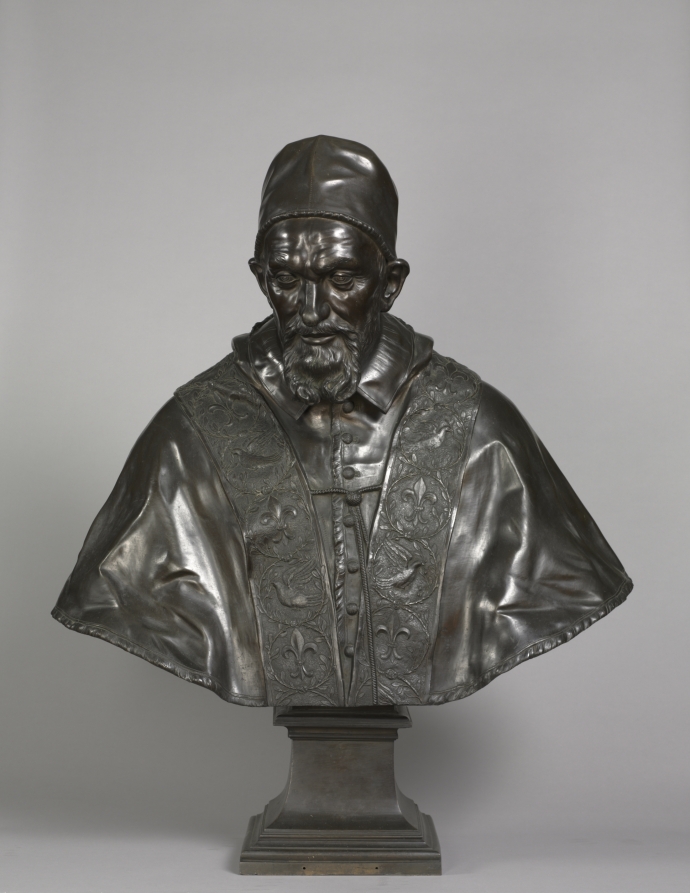
The portrait of Pope Innocent X Pamphili—Velázquez’s 1650 masterwork, not the Bacon derivative—presents a sartorial proposition of unusual rigor. The subject is seated, yet the composition is anything but passive. The mozzetta and camauro establish a closed silhouette: shoulders squared, neck concealed, the body reduced to a triangular mass of crimson and ivory. For the Addison executive, this is the ur-form of authority dressing—not the authority of display, but of containment.
The DNA source provided—a comparative meditation on The Temptation of Saint Anthony and the Southern Song Loquat—offers the theoretical bridge. The Western tradition, as the text argues, operates through symbol and deformation; the Eastern through intuition and resonance. Innocent X sits precisely at the intersection. His garments are deformed by the body beneath—the fabric strains at the shoulders, the collar cuts the jaw—yet the overall effect is one of harmonic stillness. The Loquat’s lesson: the object in its presentness. The Temptation’s lesson: the object as psychic battlefield. The Pope’s portrait resolves both: a man whose vestments are a battlefield of power, rendered with the quietude of a fruit on a branch.
II. Form Analysis: The Closed Silhouette
For the 2026 NYC executive wardrobe, we extract three formal principles from the Innocent X composition.
First: the shoulder as architectural datum. In the portrait, the mozzetta’s capelet creates a horizontal plane that extends beyond the natural shoulder line. This is not padding; it is projection. The Addison interpretation: a tailored jacket whose shoulder seam sits 1.5 centimeters beyond the acromion, with a minimal, unconstructed pad. The result is a silhouette that reads as Onyx—absolute, non-negotiable—without the aggression of 1980s power dressing. The shoulder does not invade space; it defines it.
Second: the vertical descent. The Pope’s figure is anchored by the vertical fall of the rochet and the chair’s back. There is no waist suppression, no peplum, no break in the line from clavicle to hem. For Fall 2026, we propose a columnar coat in double-faced wool, cut with a single seam at center back, no darts at the waist. The body is not shaped; it is housed. This is the Minimalist category at its most severe: the garment as architecture, the wearer as inhabitant.
Third: the collar as psychological boundary. The camauro and mozzetta together frame the face with a double ring of fabric. The neck is not exposed; it is mediated. In the executive context, this translates to a high, stand-away collar on shirts and jackets—not a turtleneck, which is too casual, but a mandarin collar or a modified spread that rises 4 centimeters above the collarbone. The effect is one of guarded composure. The wearer is present but not available.
III. Color Analysis: Onyx as Chromatic Discipline
The portrait’s palette is deceptively simple: crimson, ivory, gold, and the deep umber of the background. But the structural color—the color that holds the composition together—is the black of the Pope’s ferraiolo and the shadows within the drapery. This is not the black of absence; it is the black of density. It is Onyx.
For the 2026 wardrobe, Onyx functions as the chromatic equivalent of the closed silhouette. It absorbs light rather than reflecting it, which means the form of the garment must carry the entire communicative load. There is no pattern to distract, no sheen to seduce. The fabric must be textural: a matte wool crepe, a heavy silk faille, a bonded cotton with a dry hand. The eye reads the garment through its edges—the shoulder line, the collar break, the hem—not through its surface.
This is the lesson of the Loquat: the fruit is not described; it is present. In Onyx, the executive’s presence is likewise non-negotiable. The color does not ask for attention; it commands it through withdrawal.
IV. Synthesis: The Innocent X Protocol for 2026
The Addison executive wardrobe for 2026, derived from this research, comprises three core pieces:
The Mozzetta Jacket: A collarless, cape-shouldered jacket in Onyx double-faced wool. No buttons. Closure via a single hidden hook at the sternum. The hem falls to the high hip. Worn over a columnar dress or a straight-leg trouser.
The Camauro Collar: A stand-away collar, 4 centimeters in height, integrated into a silk-cotton poplin shirt. The collar is stiffened with a horsehair canvas interlining—a nod to the structural rigor of the Baroque.
The Ferraiolo Coat: A floor-length, unlined coat in Onyx wool gauze. Cut with a single back seam and no closures. It is worn open, draped over the shoulders, functioning as a mobile architectural envelope.
These pieces do not reference the Baroque literally. They extract its logic: the logic of containment, of verticality, of chromatic silence. In the tension between the Temptation’s chaos and the Loquat’s stillness, the Innocent X Protocol chooses stillness—but a stillness that is armed. The 2026 executive does not need to shout. She needs only to occupy space with the same inevitability as a portrait by Velázquez: present, closed, and utterly irreducible.