Urban Form: Descent from the Cross
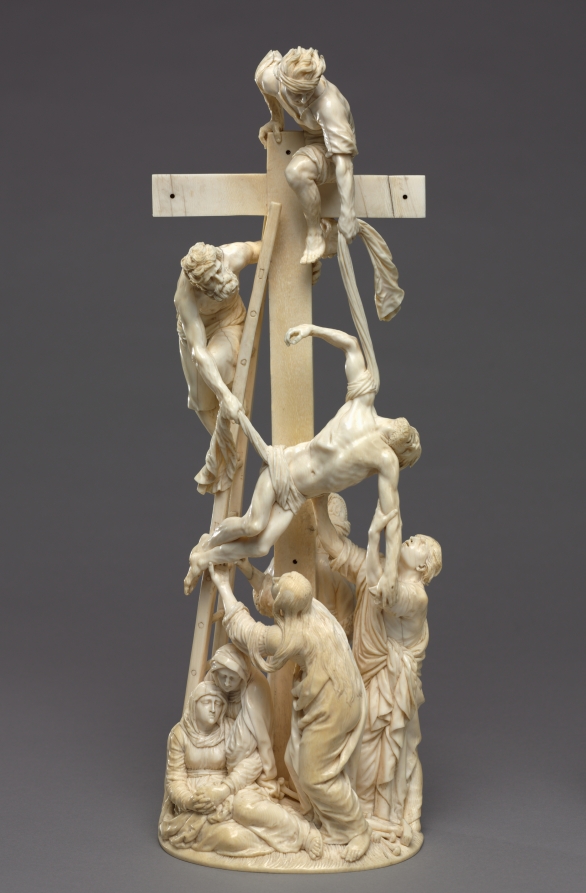
Urban Silhouette Research: Descent from the Cross
I. Geometric Integrity: The Vertical Axis as Structural Imperative
The compositional architecture of Descent from the Cross operates upon a principle of descending triangulation—a controlled collapse of the vertical axis that paradoxically reinforces its authority. The central figure, suspended between elevation and deposition, creates a gravitational column that organizes the entire pictorial field. This is not mere narrative arrangement; it is structural engineering rendered as theology.
For the 2026 executive silhouette, this translates into a fundamental reconsideration of the shoulder-to-hem relationship. The Addison woman does not merely wear structure—she inhabits a descending geometry. The shoulder line, sharply defined and architecturally resolved, initiates a controlled fall through the torso, culminating in a hem that anchors rather than releases. The silhouette does not taper; it deposits. This is the poetics of suspension made wearable.
The diagonal vectors—arms extended, cloth cascading, bodies angled in reception—create what we term dynamic counterbalance. In tailoring, this manifests as asymmetric closure systems, offset seam placement, and the deliberate disruption of bilateral symmetry. The garment becomes a field of forces rather than a static container.
II. Materiality and the Weight of Absence
The painting's chromatic restraint—its reliance upon tonal modulation rather than chromatic assertion—establishes a material philosophy that defines Addison's approach to urban fabric for the coming season. The palette is not absent of color; it is saturated with negation. Earth tones, shadow greys, the specific warmth of flesh rendered in transition—these are not passive choices but active refusals.
For 2026, we propose a material vocabulary built upon density without weight. Technical wool crêpe that holds architectural line while yielding to movement. Bonded jersey with sufficient body to maintain the descending column yet possessing the fluidity required for urban transit. The fabrics must perform a dual function: to sculpt and to surrender.
The drapery in the painting—particularly the shroud that receives the descending body—demonstrates how cloth can be simultaneously supportive and expressive. It catches, it cradles, it falls. This is the model for our outerwear: coats that envelop without obscuring, that provide architectural shelter while permitting the body its own geometry.
III. The Poetics of Descent: From Cross to Crosswalk
The urban executive exists in a state of perpetual descent—from penthouse to street level, from boardroom to transit, from authority to anonymity. The Descent from the Cross provides a visual grammar for this daily deposition. The silhouette must accommodate vertical transition as its primary function.
This requires what we term compression architecture: garments that maintain their structural integrity through the full range of urban motion. A jacket that reads as sculptural when stationary must not collapse into formlessness when the body moves. The solution lies in internal engineering—hidden seams, strategic interfacing, the invisible armature that supports visible form.
The painting's treatment of negative space—the darkness that surrounds and defines the illuminated figures—offers a lesson in strategic absence. The 2026 silhouette will employ negative space not as emptiness but as active void. Cutouts, exposed seams, deliberate gaps in construction: these are not decorative gestures but structural necessities. The void defines the form.
IV. Chromatic Restraint: Slate as Urban Ground
The specified palette of Slate—that specific grey that occupies the threshold between stone and sky, between permanence and atmosphere—serves as the chromatic foundation for this research. Slate is not neutral; it is accumulated time. It is the color of urban surfaces that have witnessed, that have absorbed, that continue to hold.
In material terms, Slate manifests across a spectrum: from the cool density of anthracite wool to the warmer, more porous tones of limestone cashmere. The palette permits tonal depth without chromatic distraction, allowing the structural poetics of the garment to assume primary importance.
The painting's use of light—its careful distribution of illumination and shadow—suggests a approach to surface treatment that we term luminance engineering. Fabrics that catch light at specific angles. Finishes that shift between matte and subtle sheen depending upon movement and environment. The garment becomes responsive rather than static.
V. Conclusion: The Descending Column
The Descent from the Cross offers Addison Fashion a complete architectural brief for the 2026 executive silhouette. The descending column, the dynamic counterbalance, the strategic void, the chromatic restraint—these are not merely formal observations but operational principles.
The Addison woman does not ascend; she descends with authority. Her silhouette is a controlled fall, a deliberate deposition, a structural meditation on the vertical. She wears the geometry of transition. She is the descent made visible, the cross made wearable, the sacred rendered urban.
This is the poetics of the descending column. This is Addison, 2026.