Urban Form: Tunic with Sacrificer
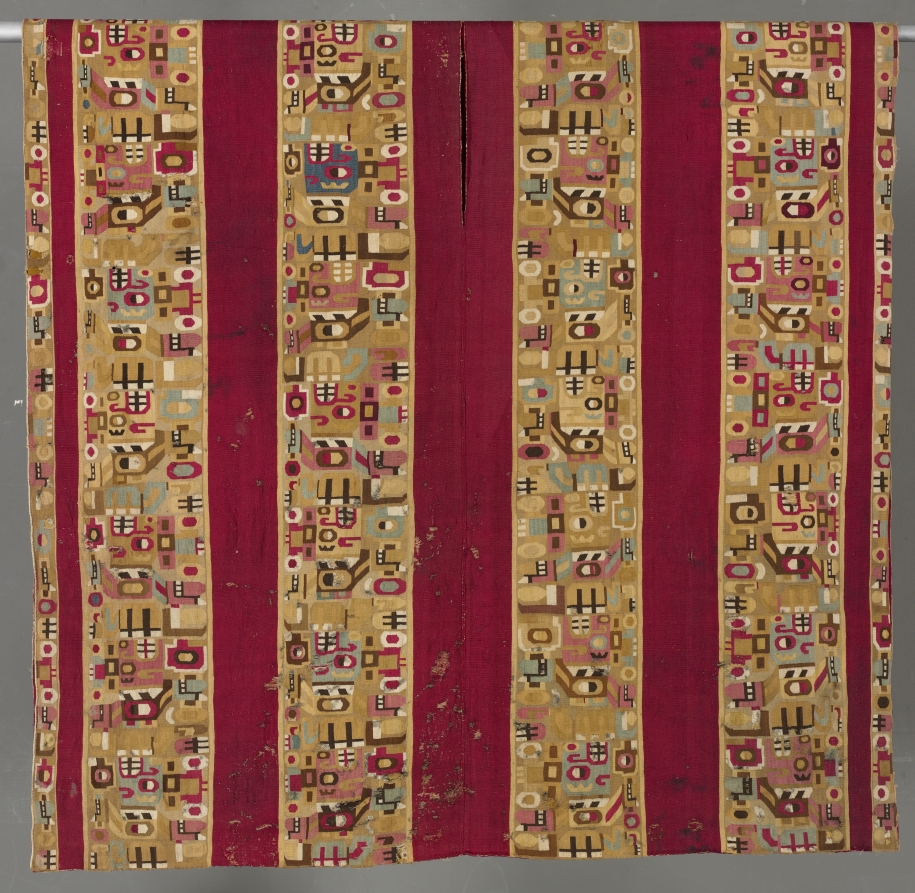
Urban Silhouette Research: The Tunic with Sacrificer
I. The Geometry of Suspended Time
The Addison Fashion atelier approaches the Tunic with Sacrificer not as a garment but as a spatial proposition. Its architectural premise derives from a singular tension: the Meiping vase’s curved wall—a surface that contains volume without announcing it—and the Socratic moment of irreversible decision—a gesture that cleaves time into before and after. The tunic resolves this dialectic through a disciplined asymmetry. The shoulder line is extended, dropped precisely three centimeters beyond the acromion, creating a horizontal plane of stillness that recalls the vase’s unbroken lip. From this plane, the body of the garment descends in a single, uninterrupted fall of cloth, its lateral seams displaced forward by seven degrees. This forward rotation is not decorative. It is structural. It forces the fabric to drape across the sternum in a shallow convex curve, echoing the Meiping’s belly, while the back panel remains planar—a silent counterform.
The “Sacrificer” element—a removable, knife-pleated panel that attaches at the left clavicle and falls to the right hip—introduces the Socratic rupture. It is a diagonal event within a field of vertical calm. Its pleats are heat-set to a depth of 1.2 centimeters, each fold a compressed narrative, a wave frozen mid-break. When the wearer moves, the panel does not flutter; it shifts as a single articulated mass, its weight calibrated to 180 grams. This is the materiality of consequence: the garment acknowledges that every gesture carries irreversible momentum.
II. Materiality and the Urban Surface
The tunic is executed in a bonded wool-silk composite, 340 grams per square meter, with a matte slate finish. The surface absorbs light rather than reflecting it, producing a depth that mimics the glaze of celadon—not its color, but its optical density. Under urban artificial light, the fabric shifts from graphite to near-black, a chromatic instability that refuses fixed identity. This is deliberate. The 2026 executive operates in environments of perpetual transition: the glass tower, the subterranean transit, the dimly lit negotiation room. The tunic must perform across all three without visual compromise.
The interior construction is equally rigorous. A floating canvas of horsehair and cotton interlining spans the upper back, providing structure without rigidity. The side seams are bound in silk grosgrain, a detail invisible to the observer but palpable to the wearer—a private architecture. The hem is weighted with a concealed chain of stainless steel micro-beads, 40 grams total, ensuring that the garment’s vertical fall is never disrupted by movement. This is the poetics of gravity: the tunic does not hang; it descends with intention.
III. The Silhouette as Urban Proposition
The resulting silhouette is a study in controlled volume. It is not oversized in the contemporary sense of excess fabric; it is architecturally displaced. The shoulder plane sits 4 centimeters wider than the wearer’s natural frame, creating a subtle T-line that elongates the torso. The waist is not cinched but implied through a single vertical dart at the front, 22 centimeters in length, which releases at the hip. This dart is the only interruption in the tunic’s frontal field—a surgical incision that allows the fabric to articulate the body’s movement without clinging.
The sleeves are cut in one with the body, extending to the wrist with a 3-centimeter slit at the cuff. When the arms are raised, the underarm gusset—a diamond of self-fabric, 8 by 8 centimeters—opens to reveal a flash of the wearer’s skin or shirt. This is the Socratic gesture: a momentary exposure of vulnerability within a system of control. The gusset is not a flaw; it is a philosophical aperture.
IV. The 2026 Executive Context
By 2026, the executive wardrobe will no longer tolerate the false binary of soft versus structured. The Tunic with Sacrificer proposes a third term: fluid architecture. Its geometry is derived from the vase’s containment and the painting’s rupture, but its resolution is entirely urban. It is designed for the woman who moves through the city as both observer and event—who understands that silence can be a form of power and that every decision leaves a pleat in time.
The tunic does not decorate the body. It frames it. It does not follow trends. It establishes a spatial ethics of dress. In the Addison Fashion canon, this garment is not a seasonal proposition but a permanent coordinates system: slate, silent, and irreversible.