Urban Form: The Fall of the Angels
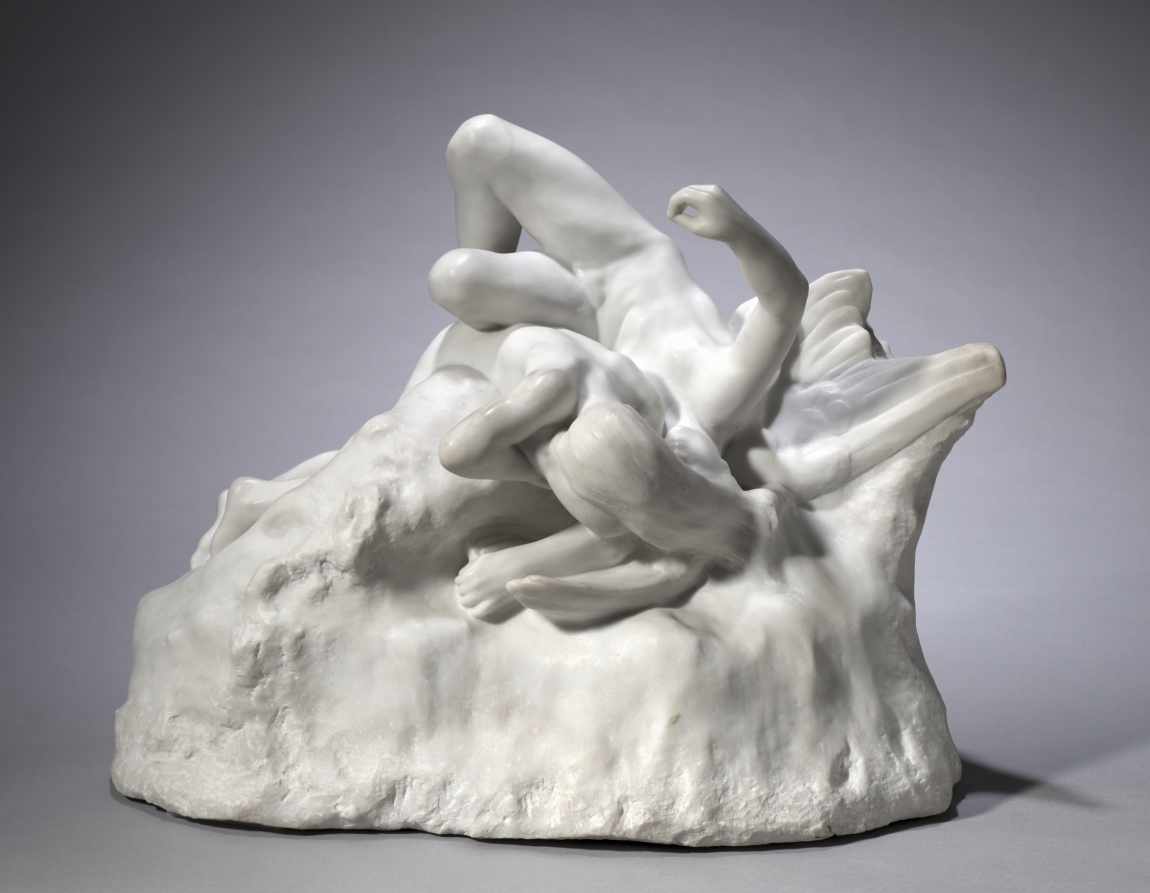
The Fall of the Angels: Structural Poetics of the 2026 Executive Silhouette
I. Preliminary Taxonomy: Two Poles of Material Consciousness
The Addison Fall 2026 research directive situates itself at the intersection of two artifacts: the Pilgrim Sudhana (善财童子) votive figure and the Sample of Fibrolite. Superficially, these objects occupy antagonistic registers—one is a cultural encoding of spiritual narrative through artisanal intervention; the other is a raw geological specimen whose aesthetic resides in its own crystalline autonomy. Yet for the purposes of urban silhouette engineering, their juxtaposition yields a precise dialectic: the object as vessel versus the object as substance. This dialectic governs the architectural logic of the 2026 executive wardrobe.
The Pilgrim Sudhana operates through what we term dematerialization via form. The artisan imposes geometry—the strict iconometric proportions of the bodhisattva posture, the regulated drapery folds, the canonical implements—upon base metal or stone. The material is disciplined into transparency; it becomes a sign, not a thing. Conversely, the Sample of Fibrolite presents materialization via structure. Its fibrous cleavage, its silky luster, its internal foliation are not imposed but disclosed. The stone is its own narrative. No external code governs its surface; its surface is its code.
For Addison, these poles are not oppositional but sequential. The executive silhouette of 2026 must first dematerialize the body—suppressing anatomical noise through tailored discipline—and then rematerialize it through the inherent logic of textile and cut. The garment becomes both votive figure and mineral specimen: a container of intention and a revelation of substance.
II. Geometric Integrity: The Sudhana Axis and the Fibrolite Plane
Analyze the Pilgrim Sudhana for geometric integrity and one finds a vertical axis of devotion. The figure’s spine is a plumb line; the shoulders form a horizontal bracket; the hands, whether in anjali mudra or holding the lotus, create secondary triangulations. This is not organic anatomy but architectural armature. The silhouette is a column with appendages—a structural poetics of ascent. The 2026 executive jacket must echo this: a suppressed waist, a defined but non-aggressive shoulder line, a hem that terminates with the finality of a plinth. The body is not revealed; it is transubstantiated into a carrier of professional intent.
Now consider the Sample of Fibrolite. Its geometry is planar and stratified. The fibrous crystals align in parallel sheets, creating a directional grain that resists isotropic reading. Light does not penetrate; it skims. The stone’s integrity lies in its cleavage planes—fault lines that are also aesthetic events. Translated to tailoring, this suggests a silhouette built from overlapping panels with visible but controlled seams. The executive coat of 2026 should not be a seamless monolith but a geological stack: a shoulder yoke, a chest panel, a waist cinch, a skirt flare—each reading as a discrete stratum while contributing to a unified mass. The seam becomes a cleavage plane: a line of both weakness and beauty.
The Fall of the Angels—the collection’s titular narrative—resides precisely in this tension. The angel is a Sudhana figure: a messenger dematerialized into pure symbol. The fall is a Fibrolite event: the symbol strikes material reality and fractures along its own internal planes. The 2026 silhouette must embody both the ascent of the votive column and the descent of the mineral plane. It is a vertical that knows it is also horizontal. A tailored shoulder that acknowledges the gravity of the hem. A minimalist surface that conceals a violent geology of seams.
III. Urban Materiality: Slate, Onyx, and the Executive Surface
The palette for this research is Slate—not as color alone but as material condition. Slate is metamorphic: compressed, foliated, split into sheets. It is the urban stone par excellence, paving the floors of corporate atria and cladding the facades of brutalist towers. For Addison’s 2026 executive, slate manifests as matte, dense, light-absorbing textiles: heavy wool crepe, bonded cotton, brushed alpaca. The surface should not shine; it should receive. The Fibrolite’s silky luster is permitted only in interior linings—a hidden silk charmeuse, a cupro twill—revealed only in motion, like a mineral vein exposed by a fault.
The Sudhana figure’s materiality is patinated: bronze darkens, wood cracks, stone weathers. The executive garment must similarly accept time. Not distress, but maturation. A slate wool that softens at the elbow. A seam that relaxes with wear. The 2026 silhouette rejects the pristine. It embraces the archaeology of use. This is the urban condition: the city wears its inhabitants, and the executive wears the city.
IV. Defining the 2026 Executive Silhouette: A Technical Specification
From the above analysis, Addison Fashion establishes the following structural parameters for Fall 2026:
1. The Votive Column: A long, narrow overcoat or duster with a suppressed waist and a straight, floor-grazing hem. Shoulder line is extended but unpadded—a horizontal bracket, not a sphere. Closure is asymmetric, referencing the Sudhana’s tilted head and offering hand.
2. The Fibrolite Panel: A modular jacket system in which the front, back, and sleeves are cut as separate planes and joined with exposed, bound seams. The seam allowance is pressed open and topstitched in a contrasting slate thread, rendering the construction legible. This is not deconstruction; it is geological honesty.
3. The Cleavage Skirt: A pencil or column skirt with a single vertical slit placed off-center, aligned with the body’s natural fault line (the iliac crest to the ankle). The slit reveals a contrasting underlayer—onyx silk or silver mesh—suggesting the mineral interior beneath the weathered surface.
4. The Patinated Finish: All textiles are pre-washed or garment-dyed to achieve a slate patina. No two pieces are identical. The executive silhouette is not a uniform; it is a specimen.
V. Conclusion: The Angel’s Fall as Design Principle
The Fall of the Angels is not a narrative of defeat but of materialization. The angel descends from pure spirit into the density of the urban real. The Pilgrim Sudhana ascends from material craft into spiritual symbol. The Sample of Fibrolite simply is—a stone that has never known either ascent or descent, only pressure and time. Addison’s 2026 executive silhouette holds all three in suspension: the tailored column, the fractured plane, the patinated surface. It is a garment for those who move through cities as both pilgrims and minerals—carrying intention, revealing structure, accepting the slow geology of the everyday.
The geometric integrity is absolute. The poetics are structural. The materiality is urban. This is the Addison Fall 2026.