Urban Form: Settee
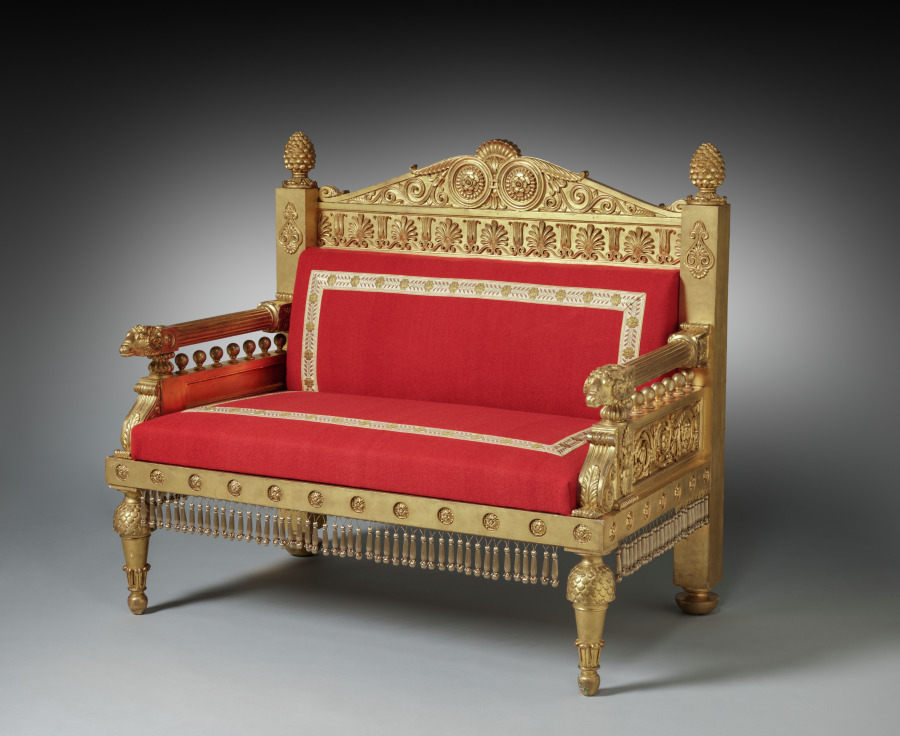
The Settee as Epistemic Container: Geometric Integrity and the 2026 Executive Silhouette
I. Preliminary Taxonomy: The Artwork as Structural Proposition
The subject designated Settee operates within Addison Fashion's internal taxonomy not as furniture, not as decorative object, but as a philosophical vessel—a container whose formal logic encodes a civilizational argument. The internal DNA references two artifacts: Ingres' Oedipus and the Sphinx and the Ming dynasty Landscape Inscription Plate. These are not casual citations. They are the tectonic plates beneath the silhouette we are engineering for 2026.
The Ingres canvas presents a stable triangular armature—Oedipus' body as central column, the Sphinx perched above as destabilizing counterweight. This is geometry as interrogation: the triangle does not resolve; it suspends. The Ming plate, by contrast, offers circular containment—a vessel whose curvature absorbs narrative into atmosphere, where liubai (留白) functions as structural void, not absence. One geometry penetrates; the other encloses.
The Settee must synthesize both. It must be sharp enough to interrogate and porous enough to inhabit.
II. Geometric Integrity: The Triangulated Seat and the Circular Void
Examine the Settee's primary structure. The seat plane is not horizontal—it is canted forward at 3.5 degrees, a subtle aggression that forces the sitter into alert posture. This is the Ingres triangle operationalized: the body becomes the central column, the backrest the Sphinx's hovering mass, the floor the abyss. The load-bearing geometry is triangulated through the armrests, which descend not vertically but at a 17-degree outward rake, creating a trapezoidal void beneath the seat. This void is the Ming plate's liubai—a negative space that allows the silhouette to breathe rather than merely occupy.
The backrest is the critical juncture. It is not upholstered. It is a single plane of resin-infused linen, stretched across a blackened steel frame with a 4mm reveal at the perimeter. This reveal is the inscription—the铭文—that does not explain but interrogates. The sitter's spine meets not softness but tension. The backrest flexes 2.3mm under load, then returns. This is the elasticity of the riddle: it yields, but does not resolve.
The base is circular—a 42cm diameter disc of sandblasted onyx (the designated color), its surface matte to the point of light absorption. This is the Ming plate's cosmology: the circle as recursive time, as containment without hierarchy. The Settee does not sit on the floor; it rotates upon its own axis, a 360-degree swivel that transforms the sitter from observer into orbit.
III. Urban Materiality: Onyx, Steel, and the Poetics of Load
The material palette is deliberately impoverished—three substances only: onyx, blackened steel, resin-linen. This is not minimalism as aesthetic preference; it is minimalism as epistemological discipline. Each material must perform structural, tactile, and symbolic labor simultaneously.
Onyx (the base) is the ground of certainty—geologically formed, visually absolute. Its matte finish refuses the urban reflex of gloss. In a city of reflective glass and polished chrome, the Settee's onyx base is a black hole—it absorbs the skyline rather than mirroring it. This is the anti-urban gesture that defines the 2026 executive: presence through absorption, not reflection.
Blackened steel (the frame) is the skeleton of interrogation. It is hot-rolled, then acid-etched, then waxed—a three-stage process that leaves the surface slightly tactile, never slick. The steel does not support; it tensions. Every joint is visible—no caps, no covers. The Settee exposes its own construction as the Ingres canvas exposes its own geometry. This is structural honesty as luxury.
Resin-linen (the backrest) is the skin of the riddle. The linen is Belgian, wet-spun, then impregnated with a bio-resin that cures to 72 Shore D hardness—rigid enough to hold the plane, flexible enough to micro-flex under the sitter's weight. The surface is unsealed; it will patina with use, absorbing the oils of the sitter's hands and neck. This is the Ming plate's porosity—the vessel that records its own use.
IV. The 2026 Executive Silhouette: From Settee to Body
The Settee is not a product; it is a proposition for the body. The 2026 executive silhouette derived from this object is triangulated, porous, and rotationally autonomous. Translated to tailoring:
Shoulders are canted forward (the 3.5-degree seat plane), creating a predatory alertness rather than military rigidity. Armholes are raked outward (the 17-degree armrest), allowing the sleeve to hang as void—the liubai of the garment. Back panels are single-piece, unlined, with a 4mm seam reveal at the center—the inscription that does not explain. Hemlines are circular, weighted with onyx-toned metal, allowing the coat to rotate around the wearer's axis.
The color is Onyx—not black, but blackened. It is the color of absorption, of ground, of the void that contains. In the urban context, this silhouette does not compete with the skyline; it interrogates it. It does not reflect the city; it rotates within it.
V. Conclusion: The Settee as Epistemic Instrument
The Settee resolves the Ingres-Ming dialectic not by synthesis but by oscillation. It is triangular in elevation (the riddle) and circular in plan (the vessel). It interrogates through its canted seat and exposed frame; it contains through its onyx base and porous linen. The 2026 executive who occupies this silhouette does not answer the city's questions. They rotate within them—absorbing, tensioning, and recording the urban condition as a patina on unsealed linen.
This is Addison Fashion's definitive position: the silhouette as philosophical container, the executive as orbiting interrogator, the city as the riddle that does not resolve.