Urban Form: Satyress
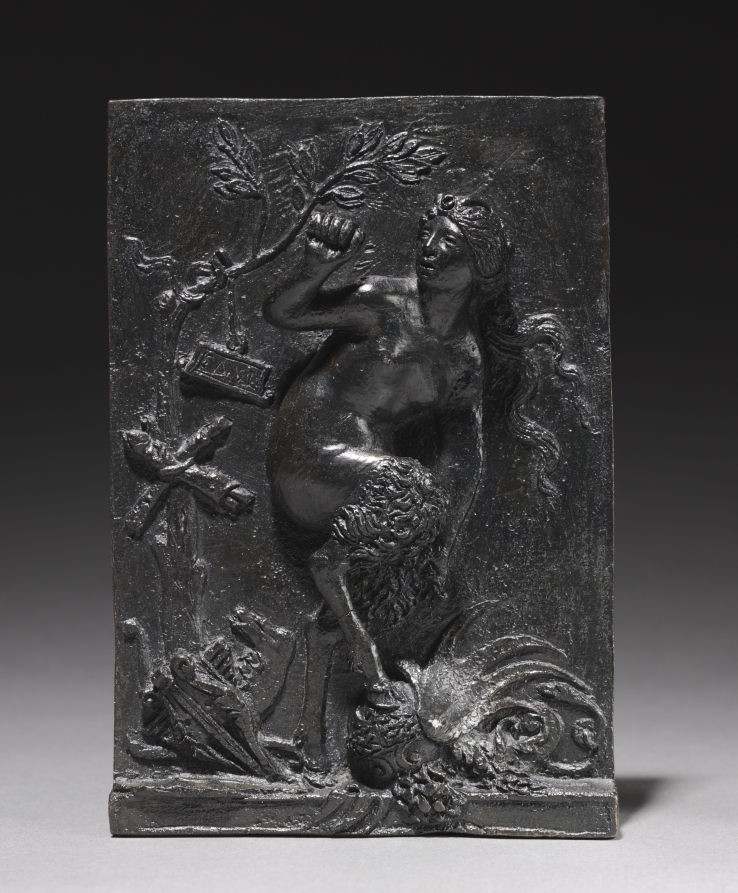
Technical Deconstruction: The Satyress Silhouette & The 2026 Executive Form
The conceptual nucleus of the Satyress project—a dialectic between the dense, symbolic conflict of The Temptation of Saint Anthony and the serene, intuitive harmony of Loquat Painting—provides a profound framework for evolving the urban executive silhouette. This analysis deconstructs this aesthetic dialogue into its constituent formal principles, translating transcendent artistic conflict into a rigorous, wearable architecture for the 2026 New York executive. The resultant form is a study in controlled tension, where internal complexity is resolved through external purity, articulated in the definitive, cerebral hue of Slate.
Formal Synthesis: Conflict, Void, and Structural Resolution
The core technical challenge lies in synthesizing two opposing formal languages. From the Western symbolic and transformative tradition, we extract the principle of internalized articulation. This is not the external grotesquerie of the painting, but its structural metaphor: the silhouette becomes a field for resolving internal tension. This manifests in engineered internal constructions—asymmetric darting that implies movement beneath stillness, strategic seaming that maps conceptual rather than purely anatomical topography, and layered under-structures that provide a subtle, almost imperceptible friction against the outer shell. The garment becomes a "soul's battlefield" only in the most abstract sense: a site where form contends with function, and restraint negotiates with expression.
Counterbalancing this is the Eastern principle of intuitive vacancy and inherent vitality, derived from the Loquat Painting. This is operationalized through the mastery of negative space and contour integrity. The silhouette is not defined by what is added, but by what is meticulously omitted. Armholes are precision-cut to create a clean, extended shoulder line that breathes; torsos are shaped not through constriction but through parabolic curves that echo the "roundness and fullness" of the fruit. The "blank background" translates into the strategic use of monochromatic fabric plains, where the focus shifts to the uninterrupted, sculptural flow of the material itself. The cut must possess the "rhythm of breath" found in the branching loquat leaves—a logic that feels natural, inevitable, and alive.
The 2026 Silhouette: Architectural Poise in Slate
The synthesized 2026 silhouette for the Addison executive is therefore one of architectural poise. It rejects both the aggressive severity of past power dressing and the unstructured fluidity of casualization. Instead, it proposes a uniform of intelligent austerity. For womenswear, this translates into a single-breasted blazer with a slightly extended yet sharply defined shoulder, its internal canvas providing the "inward exploration" of structure. It pairs with a wide-leg, high-waisted pant whose drape creates a columnar void, a vertical "blank space" that elongates and centers the figure. The ensemble is unified in Slate—a color that embodies the synthesis. It possesses the gravity and depth of the saint's dark turmoil, yet the cool, detached serenity of ink wash. It is neither warm nor cold, but decisively cerebral.
Menswear follows a congruent logic. The overcoat becomes a key silhouette, its volume carefully calibrated between presence and absence. It is not oversized, but definitively scaled, creating a perimeter of personal space—a "cosmic vitality flowing" around the wearer. Underneath, a deconstructed suit in the same Slate tonality features a minimally padded shoulder and a jacket that closes high, creating a tapered torso that resolves into a straight, clean hem. The fabric is paramount: high-twist wools or technical blends with a slight matte finish to absorb and subtly reflect the city's light, much like the loquat's "elegant coloring."
Materiality and Executive Performance
This is a wardrobe for cognitive performance, not physical labor. The material selection must facilitate the "conflict-free aesthetics" of the loquat while enduring the "spiritual struggle" of the urban environment. Technical wools, precision-engineered knits with memory, and matte-finish technical silks are specified. Seams are clean-finished or bonded to maintain the integrity of the silhouette's outer plane, ensuring the "metaphor of the soul's state" remains an internal affair, not a external distraction. Details are eradicated or sublimated: fasteners become hidden magnetic closures, pockets are seamlessly integrated, and vents are engineered to preserve contour.
The ultimate function of the Satyress-informed silhouette is to create a habitat for the modern executive psyche. It provides the armored tranquility necessary to navigate the dense, often grotesque theater of global business—the "demonic objects" of the boardroom—while maintaining a core of contemplative clarity. It allows the wearer to be both in the conflict and above it, embodying the resolution the art historical dialogue seeks. In the uniform of Slate, the New York executive does not merely dress for success; they attire themselves in a philosophy of resolved tension, where the infinite space of strategic thought is opened within the finite, impeccable lines of the modern form.