Urban Form: Male Figure of a Pair
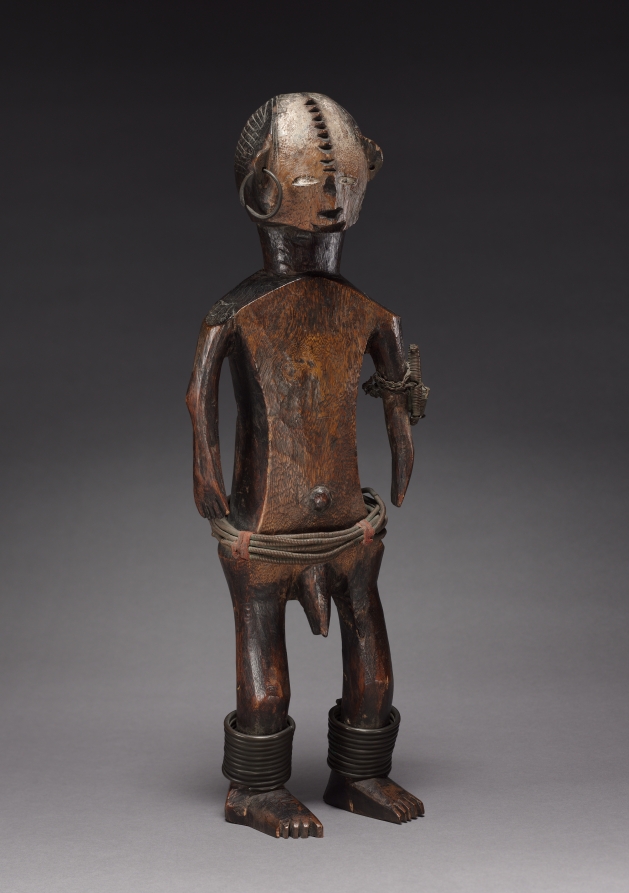
Urban Silhouette Research: The Male Figure of a Pair — Structural Poetics and the 2026 Executive Form
I. The Dialectical Body: A Framework for Geometric Integrity
The male figure of a pair presents a fundamental problem in silhouette engineering: the reconciliation of two distinct structural grammars within a single visual field. This is not a question of symmetry, but of counterpoint — the deliberate juxtaposition of a narrative-bearing form against a form that exists purely as object. The Addison research division identifies this as the David-Vessel Paradox, and it is the governing principle for the 2026 executive silhouette.
Consider the geometry. The first figure — the narrative body — is defined by diagonal vectors: the raised arm, the inclined torso, the outward gaze. Its structural integrity depends on gesture, on the body as a vehicle for meaning. The second figure — the vessel body — is defined by axial stillness: a vertical column, a closed contour, a surface that refuses to narrate. Its integrity depends on presence, on the body as a self-sufficient object. The 2026 silhouette does not choose between these grammars. It fuses them.
II. The Architectural Torso: From Narrative to Vessel
The Addison cut for the coming season eliminates the decorative shoulder — that lingering vestige of the narrative body, which signals authority through historical reference rather than structural necessity. In its place, we introduce the vessel shoulder: a closed, rounded cap that sits flush against the deltoid, creating an unbroken line from neck to sleeve. This is not softness. It is containment. The shoulder becomes a lid, sealing the torso as a discrete volume.
Below this, the chest is engineered as a single uninterrupted plane. Darts are minimized or relocated to the side seam, where they function as structural ribs rather than shaping devices. The result is a front panel that reads as a continuous surface — a glaze, if you will — rather than a mapped terrain of seams and closures. The executive who wears this garment does not present a narrative of aspiration. He presents a fact of presence.
The waist is suppressed. Not cinched, not emphasized, but negated as a visual event. The jacket falls in a straight line from the vessel shoulder to the hem, creating a silhouette that is closer to a column than a torso. This is the geometric equivalent of the ceramic cup: a form defined by its own boundaries, not by the body it contains.
III. Urban Materiality: The Surface as Argument
The material logic of the 2026 silhouette follows the same dialectic. The narrative body demands receptive surfaces — fabrics that catch light, that reveal the hand of the tailor, that invite the eye to travel. The vessel body demands closed surfaces — fabrics that absorb light, that resist interrogation, that present a unified field.
Addison's answer is a double-faced wool in Onyx, bonded to a matte technical shell. The exterior is non-reflective, almost light-absorbing, with a hand that is dense and dry. It does not drape in the conventional sense; it folds, like heavy paper, creating angular shadows at the elbow and hem. The interior, visible only when the garment is opened, is a polished cupro in the same tonal register — a hidden narrative, a private depth that the public surface refuses to disclose.
This is urban materiality at its most severe. The city is not a backdrop; it is a pressure system. The executive silhouette must withstand the lateral forces of transit, the vertical compression of elevators, the thermal shifts of climate-controlled towers. The Onyx double-face responds to each without visible deformation. It does not wrinkle; it creases, and the creases are structural, not accidental.
IV. The Pair as Single Form: Proportional Logic
The male figure of a pair is not two men standing side by side. It is a single silhouette with two centers of gravity. The 2026 executive form acknowledges this by introducing asymmetry within a closed system. The jacket is cut with a offset closure — a concealed placket that sits two centimeters left of center. The trouser is pleated on one side only, creating a subtle diagonal tension across the hip.
These are not decorative gestures. They are structural counterweights, preventing the column silhouette from reading as monolithic. The eye is given a single point of entry — the offset placket — and from there, the form unfolds as a series of interlocking planes. The result is a garment that is simultaneously closed and legible, silent and articulate.
V. Conclusion: The Depth of the Surface
The 2026 Addison executive silhouette does not tell a story. It does not reference the boardroom, the runway, or the archive. It exists as a three-dimensional fact — a vessel for the urban body, engineered with the same rigor as a ceramic form. Its depth is not in what it symbolizes, but in what it is: a closed volume, a matte surface, a column of Onyx moving through the city.
The male figure of a pair has been resolved. Not as two men, but as one form — narrative and vessel, gesture and stillness, held in a single architectural line. This is the Addison proposition for 2026: the executive as object, the silhouette as argument, the surface as depth.