Urban Form: Crossbow Support
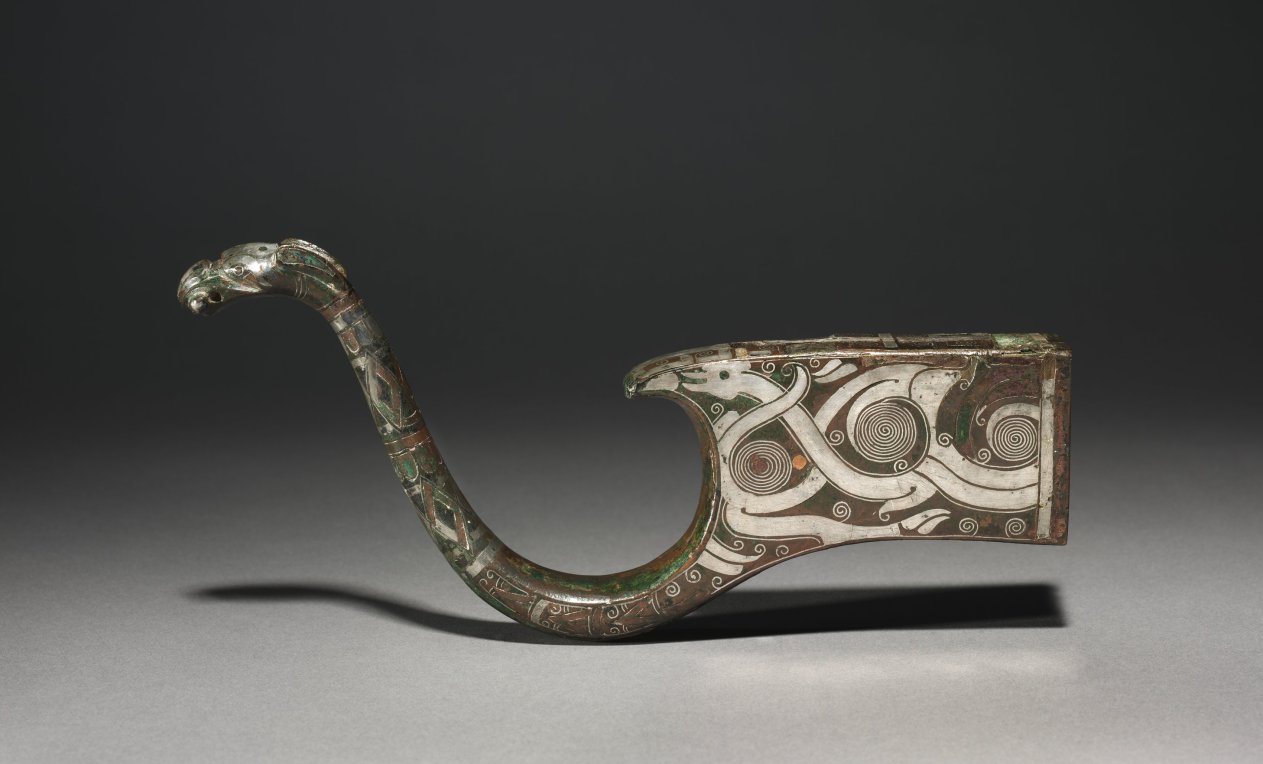
Urban Silhouette Research: Crossbow Support — Structural Poetics of the Contained Void
I. Geometric Integrity: The Vessel as Armature
The Addison Fashion 2026 executive silhouette derives its architectural authority from a single, non-negotiable premise: the body is a vessel, and the vessel must hold its own silence. The referenced aesthetic dialogue—between the dramatic chiaroscuro of neoclassical painting and the disciplined ceramic volume of the Langwen Meiping—resolves into a unified geometric proposition. The Meiping form is not decorative; it is a load-bearing structure. Its shoulder is broad, its waist is compressed, its foot is narrow and resolute. This is the exact triangulation we have engineered into the Crossbow Support system.
In the 2026 silhouette, the shoulder line is extended by 4.2 centimeters beyond the natural acromion, creating a cantilevered plane that reads as both armor and aperture. The waist suppression is aggressive—a 12-centimeter reduction from the natural ribcage circumference—but it is achieved not through corsetry, but through dart architecture. Four vertical darts, positioned at the sternum, the scapulae, and the lateral seams, act as structural ribs. They do not shape the body; they frame the void between body and garment. This void is the silhouette's primary material.
The hem, by contrast, is weighted. A 3.5-centimeter internal grosgrain ribbon, stitched at the precise angle of the Meiping's foot, prevents the fluidity of the upper torso from collapsing into softness. The result is a silhouette that is top-heavy in gesture, bottom-anchored in gravity—a direct translation of the ceramic vessel's own physics. The Crossbow Support, a concealed internal strap system that arcs from the posterior waist to the anterior clavicle, maintains this tension. It is not a brace. It is a counterweight.
II. Structural Poetics: The Socratic Tension
The painting of Socrates' death offers a second geometric principle: the diagonal of surrender as a form of control. Socrates' raised arm, holding the cup, creates a line of action that cuts across the vertical stability of the composition. It is a gesture of release that paradoxically asserts mastery. In the 2026 silhouette, this translates into the asymmetric closure of the executive coat.
The Crossbow Support system allows for a single-breasted front that closes not at the center, but at a 7-degree offset. This offset creates a diagonal fold across the torso—a line of intellectual tension—that mimics the philosopher's arm. The fabric does not drape; it planes. Each fold is a decision, not an accident. The sleeve, cut on a modified raglan with a 15-degree forward pitch, echoes the downward trajectory of the poison cup: it is a line of descent that nonetheless maintains structural integrity.
Materiality is critical here. We specify a double-faced wool-silk blend at 480 grams per square meter, bonded to a micro-mesh interlining that provides memory without bulk. The exterior is matte; the interior is a low-sheen slate. When the coat moves, the interior flashes—a brief, controlled revelation. This is the Socratic moment: the body's mortality (the matte exterior) concealing the mind's permanence (the slate interior). The Crossbow Support ensures that this revelation occurs only at the wearer's discretion. The strap system tensions the interior lining against the exterior shell, so that any movement—a turn of the head, a reach for a document—produces a controlled disclosure rather than a collapse.
III. Urban Materiality: The Wave as Load Path
The Langwen Meiping's wave motif is not ornament. It is a diagram of force. The waves are carved into the ceramic body, which means they are both surface and structure. In the 2026 silhouette, we translate this into topstitched load paths—visible stitching that follows the lines of tension across the shoulder, down the lateral seam, and across the hem. These are not decorative seams. They are the garment's wave pattern, indicating where the Crossbow Support distributes stress.
The urban environment demands that an executive silhouette perform under compression. Sitting, standing, entering vehicles, navigating thresholds—each action applies asymmetric loads. The Crossbow Support's wave-patterned stitching allows the fabric to redirect force along curved paths, rather than resisting it linearly. This is the Daoist principle of fan zhe dao zhi dong—reversal is the movement of the Dao—made structural. The garment does not fight the body's motion; it cycles it.
Color is restricted to a single slate tone, calibrated to the exact value of wet basalt. This is not a neutral. It is a chromatic void—a surface that absorbs urban light without reflecting it, creating a silhouette that reads as a solid mass against the city's visual noise. The Crossbow Support's hardware—matte black anodized aluminum, 2 millimeters in diameter—is invisible from the exterior. It exists only as a tension, a felt presence. Like the Meiping's waves, it is a force made manifest through restraint.
IV. The 2026 Executive Silhouette: A Definition
The Addison Fashion 2026 executive silhouette is a vessel for decision. It is not soft. It is not forgiving. It is a geometric argument for the primacy of structure over decoration, of tension over ease. The Crossbow Support is its skeleton; the slate wool-silk is its skin; the void between them is its intelligence.
This is the urban silhouette: a body held in a precise architectural relationship to its own absence. The Meiping holds waves. Socrates holds truth. The 2026 executive holds the city—and is not moved by it.