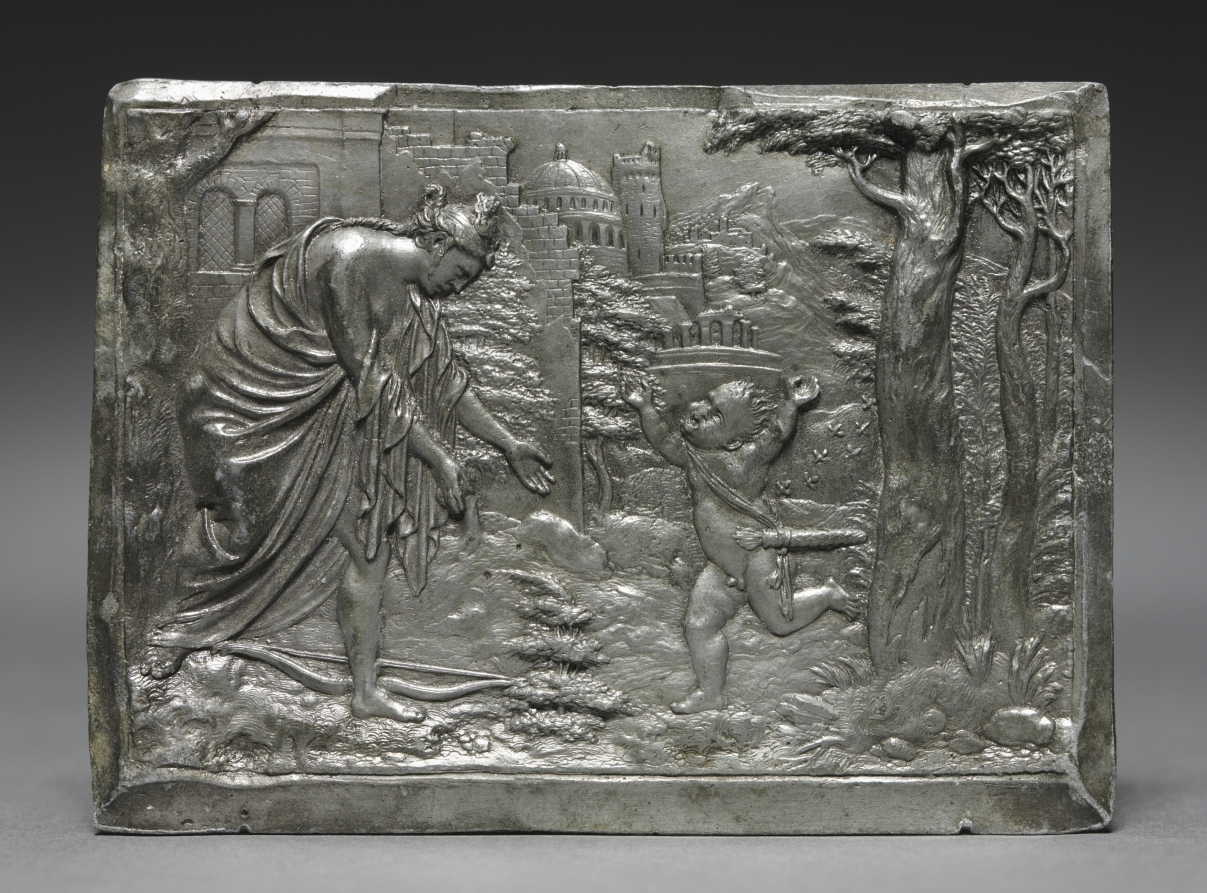
Urban Form: Cupid Complaining to Venus
The Urban Silhouette Research: Form as Doctrine, Color as Restraint
The Addison Fashion NYC design directive for 2026 demands a rigorous reconciliation between two opposing aesthetic architectures: the chaotic generativity of the Song dynasty scholar's rock and the centripetal authority of the Qing dynasty pushou door ring. For the executive wardrobe, this is not an exercise in historical quotation. It is a structural problem. The modern urban silhouette must absorb the philosophical tension between open form and closed form, between material silence and symbolic declaration, and translate that tension into garments that perform under the pressure of the Manhattan boardroom.
I. Chromatic Doctrine: The Onyx Imperative
We begin with color, because color is the first negotiation between the body and the environment. The Song scholar's rock operates in a register of chromatic interiority—its palette of blue-grey, ochre, and ink-black is not applied but inherent. It is the color of geological time, of oxidation and compression. The pushou, by contrast, operates in chromatic exteriority: gilded bronze against vermilion lacquer, a palette designed to seize the retina and announce jurisdiction.
For the 2026 executive wardrobe, we reject both extremes in their pure form. The synthesis is Onyx—not as a single flat tone, but as a spectrum of blacks that mirrors the Song principle of mo fen wu se (ink dividing into five colors). Onyx in our vocabulary encompasses jet, charcoal, graphite, and the deep umber-black of oxidized silver. This is a palette that refuses ornamentation. It does not decorate the wearer; it constitutes the wearer. The executive who dresses in Onyx is not signaling wealth—she is signaling substance. The color is the material; the material is the message.
Critically, we introduce micro-gradient variation across garment panels. A blazer in Onyx may shift from a matte wool-silk blend at the shoulder to a subtle satin-finish twill at the lapel, creating the same effect as the scholar's rock: light catching the ridge, shadow pooling in the hollow. This is not embellishment. This is chromatic structuralism.
II. Silhouette as Spatial Argument
The pushou is a centered, symmetrical, closed composition. Every element radiates from the beast's nose—the ring, the brows, the fangs, the flame motifs. It is a visual fortress. The scholar's rock is the inverse: asymmetrical, porous, open-ended. Its holes and protrusions create multiple vanishing points; the eye never rests. It is a visual invitation.
The 2026 Addison executive silhouette must embody both logics simultaneously. We propose a dual-axis construction:
Axis One—The Fortress Line: The torso is engineered as a closed system. Shoulders are precisely structured with a pushou-derived symmetry: a clean, unbroken line from clavicle to deltoid, reinforced by internal canvassing that holds the shape without rigidity. The waist is defined—not cinched, but declared—through paneled seaming that creates a central vertical axis. This is the door ring: the body as boundary, as jurisdiction, as non-negotiable presence.
Axis Two—The Permeable Line: Below the waist, the silhouette opens. Trousers and skirts incorporate strategic negative space—a slit, a vent, a layered panel that reveals and conceals in motion. The fabric here is lighter, more fluid, allowing the garment to breathe like the scholar's rock. The eye is invited to wander, to complete the form. This is not vulnerability; it is controlled porosity. The executive who moves through a room in this silhouette is both fortress and aperture—impenetrable at the core, generative at the periphery.
III. Materiality and the Tactile Contract
The scholar's rock is tactile in its refusal of touch. Its surface—weathered, pitted, veined—invites the hand but punishes the grasp. The pushou is tactile in its demand for contact: the ring is meant to be struck, pulled, used. One material withdraws; the other commands.
For 2026, we specify fabrics that operate on this same double register. Double-faced cashmere in Onyx: the exterior is dense, brushed, almost geological in its matte refusal of light. The interior is smooth, cool, a private luxury known only to the wearer. Bonded leather for outerwear: the surface is sealed, impervious, a pushou-like shield; the edge is raw, unsealed, revealing the fiber structure beneath—a deliberate flaw that signals authenticity. Silk-georgette for layering pieces: translucent, porous, a fabric that exists to be seen through, not at.
The tactile contract is this: the garment must reward the wearer's touch while withholding itself from the observer's gaze. It is intimate authority.
IV. The 2026 Executive Wardrobe: A Specimen
Consider the Addison Onyx Structured Blazer. Shoulders: pushou symmetry, reinforced with horsehair canvas. Lapel: a single, narrow notch—no peak, no shawl—a clean vertical that echoes the door ring's central axis. Closure: hidden. The blazer does not fasten; it seals. Below, the Permeable Trouser: high-waisted, wide-legged, with a single deep pleat that opens as the wearer walks, revealing a lining of contrasting Onyx satin. The effect is that of the scholar's rock: a form that is never fully seen, never fully known.
Accessories follow the same logic. A silver-tone collar pin—not a brooch, not a chain—functions as a miniature pushou: a centered, symmetrical punctuation at the throat, declaring the boundary between self and world. A belt in bonded leather, its buckle a simple brushed rectangle, no logo, no ornament. The buckle is the ring; the belt is the door.
V. Conclusion: Form as Philosophy
The Addison Fashion NYC 2026 executive wardrobe is not a collection of garments. It is a spatial philosophy rendered in cloth. It draws from the Song scholar's rock the principle of generative openness—the silhouette that invites completion, that breathes, that refuses to be exhausted by a single glance. It draws from the Qing pushou the principle of centripetal authority—the core that cannot be breached, the center that holds. And it resolves these opposites not through compromise but through layered simultaneity: the fortress and the aperture, the Onyx surface and the Onyx depth, the closed form and the open form, worn by the same body, in the same room, at the same moment.
This is the urban silhouette. Not a shape. A doctrine.