Urban Form: Satyress
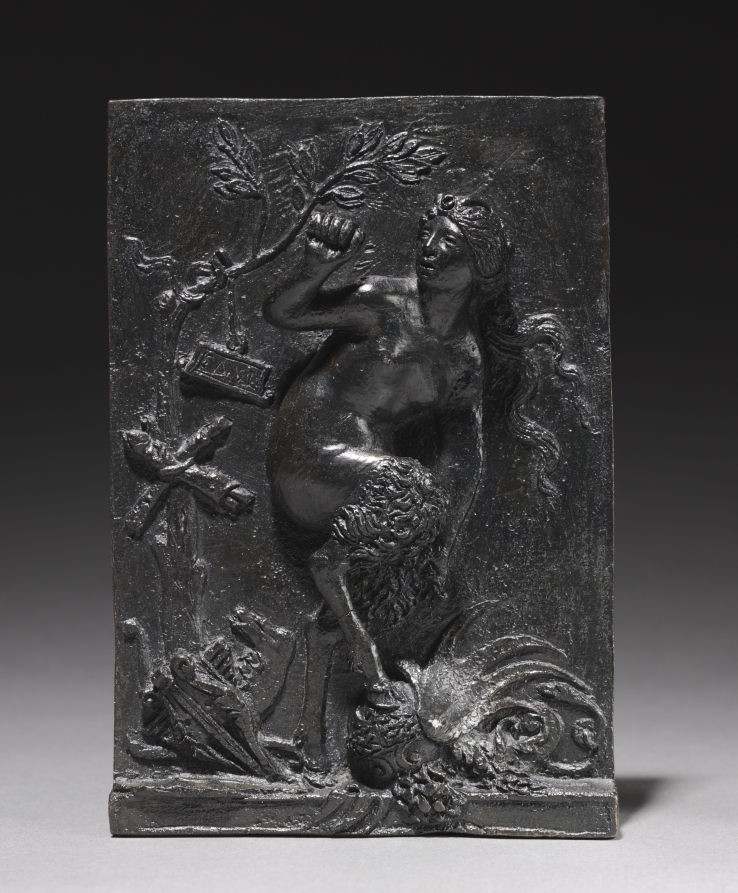
Urban Silhouette Research: Satyress — The Archaeology of Restraint
I. Material Dialectics and the Executive Form
The Addison Fashion NYC design intelligence for 2026 begins with a deliberate misreading of archaeological artifacts as garments. The Mold Fragment with Musicians and the Square Mirror with Two Phoenixes and Floral Sprays are not decorative references; they are structural propositions. The former — a ceramic mold, fragmented, its musicians eroded into suggestion — offers a thesis on negative space as functional architecture. The latter — a square bronze mirror, complete, its phoenixes and floral sprays in dynamic tension — proposes containment without stasis. For the Satyress silhouette, we synthesize these into a wardrobe logic that privileges the incomplete over the overdetermined, the implied over the explicit.
The executive wardrobe of 2026 operates in a climate of informational saturation. The Addison woman does not compete for attention; she withdraws it. The Satyress silhouette is therefore built on a principle of strategic absence — a tailoring philosophy where what is removed carries more authority than what is added. The mold fragment teaches us that erosion is not loss but refinement. Applied to the blazer, this means shoulder seams that dissolve rather than pronounce, lapels that taper into near-invisibility, and closures that operate through magnetic tension rather than visible hardware. The garment does not announce its construction; it withholds it.
II. Chromatic Restraint: Slate as Operational Neutral
The color directive is Slate — not as a single tone but as a spectral range from wet cement to oxidized iron. This is the chromatic equivalent of the mold fragment's surface: matte, mineral, resistant to easy categorization. Slate absorbs light without reflecting it, creating a silhouette that reads as volume rather than surface. In the context of the NYC executive environment — glass towers, halogen corridors, the relentless gray of February — Slate functions as both camouflage and assertion. It does not blend; it anchors.
For the Satyress wardrobe, Slate is deployed in three registers: Base Slate (a cool, blue-undertoned wool crepe for suiting), Ash Slate (a warmer, green-tinged technical fabric for outerwear), and Iron Slate (a near-black with metallic particulate for evening). The interplay between these registers creates depth without pattern, movement without ornament. The eye is not drawn to the garment but to the body within it — precisely as the mirror's phoenixes draw the eye not to the bronze but to the space between the birds.
III. The Square Mirror Protocol: Containment and Dynamism
The Square Mirror is the governing metaphor for the Satyress silhouette's proportional system. The square is the most stable of geometric forms — equal sides, right angles, no hierarchy. Yet the phoenixes and floral sprays introduce controlled asymmetry within that stability. The mirror does not choose between order and chaos; it choreographs their coexistence.
Translated to tailoring, this yields a silhouette defined by rectilinear containment with organic interruption. The core shape is a long, narrow column — a square extruded vertically. The coat is cut to the ankle, the trouser to the floor, the blazer to the mid-thigh. Within this column, three interruptions occur: a diagonal seam across the chest (the phoenix's wing), a gathered drape at the hip (the floral spray), and a vent at the back hem (the mirror's reflective surface, suggesting what lies beneath). These are not embellishments; they are structural events that prevent the silhouette from becoming a uniform.
The square mirror also informs the accessory logic. Bags are rigid, architectural, with a single asymmetric closure. Footwear is a low, square-toed boot in Slate leather, its surface unpolished. Jewelry is minimal — a single brushed-metal cuff, a pair of geometric studs. Nothing dangles. Nothing catches the light. The Satyress does not glitter; she absorbs.
IV. The Musicians' Fragment: Incompleteness as Executive Strategy
The mold fragment's most radical proposition is that incompleteness is a form of power. The musicians are not fully visible; their performance is implied. The viewer must complete the image. In the executive context, this translates to a wardrobe that invites projection rather than demanding recognition. The Satyress does not wear a logo. She does not wear a signature print. She wears a grammar of absence — a garment that is recognizably Addison only to those who understand the code.
This is the ultimate expression of MBA-level restraint: the confidence to be unread by the many and legible to the few. The mold fragment does not shout its music; it waits for the listener. The Satyress wardrobe does not announce its price point; it waits for the wearer to animate it. In a city of 8 million signals, the most powerful gesture is the one that refuses to transmit.
V. Conclusion: The 2026 Executive Silhouette
The Satyress silhouette for Addison Fashion NYC is not a collection; it is a method. It begins with the fragment and ends with the mirror — from the incomplete to the contained, from the eroded to the reflective. The 2026 executive wardrobe is Slate, Minimalist, and ruthlessly edited. It is a garment that does not ask to be seen but cannot be ignored. It is the sound of one hand clapping, the reflection of a face that has learned to disappear into its own authority.
The mold fragment waits. The mirror reflects. The Satyress wears neither — she is both: the unfinished performance and the eternal gaze, tailored into a single, silent column of Slate.