Urban Form: Brahma-Shiva
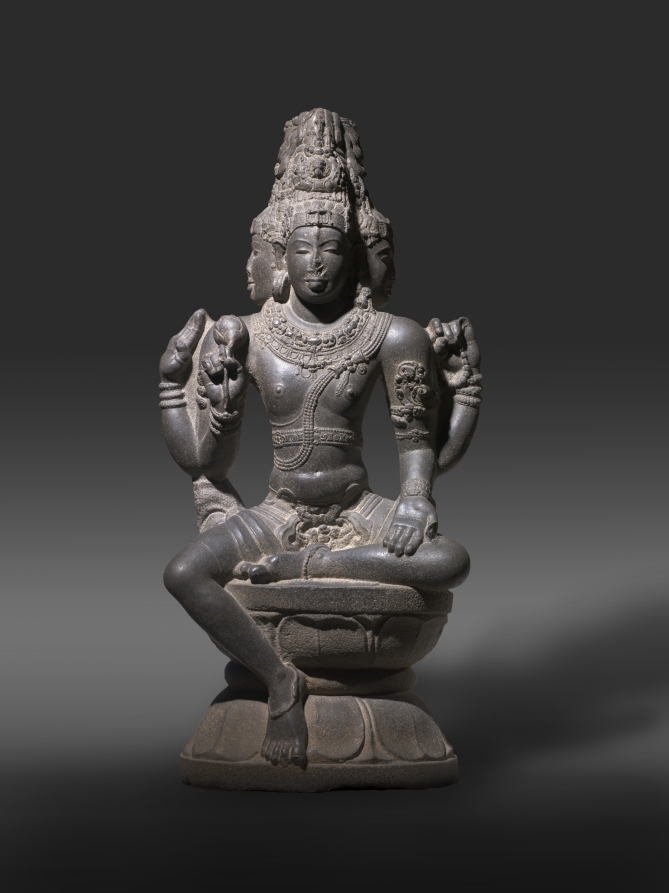
Urban Silhouette Research: Brahma-Shiva — The Dialectics of Stratification and Void in Executive Armor
I. Preliminary Taxonomy: The Damascus Room as Structural Precedent
The Damascus Room—an eighteenth-century Ottoman reception chamber from Syria—operates as a masterclass in what I term compressive ornamentation. Every vertical surface, from the wainscoting to the coffered ceiling, functions as a palimpsest of material intervention: carved wood, marble inlay, gesso relief, glazed tile, and gilded calligraphy. This is not decoration as afterthought; it is decoration as load-bearing semiotics. The room’s formal logic rests on a paradox that the Addison atelier has long interrogated: maximal surface density generating a minimal, almost monastic central void. The void—the diwan, the gathering space—is the product of the ornament, not its negation.
For the 2026 executive wardrobe, this translates into a silhouette of controlled accumulation. The Brahma-Shiva archetype does not reject layering; it systematizes it. Consider the three-piece slate suiting proposition: a base layer of matte silk-cotton in near-black, overlaid with a structured waistcoat in tonal jacquard, itself surmounted by an unlined wool overcoat with raw-edge lapels. Each stratum is legible, yet the composite reads as a single, deliberate gesture. The void—the negative space between body and garment—is not accidental but engineered through precise shoulder-to-hem ratios. The executive does not disappear into the clothing; the clothing creates the conditions for the executive’s presence.
II. The He Xiangu Base: Verticality, Transition, and the Plinth as Power
The base of the Daoist immortal He Xiangu—typically composed of stacked cloud motifs, lotus petals, and zoomorphic supports—performs a function that is simultaneously structural and metaphysical. It elevates the figure while grounding its transcendence. The base is a visual elevator: its tiered construction implies ascent, yet its material weight anchors the composition. This is the dialectic of the plinth. In sartorial terms, the base corresponds to the lower-body architecture of the executive silhouette: the trouser break, the heel height, the taper of the ankle.
For 2026, Addison proposes a stratified columnar leg—a trouser cut with a subtle flare from knee to hem, constructed in double-faced wool crepe, its surface interrupted by a single horizontal seam at mid-calf. This seam is the sartorial equivalent of the lotus petal: a decorative interruption that also serves a structural purpose, allowing the fabric to drape with controlled volume. The shoe—a squared-toe boot in slate nubuck with a stacked leather heel—completes the plinth. The executive stands not on the ground but on a constructed platform of meaning.
III. Color as Stratification: Slate, Onyx, and the Chromatics of Restraint
The Damascus Room’s palette is deceptively rich: cobalt, vermilion, gold, and ivory layered in tight chromatic intervals. Yet the room’s dominant impression is one of tonal depth rather than hue variation. This is the principle of chromatic stratification—the use of closely related values to create the illusion of infinite recession. For the executive wardrobe, this mandates a departure from the monochrome suit. Instead, Addison advocates a three-value system: slate (the base), onyx (the accent), and ivory (the release).
The slate suit—whether in wool-silk blend or technical gabardine—serves as the room’s plaster wall: a neutral ground that absorbs and reflects. The onyx appears in the accessories: a belt of eel skin, a portfolio of embossed calf, a pair of gloves in glazed lambskin. The ivory is the void made visible: a silk pocket square, a collarless shirt in undyed linen, a single strand of freshwater pearls worn under the lapel. This is not color coordination; it is color as spatial planning. Each value occupies a distinct zone of the body, creating a vertical progression from grounded darkness to luminous aperture.
IV. The Brahma-Shiva Synthesis: Form as Metaphysical Argument
The Brahma-Shiva designation—creator and destroyer, stasis and flux—finds its sartorial expression in the tension between fixed structure and fluid drape. The Damascus Room is fixed: its walls do not move. The He Xiangu base is fixed: its stones do not shift. Yet both contain within their formal logic the potential for transcendence—the void that permits movement, the ascent that implies departure. The 2026 executive wardrobe must embody this same paradox. The shoulder is structured; the sleeve is fluid. The torso is compressed; the hem is released. The collar is high and closed; the cuff is open and exposed.
This is not eclecticism. It is dialectical tailoring. The Addison atelier rejects the false choice between armor and ease. The Brahma-Shiva silhouette is both: a constructed vessel for an unconstructed self. The executive who wears it does not choose between power and vulnerability; she wears their synthesis. The slate wool absorbs the light; the onyx accessories deflect it; the ivory linen releases it. The body within is neither hidden nor exposed but strategically revealed through the architecture of concealment.
V. Conclusion: The Executive as Living Ornament
The Damascus Room and the He Xiangu base are not merely historical artifacts; they are operating manuals for presence. They teach that decoration is not superficial but ontological—a means of constructing reality. The 2026 executive does not dress to blend in or to stand out. She dresses to occupy space with intention. The Brahma-Shiva silhouette—slate, stratified, structured yet fluid—is her chamber and her plinth. It is the void she inhabits and the ascent she performs. In the urban theater of New York, she is not a participant. She is the architecture.