Urban Form: Portrait of Fabrizio Naro
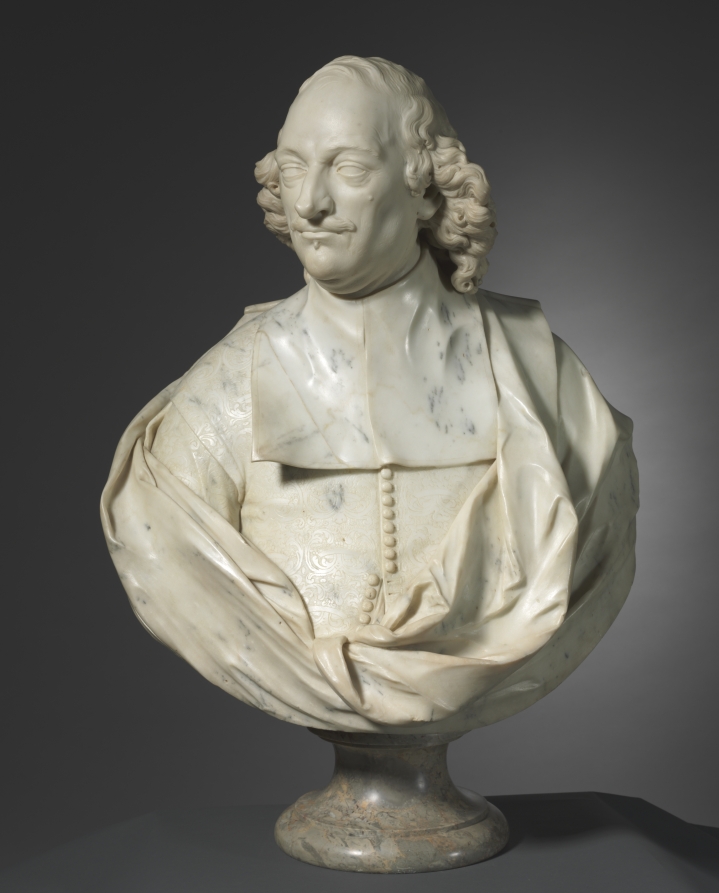
Urban Silhouette Research: The Naro Protocol — Form as Metaphysical Armature
I. Preliminary Framework: Two Vessels, One Silhouette
The subject, Fabrizio Naro, presents a physiognomy that resists easy categorization. What the portrait offers is not a face but a structural proposition—a convergence of two archaic vessels: the kylix from which Socrates drank, and the Song dynasty jar that holds nothing and therefore holds everything. Our task at Addison is not to illustrate this convergence but to engineer it into wearable architecture. The 2026 executive wardrobe demands precisely this: garments that function as both philosophical statement and operational tool. The silhouette must negotiate between the Western imperative of teleological form—clothing that points toward an ideal, that aspires—and the Eastern principle of vacant capacity—clothing that recedes, that permits the wearer to occupy rather than announce.
II. The Socratic Line: Rational Armature and the Ascending Shoulder
Jacques-Louis David's Death of Socrates operates through a rigorous geometry of ascension. The philosopher's raised hand, the verticality of the Doric columns, the upward gaze—all constitute what we term in tailoring a vertical load path. In the Naro silhouette, this translates to a shoulder line that is neither padded nor suppressed but articulated: a clean, slightly extended shoulder that creates a subtle upward vector from the clavicle. The armhole sits high and forward, allowing the sleeve to hang with the gravity of a column rather than the slackness of drapery. This is not the aggressive power shoulder of the 1980s; it is the shoulder of a man who has already won the argument and no longer needs to prove it.
The torso follows suit. We propose a single-breasted, two-button closure with a lapel width of 8.5 centimeters—narrow enough to read as contemporary, wide enough to frame the sternum as a site of intellectual rather than physical exposure. The waist suppression is minimal: 4 centimeters at the natural waist, creating a silhouette that is columnar rather than hourglass. The jacket length extends to the mid-thigh, a deliberate elongation that references the philosopher's robe without descending into costume. Ventless back, because the Socratic posture admits no escape route.
III. The Ceramic Void: Negative Space as Operational Luxury
Now the Eastern counterweight. The Jar does not signify through surface but through interior volume—the void that constitutes its utility. In garment terms, this is the principle of ease: the difference between the body's measurement and the garment's internal circumference. For the Naro prototype, we specify 6 centimeters of chest ease, 4 centimeters at the waist, and 5 centimeters at the hip. These are not arbitrary figures. They represent the minimum clearance required for the wearer to inhabit the garment rather than be encased by it—to move through a boardroom, a negotiation, a transatlantic flight without the fabric announcing its presence through tension lines or pull folds.
The trousers follow the same logic. A single pleat, forward-facing, provides volume at the thigh that tapers to a 19-centimeter hem. The rise is high—at the natural waist—which elongates the leg line and creates a continuous vertical from shoulder to shoe. The fabric here is critical: a double-faced wool crepe in Onyx, 340 grams per square meter, with a slight mechanical stretch that permits the cloth to recover its shape after extended wear. The crepe's matte surface absorbs light rather than reflecting it, reinforcing the jar's principle of receptivity over projection.
IV. Color as Philosophical Position: The Onyx Imperative
We have selected Onyx—not black, but the deepest achievable neutral, a color that sits at the threshold of visibility. Onyx is the chromatic equivalent of the jar's void: it does not assert, it contains. In the context of the 2026 executive wardrobe, Onyx offers three operational advantages. First, it eliminates the visual noise of pattern and texture, forcing the eye to read silhouette and proportion—the only variables that matter in a minimalist system. Second, it functions as a chromatic ground against which skin tone, eye color, and the occasional accessory (a silver cufflink, an ivory pocket square) register with maximum contrast. Third, it references the funerary without becoming morbid: the Onyx suit is not a shroud but a vessel, and the executive who wears it is not mourning but administering.
V. The Synthesis: Wearing the Dialectic
The Naro silhouette, then, is not a compromise between Socratic ascension and ceramic receptivity. It is their simultaneous expression. The shoulder ascends; the torso contains. The lapel points forward; the ventless back refuses retreat. The trouser drapes with the weight of tradition; the crepe recovers with the resilience of the contemporary. This is the Addison proposition for 2026: a wardrobe that does not resolve the tension between Western teleology and Eastern immanence but wears it—literally, structurally, without apology.
The executive who adopts this silhouette will not be mistaken for a philosopher or a potter. He will be recognized, instead, as someone who understands that form is never neutral, that every seam is an argument, and that the most powerful statement in a room is often the one that occupies space without filling it. The jar does not shout. The hemlock does not hesitate. The suit, if cut correctly, does neither.