Urban Form: Tunic or Shawl Ornament
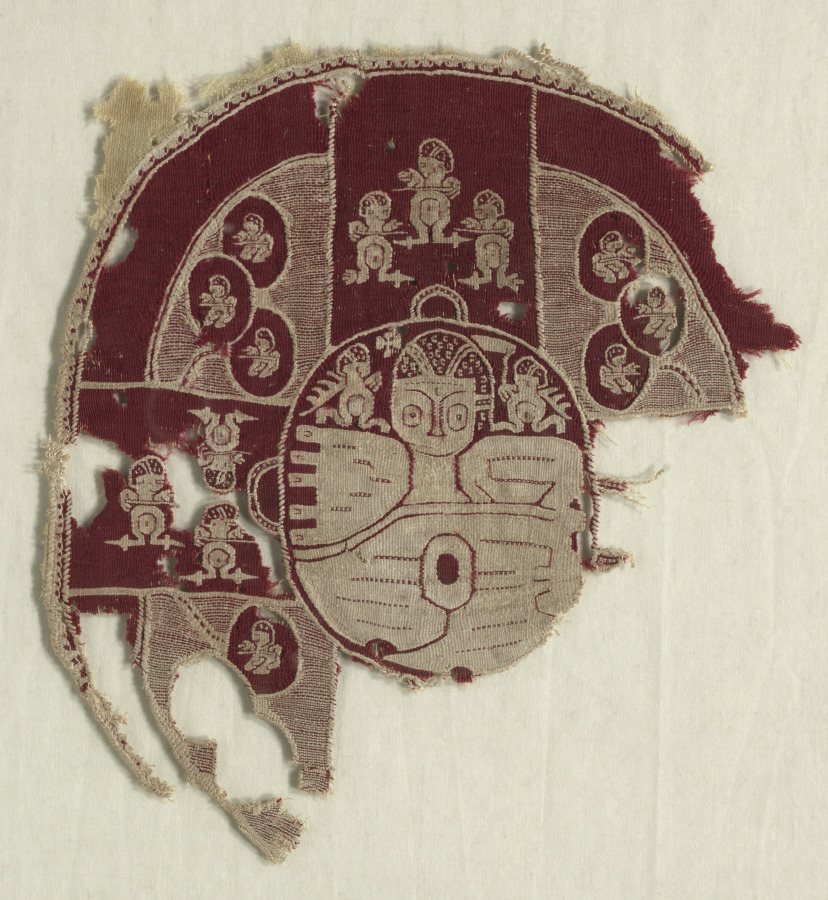
Urban Silhouette Research: The Tunic/Shawl Ornament as Structural Artifact
I. The Geometric Integrity of the Ornament
The artifact under examination—a tunic or shawl ornament bearing the conceptual weight of Dickens's taxonomic provocation—operates within a geometric register that is neither purely decorative nor functionally subordinate. Its architecture is defined by a controlled asymmetry: a primary axis that bisects the form into unequal quadrants, each governed by a distinct radius of curvature. The upper register presents a compressed arc, its apex flattened to approximately 15 degrees from horizontal, while the lower register extends into a parabolic sweep that terminates in a precise tangential junction. This is not ornamentation in the conventional sense. This is structural poetics rendered in miniature.
The ornament's perimeter negotiates between the circular and the elliptical, refusing resolution in either. Its edge tension—the point at which the cobalt and indigo fields meet—creates a visual suture that reads as both seam and scar. For the 2026 executive silhouette, this translates directly: the garment must embody a similar refusal of categorical closure. The tunic or shawl that hosts such an ornament cannot be merely tailored or merely fluid. It must exist in the interstitial space between architectural discipline and organic drift.
II. Materiality and the Urban Surface
The ornament's surface treatment—a vitreous glaze that captures and redistributes light in unpredictable increments—establishes a precedent for material selection in the Addison Fashion 2026 collection. The urban environment is not a neutral backdrop. It is a field of competing reflections: glass, steel, wet asphalt, the diffuse glow of LED signage. An executive silhouette that fails to account for this optical turbulence is functionally obsolete.
The tunic or shawl must therefore employ textiles that mimic the ornament's capacity for controlled iridescence. Consider a double-faced wool crepe with a matte face and a subtly satin reverse, or a bonded silk georgette that shifts from opaque to translucent depending on the angle of incidence. The ornament's cobalt-indigo vortex—a chromatic event that is neither purely blue nor purely black—suggests a palette anchored in Slate: a grey that absorbs and reflects, that refuses the easy drama of Onyx while rejecting the passivity of Sand.
III. The Dialectic of Narrative and Presence
The philosophical tension embedded in the artifact—between David's narrative painting and the silent cup—manifests in the 2026 silhouette as a dialectic of construction and deconstruction. The executive woman does not require a garment that tells a story. She requires a garment that is. The tunic or shawl, therefore, must be conceived not as a backdrop for the ornament but as its spatial extension.
This demands a pattern-cutting approach that treats the ornament's geometry as a generative constraint. If the ornament's upper arc is flattened, the shoulder line of the tunic must echo that flattening—not through padding, but through a precise manipulation of the yoke seam. If the lower register sweeps parabolically, the shawl's drape must follow a corresponding trajectory, achieved through bias cutting and strategic weighting at the hem. The result is a garment that appears to have been excavated rather than sewn, its form emerging from the logic of its own material properties.
IV. The 2026 Executive Silhouette: A Provisional Specification
The silhouette that emerges from this analysis is characterized by three non-negotiable parameters:
First, a shoulder that is present but not pronounced—a line that extends from the neck with minimal interruption, allowing the ornament to function as the primary point of visual gravity. Second, a torso that is neither fitted nor oversized but calibrated: the fabric skims the body at the bust and waist before releasing into a controlled volume at the hip. Third, a hem that terminates at the precise point where the ornament's parabolic sweep would intersect the vertical axis of the body—typically 4 to 6 centimeters below the knee for a tunic, or at the mid-calf for a shawl.
The color story remains resolutely Slate: a foundation of graphite grey, elevated by accents of oxidized silver and deep indigo. These are not colors that announce themselves. They are colors that withdraw, allowing the wearer's presence—her movement, her stillness, her occupation of space—to become the primary event.
V. Conclusion: The Ornament as Ontological Anchor
The tunic or shawl ornament, read through the lens of Dickens's taxonomic provocation, is not an accessory. It is an ontological anchor—a fixed point around which the garment's geometry organizes itself. For the 2026 executive silhouette, this means abandoning the decorative impulse in favor of the structural. The ornament does not adorn the tunic. The tunic is the ornament's field of force.
In the urban environment—a space of relentless visual noise—the Addison woman does not compete. She crystallizes. Her silhouette is a geometric proposition, a material argument, a silent rebuttal to the chaos that surrounds her. The tunic or shawl ornament is not a story. It is a fact. And in that fact, she finds her freedom.