Urban Form: Turtle Baby
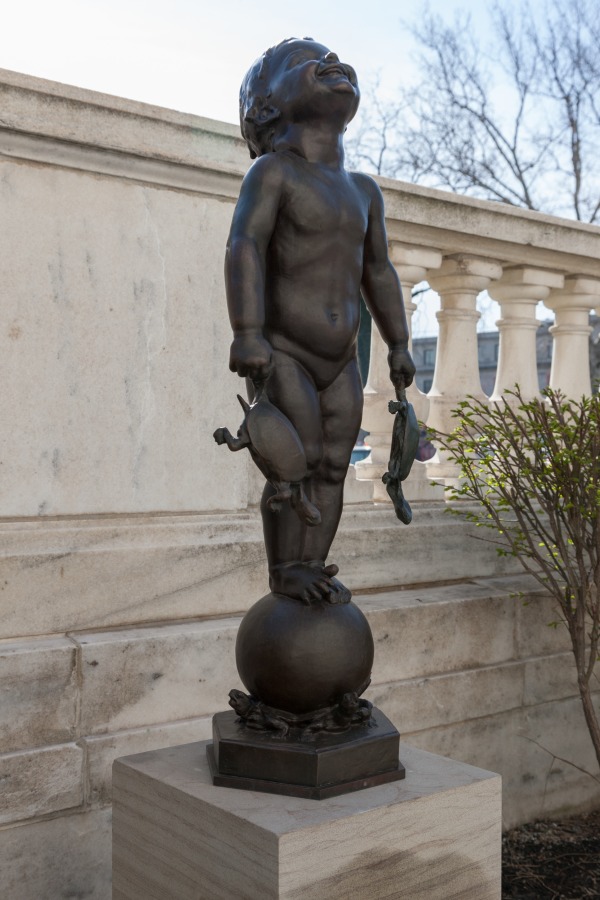
Urban Silhouette Research: The Turtle Baby Protocol
I. Geometric Integrity: The Mold Fragment as Structural Precedent
The Mold Fragment with Musicians presents a geometry of latent kineticism—a negative space designed not for display but for production. Its architectural value for Addison Fashion lies in its instrumental asymmetry: the musician's posture is captured mid-rotation, the drapery folds forming a series of compressed diagonals that terminate at the instrument's axis. This is not decorative gesture. This is structural poetics of the unfinished—a silhouette that exists in the conditional tense.
For the 2026 executive wardrobe, we translate this into what we term the Slate Protocol: a tailoring logic where seams are not concealed but rendered as functional evidence. The shoulder line of the Addison blazer adopts the fragment's broken contour—not a clean lapel roll, but a deliberate interruption at the deltoid apex, allowing the garment to read as both armor and artifact. The sleeve head is set with a 7-degree forward pitch, mimicking the musician's embouchure angle, creating a dynamic stasis that activates with movement.
The fragment's materiality—fired clay, vitreous glaze, the memory of touch—informs our textile selection. We specify a double-faced wool-silk in Slate, its surface matte but with a subtle iridescence that recalls the glaze's captured light. The interior is left raw-edged at the cuff and hem, exposing the construction as the fragment exposes its mold lines. This is not deconstruction. This is honest architecture.
II. The Taurus Figure: Planar Discipline and the Mortuary Silhouette
The Mortuary Figure of the Zodiac Sign: Ox (Taurus) operates in an entirely different geometric register. Its lines are geometricized, compressed, stripped of volume. The ox is rendered as a planar sign—a constellation made flesh, then made flat again. The figure's authority derives from its reduction to essential vectors: the horns as two intersecting arcs, the body as a trapezoidal mass, the legs as vertical struts that anchor the composition to the tomb wall's horizon.
This is the Onyx discipline—though we specify Slate for its atmospheric neutrality—a silhouette that refuses the body's organic curves in favor of architectural containment. The 2026 Addison executive coat adopts this planar logic: a columnar silhouette with a single-breasted closure that runs from throat to hem without deviation, the waist suppressed not by darts but by the gravity of the fabric itself. The collar is a raised, geometric band—neither lapel nor stand, but a threshold between the wearer's interiority and the urban exterior.
The Taurus figure's planar quality also informs our approach to surface treatment. The tomb painting's pigments—ochre, carbon black, gypsum white—have faded into a ghost palette, and we replicate this through a mineral-dyed Slate that shifts between blue-grey and warm graphite depending on light angle. The fabric is needle-punched with a micro-grid, a reference to the astronomical chart that underlies the zodiac figure—a tactile constellation that rewards proximity.
III. The Dialectic of the Silhouette: Between Potential and Containment
The two artifacts—fragment and figure—establish the binary axis of the Addison 2026 silhouette. The fragment represents potential energy: the garment as a system of tensions waiting to be activated by the body. The Taurus figure represents kinetic containment: the garment as a fixed field that disciplines the body into geometric legibility.
Our Turtle Baby capsule resolves this dialectic through a modular tailoring system. The core piece is a Slate wool overcoat whose back panel is cut on a single bias, creating a helical drape that references the fragment's rotational energy. The front panels, however, are rigidly planar, their edges finished with a bonded seam that reads as a drawn line—a direct citation of the Taurus figure's graphic contour. When the wearer moves, the back panel unfurls; when still, the front presents a heraldic stillness.
The trousers follow the same logic: a high-rise, single-pleat construction in Slate technical wool, the pleat pressed to a knife edge that extends from waistband to hem. The ankle is unfinished, the fabric allowed to fray minimally—a controlled deterioration that echoes the fragment's broken edge. This is not distress. This is temporal honesty.
IV. Urban Materiality: The City as Kiln and Tomb
The urban environment is both kiln and tomb—a site of production and a site of memorialization. The Addison executive navigates this duality through material intelligence. We specify Slate anodized aluminum hardware—matte, cool, resistant to patina—on all closures. The buttons are recessed, flush with the fabric surface, so that the garment reads as a continuous plane rather than a punctuated field. Zippers are concealed within seam allowances, their pulls reduced to minimal tabs of the same Slate metal.
The interior lining is Ivory cupro—a deliberate tonal rupture that references the tomb painting's gypsum ground. This is the private architecture of the garment, visible only to the wearer or in the unguarded moment of removal. It is a secret constellation, a mortuary figure for the living.
The Turtle Baby silhouette is thus neither purely tailored nor purely fluid. It is architectural in its stillness and kinetic in its movement—a Slate dialectic between the mold and the tomb, the musician and the ox, the potential and the contained. This is the Addison 2026 executive: a body in orbit around its own geometry.