Urban Form: Brahma-Shiva
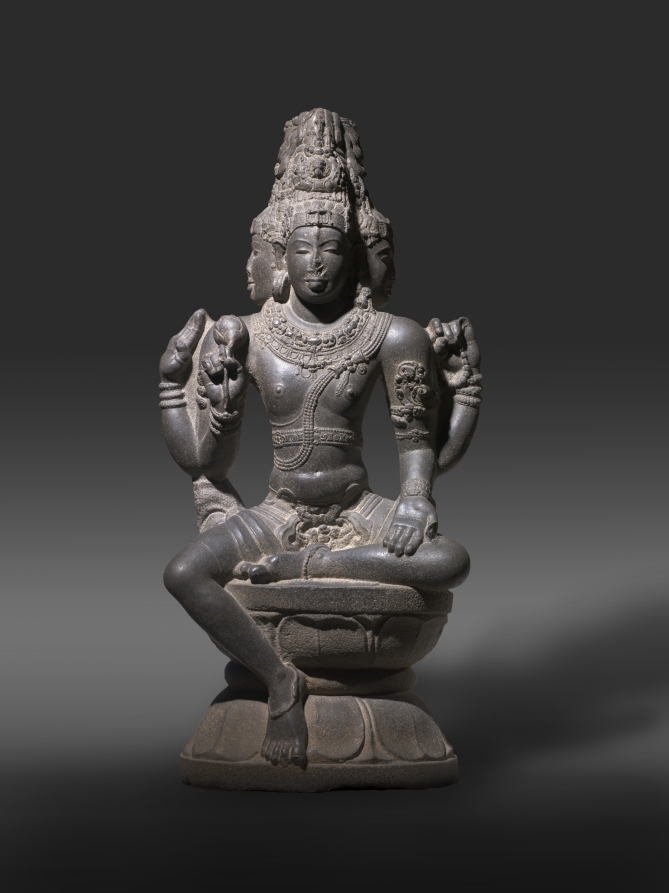
Technical Deconstruction: The Brahma-Shiva Silhouette & The 2026 Executive Form
The proposed aesthetic dialogue between the Ming Dynasty carved lacquer box and Caravaggio’s The Musicians presents a profound case study in contrastive unity—a Brahma-Shiva dynamic of creation through disciplined reduction and resonant depth. For the 2026 NYC executive wardrobe, this translates not into literal interpretation, but into a rigorous philosophy of form, where architectural minimalism meets narrative poise. The core mandate is the construction of a silhouette that embodies the lacquer’s stratified intentionality and the painting’s choreographed immediacy, resulting in a uniform of calculated presence.
Formal Analysis: Stratification vs. Theatrical Focus
The lacquer object’s essence lies in its accumulative, tactile dimensionality. Hundreds of layers of cinnabar are carved back to reveal a narrative in negative space, a process mirroring the construction of executive authority: it is built, stratum by stratum, through disciplined accretion. The resultant form is defined by precise edges, deep shadow within recesses, and a surface that demands proximal engagement to appreciate its nuance. Conversely, Caravaggio’s work operates via chiaroscuro and focal immediacy. The subjects emerge from a void, their forms modeled by light to create a hyper-real, self-contained scene of suspended action. The silhouette here is not built by layer but by contrast, a figure-ground relationship of extreme clarity.
For the urban silhouette, this synthesis yields a monolithic yet articulated form factor. The foundational garment—be it a tailored coat, a dress, or a suit—must possess the lacquer’s sense of a unified, hard-shell architecture. Seam lines are minimized or strategically placed to emphasize the purity of the shape, akin to the lacquer box’s clean geometry. However, within this shell, Caravaggio’s influence dictates the use of strategic negative space and controlled drape. A deep plunge neckline becomes the “carved” recess, catching light and shadow. A single, precise dart or seam might run like a sculptural line, creating a focal point that draws the eye with theatrical precision, much like the illuminated face of a musician. The silhouette avoids fluidity; it is crisp, contained, and deliberately static until movement reveals its considered construction.
Materiality & Surface: The Slate Imperative
The designated color, Slate, is the critical medium for this dialogue. It is neither warm nor cool, but mineral and absolute. It captures the lacquer’s depth without its redness and the painting’s shadow without its obscurity. Slate possesses an inherent, non-reflective seriousness that speaks to the lacquer’s matte, time-worn patina, while its capacity to appear differently under varied lighting conditions echoes Caravaggio’s dramatic modeling.
Material execution is paramount. To achieve the lacquer’s “tactile visuality,” fabrics must invite closer inspection. Consider dense, paper-felted wools, technical matte jerseys with substantial weight, or innovative non-woven textiles that hold a sharp edge. The surface interest is textural, not ornamental: a subtle brush, a micro-rib, a melton-like finish. This contrasts with moments of “stage-light” fabrication inspired by the painting’s velvets and satins. A panel of deadened silk matte satin within the slate ensemble will absorb and emit light differently, creating a chiaroscuro effect on a single garment. The executive becomes a walking study in controlled surface contrast, where the narrative is told through material intelligence, not color or pattern.
Application: The 2026 NYC Executive Uniform
This deconstruction informs a capsule system built on uniform dressing principles, where each piece is a component in a modular, powerful identity.
The Architectural Coat: The primary outer layer is a knee-length or mid-calf coat with a volumetric, A-line or rectangular silhouette. Its construction mimics the lacquer box: seemingly simple, but reliant on internal structure and perfect proportion to achieve its authority. A wide, standing collar or a deep, slashed neckline provides the Caravaggio-esque focal point. Closures are minimal—a single hook, a hidden placket—preserving the clean facade.
The Monolithic Dress or Suit: The dress is a column, cut in one or two pieces from a single slate fabric. Seam placement is forensic, designed to elongate and frame the body as a cohesive unit. The suit—whether trouser or skirt—abandons traditional tailoring details. The jacket is boxy, hip-length, with minimal shoulder definition; the trousers are wide-leg and high-waisted, creating an uninterrupted line. This ensemble embodies the self-contained “theatrical space” of the painting, the wearer a complete composition.
The Strategic Negative Space: This is the critical, modernizing element. It manifests as a deep open back, a severe cut-out at the clavicle, or an asymmetrical neckline that reveals a slice of sternum. This “carving” is never casual; it is geometrically precise, echoing the lacquer artist’s knife work. It functions as the narrative device, the point of human connection and vulnerability within the otherwise impervious form.
In conclusion, the Brahma-Shiva silhouette for 2026 is an exercise in reductive potency. It synthesizes Eastern stratified craft with Western dramatic focus into a uniform of immense quiet power. It rejects trend, ornament, and superfluous detail in favor of form, material truth, and intelligent contrast. The executive clad in this slate-minimalist paradigm does not merely wear clothes; they inhabit a meticulously constructed aesthetic argument—one that commands the boardroom with the silent authority of a carved lacquer box and engages the urban landscape with the focused intensity of a figure emerging from the dark.