Urban Form: Carved Brackets
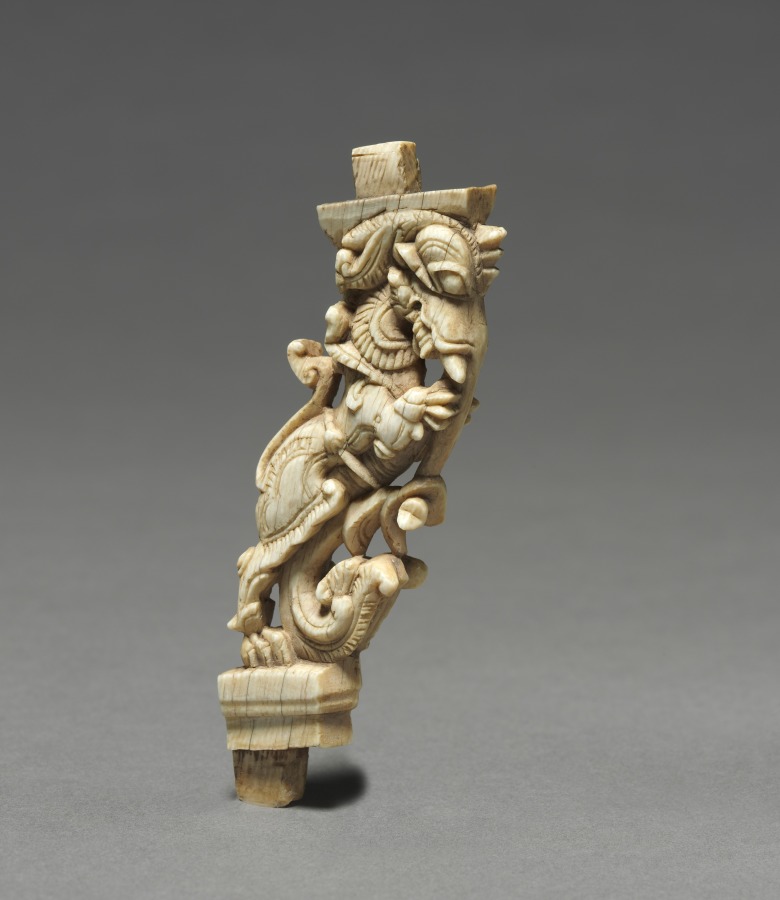
Carved Brackets: The Architecture of Moral Weight and Fluid Stillness
I. Geometric Integrity: The Bracket as Structural Device
The visual source material for Addison Fashion’s 2026 executive silhouette is not a garment but a tension—a carved bracket that holds two irreconcilable geometries in suspension. On one axis, Jacques-Louis David’s The Death of Socrates presents a closed system: the vertical of the philosopher’s raised hand, the horizontal of the bed, the triangulation of disciples’ gaze. It is a load-bearing composition, every limb a strut, every shadow a mortise. On the other axis, the anonymous Wave-Patterned Meiping offers an open system: the continuous curve of cobalt and ivory, a surface without narrative, a vessel that contains nothing but rhythm. The 2026 silhouette must function as the bracket between these two—a structural element that transfers the weight of Western moral absolutism into the fluid poetics of Eastern atmospheric restraint.
Geometrically, this translates into a silhouette that is neither rigid nor soft. The shoulder line is carved, not padded: a sharp, architectural descent from acromion to deltoid, echoing the sculptural stability of Socrates’ torso. Yet the waist and hip dissolve into a continuous, wave-like drape—no hard seam, no interruption. The result is a garment that reads as two pieces from the front and one from the side, a deliberate ambiguity that mirrors the meiping’s refusal to distinguish between form and surface.
II. Structural Poetics: The Weight of the Instant and the Flow of Duration
David’s painting is an argument about time. It cuts the narrative of a life into a single, unbearable cross-section: the moment before the cup is taken. That cut is a vertical plane—a guillotine of moral clarity. The meiping, by contrast, is an argument about duration. Its waves do not break; they circulate. The brushwork is not a record of a single wave but of the potential of water, a continuous present tense.
For the 2026 executive, this duality must be worn, not resolved. The jacket’s front panel is cut on a strict bias, its edge a clean diagonal that recalls the light falling from the left in David’s composition—a line of judgment. But the back panel is gathered into a series of shallow, overlapping pleats, each one echoing the meiping’s cobalt ripples. When the wearer stands still, the silhouette is monumental, almost funerary. When she moves, the pleats release a slow, liquid undulation. The garment thus performs the same operation as the artwork: it holds the instant of decision and the flow of contemplation in a single frame.
III. Urban Materiality: Slate, Onyx, and the Patina of Authority
The material palette must be cold, dense, and slightly reflective—surfaces that absorb the city’s gray light and return it as a muted sheen. We specify a bonded wool-silk in Onyx, its face matte but its underside treated with a thin, silver-toned resin that catches the light only at the fold. This is the visual equivalent of the meiping’s glaze: not a color, but a depth. The Onyx is not black; it is a black that has been carved, its surface interrupted by micro-etchings that mimic the crackle of ancient porcelain.
For the bracket itself—the structural seam that joins the carved shoulder to the fluid drape—we introduce a Slate-gray technical ribbon, woven from recycled carbon and silk. It runs from the nape of the neck, down the spine, and disappears into the back pleats. This ribbon is the only visible hardware. It does not fasten; it tensions. It is the iron chain in David’s painting, but reversed: instead of binding the body to death, it binds the body to its own architectural potential.
IV. The 2026 Executive Silhouette: A Provisional Conclusion
The definitive urban silhouette for 2026 is not a shape but a negotiation. It must carry the moral weight of the Western bracket—the shoulder, the spine, the decisive line—without sacrificing the Eastern vessel’s capacity for endless, quiet circulation. The executive who wears this garment does not choose between the scream and the whisper. She wears both. She is the carved bracket: a small, precise, load-bearing element that allows two great architectures—one of tragedy, one of breath—to stand together without collapsing into each other.
In the city, under fluorescent light and rain, the Onyx surface will not shine. It will absorb. And in that absorption, the silhouette will do what all great art does: it will make the invisible weight of thought visible, for a moment, on the body.