Urban Form: Vessel with Abstract Heads
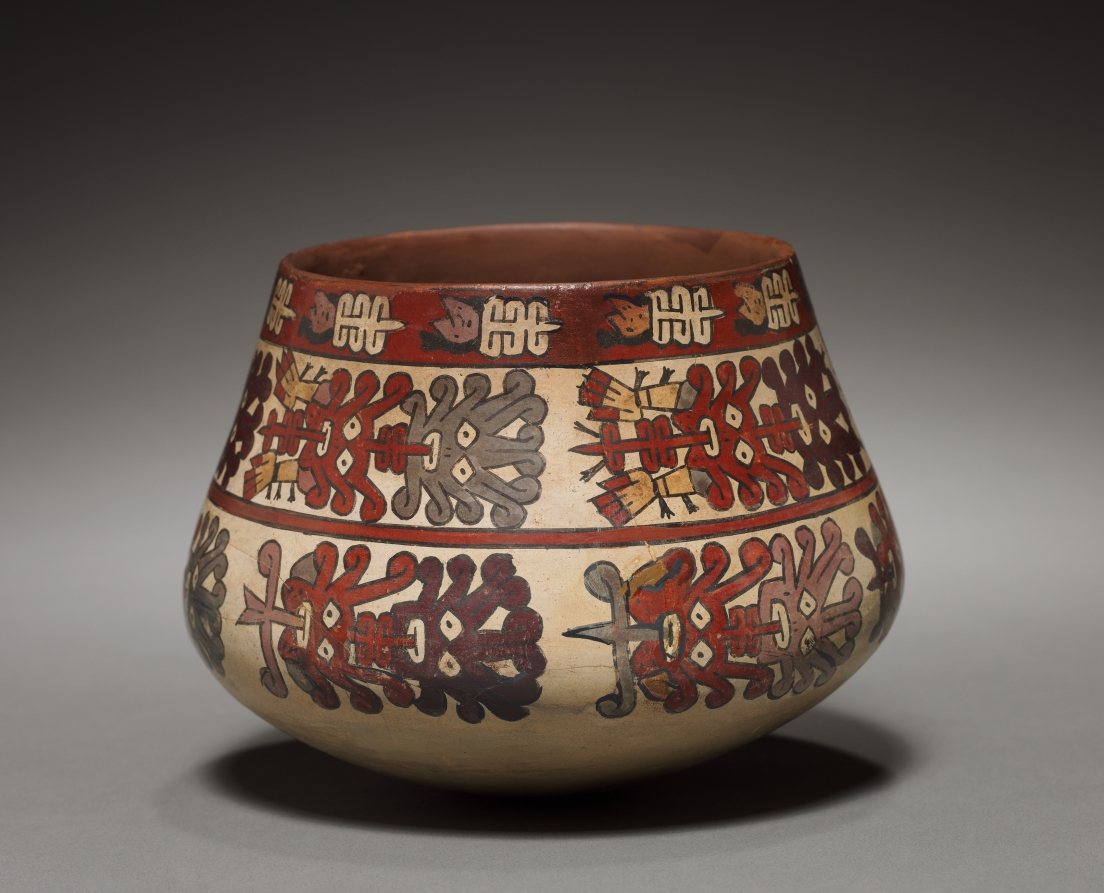
Urban Silhouette Research: Vessel with Abstract Heads
I. Formal Deconstruction: The Vessel as Structural Precedent
The Qing Dynasty famille rose vase—Landscapes, Figures, and Flowers—operates as a closed volumetric system whose surface curvature generates a continuous narrative field. Its formal logic is one of containment and circulation: a vertical axis establishing rotational symmetry, interrupted by the lateral drift of painted mountains, scholars, and floral motifs. The vessel does not present a single frontal image; it demands peripatetic viewing. The silhouette is therefore not a static outline but a temporal sequence of profiles, each angle revealing a new compositional equilibrium.
The Flowering Crab Apple introduces a countervailing formal principle: asymmetrical concentration. A single branch, cropped and isolated, occupies the lower-left quadrant of an otherwise void field. The branch’s curvature is calligraphic—tension held in the elbow of the wood, release in the blossom. Negative space is not absence but active atmospheric volume, a breathing chamber for the subject. The painting’s formal economy is severe: no horizon, no secondary subject, no decorative filler. Every mark is load-bearing.
When these two formal systems are superimposed—the vessel’s rotational continuity and the painting’s axial asymmetry—a hybrid silhouette emerges. It is cylindrical yet interrupted, contained yet porous. The abstract heads that populate the vessel’s surface are not portraits but typological markers: reduced facial geometries that function as rhythmic punctuation along the vertical axis. They are the formal equivalent of the crab apple’s blossoms—discrete, repeated, and deliberately incomplete.
II. Color Logic: Ivory as Chromatic Substrate
The palette of both source objects converges on a narrow band of low-chroma, high-value neutrals. The vase’s famille rose glazes—rose, turquoise, pale green—are suspended within a porcelain ground that reads as warm ivory under diffuse light. The crab apple painting employs ink washes ranging from pale grey to near-black, but its paper support is an aged, fibrous ivory. In both cases, ivory is not a background but a chromatic constant—the visual silence against which all other tones acquire meaning.
For the 2026 executive wardrobe, this suggests a departure from the cool grey monoliths of the previous decade. Ivory functions as a tonal anchor that permits adjacent colors—slate, onyx, muted silver—to register with greater precision. The vessel’s glazes offer a secondary lesson: accent colors should be desaturated and mineral, never synthetic. A rose glaze is not pink; it is a warm grey with a red undertone. A turquoise glaze is not blue; it is a cool grey with a green undertone. The executive palette therefore operates in subdued chromatic intervals, each hue legible only in relation to the ivory field.
III. Silhouette Translation: The Abstract Head as Structural Device
The “abstract heads” on the vessel are formal reductions—ovals, arcs, and linear indications of feature. They do not represent individuals; they represent the idea of the figure. In garment terms, this translates to the abstracted torso: a silhouette that acknowledges the body without anatomizing it. The 2026 Addison executive wardrobe will therefore favor columnar volumes with strategic interruptions—a shoulder seam that floats, a waist that does not cinch but merely suggests, a hem that terminates before resolution.
The vessel’s rotational symmetry informs 360-degree construction. Garments must read from every angle: back, side, and three-quarter views are not afterthoughts but co-equal compositional zones. This mandates seamless transitions—no visible darts, no abrupt color breaks, no hardware that disrupts the continuous surface. The crab apple’s asymmetry, by contrast, informs deliberate imbalance: a single lapel extended, a cuff left unbuttoned, a pocket placed off-axis. The tension between these two principles—continuity and interruption—defines the collection’s formal signature.
IV. Material and Construction Implications
The vessel’s porcelain surface is hard, smooth, and reflective; the painting’s paper is soft, fibrous, and matte. The executive wardrobe must negotiate both material registers. Ivory wool crepe provides the matte, fibrous ground. Slate silk twill introduces the reflective, liquid quality of glaze. Onyx leather—used sparingly, as the vessel uses its darkest glazes—functions as structural punctuation: a belt, a binding, a single panel.
Construction must be invisible. The vessel’s narrative is painted, not carved; the garment’s structure must be felt, not seen. This means bound seams, hand-finished edges, and internal corsetry that shapes without external evidence. The abstract head motif may appear as tonal embroidery—ivory thread on ivory ground—visible only at close range, a private formal language for the wearer.
V. The 2026 Executive Wardrobe: A Provisional Specification
The resulting silhouette is cylindrical, uninterrupted, and vertically oriented. Lengths are mid-calf to ankle; widths are generous but not oversized—the garment follows the body’s volume without compressing it. Shoulders are softly structured, neither padded nor collapsed. Necklines are high and closed, echoing the vessel’s narrow mouth. Sleeves are long and tapered, terminating in a clean, unadorned cuff.
Color is restricted to ivory, slate, onyx, and silver, with sand as an optional warm neutral. No prints. No logos. No hardware. The only permissible ornament is tonal variation—a slightly darker ivory panel, a slate binding, a silver thread. The wardrobe is not decorated; it is composed. Its beauty emerges from proportion, material, and the disciplined repetition of a single formal idea: the abstracted vessel, the breathing column, the ivory field.
This is not nostalgia for the Qing dynasty. It is formal extraction—the translation of a historical object’s structural logic into a contemporary system of dress. The executive who wears it does not reference the past; she operationalizes it. The silhouette is the argument. The color is the evidence. The ivory is the silence that makes both legible.