Urban Form: St. Francis
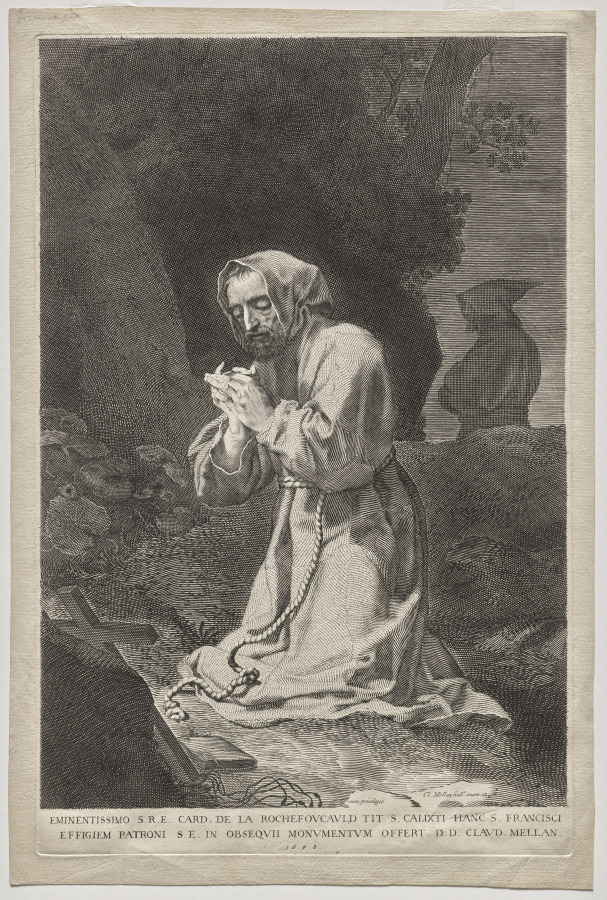
Urban Silhouette Research: St. Francis — The Aesthetics of the Filament
I. Preliminary Thesis: Line as Ontological Infrastructure
The Addison Fashion NYC design intelligence for the 2026 executive wardrobe begins not with fabric, but with a philosophical proposition: that the most durable architecture is not mass, but line. Our subject of study — designated internally as St. Francis — draws its DNA from two artifacts of Chinese antiquity: the Mold Fragment with Musicians and the Square Mirror with Two Phoenixes and Floral Sprays. One is a broken ceramic shard; the other, a polished bronze mirror. One is incomplete by accident; the other, complete by design. Yet both operate under a shared aesthetic regime that we at Addison have codified as the filament principle: the subordination of volume to trajectory, of surface to gesture, of presence to resonance.
For the 2026 executive — a figure navigating hybridized boardrooms, transcontinental transit, and the perpetual scrutiny of the digital panopticon — this principle is not ornamental. It is operational. The St. Francis research proposes that the modern power silhouette must be constructed not through aggressive tailoring or logo-signaling, but through the disciplined deployment of line as a carrier of authority. The executive who understands the filament does not need to occupy space; she needs only to articulate it.
II. The Mold Fragment: Incompleteness as Structural Strategy
The Mold Fragment with Musicians presents a paradox that Addison finds commercially instructive. Its aesthetic value is inversely proportional to its material integrity. The musicians — rendered in what Chinese art historians term yousi miao, or "swimming-silk line" — are not sculpted in the Western sense. There is no chiaroscuro, no volumetric musculature, no attempt to simulate the weight of a body. Instead, the line traces the event of performance: the tilt of a torso, the implied pressure of a finger on a string, the breath before a note. The fracture that severs the vessel does not destroy the music; it releases it into the viewer's imagination.
Translated into garment architecture, this yields a radical proposition for the 2026 executive wardrobe: the strategic omission. Addison's St. Francis tailoring does not resolve every seam into a closed system. Jackets feature a single, uninterrupted shoulder line that terminates before the cuff, leaving the wrist exposed — a deliberate incompleteness that forces the eye to complete the gesture. Trousers are cut with a floating waistband, creating a negative space at the hip that reads as both restraint and confidence. The executive who wears this does not present a finished argument; she presents a proposition that invites — indeed, compels — the room to participate in its resolution.
This is not minimalism as austerity. It is minimalism as invitation. The fragment teaches us that authority is most potent when it withholds just enough to remain in the viewer's mind after the meeting has ended.
III. The Square Mirror: Recursive Order and the Discipline of Repetition
If the fragment operates through subtraction, the Square Mirror with Two Phoenixes and Floral Sprays operates through recursive addition. The phoenixes are not depicted; they are woven — their feathers constructed from interlocking lines that spiral inward and outward, creating a closed loop of avian and botanical forms. The mirror's surface is both reflective and generative: it reflects the viewer, but it also projects a cosmology. The phoenix and flower do not merely decorate; they enact a principle of eternal return.
For Addison's 2026 silhouette, this translates into controlled recursion. The St. Francis coat, for instance, employs a single motif — a diagonal line derived from the phoenix's wing — repeated at three scales: macro (the lapel roll), meso (the seam placement), and micro (the stitch pattern). The repetition is not decorative; it is structural. It creates a visual rhythm that the eye can parse at any distance, from the boardroom table to the elevator bank. This is the executive equivalent of the mirror's cosmology: a self-contained system of meaning that signals coherence, intentionality, and — crucially — self-possession.
The color logic follows suit. Our designated palette for St. Francis is Slate: a mineral gray with a cool, blue undertone that reads as neither aggressive nor passive. Slate is the color of wet stone, of overcast skies over the Hudson, of the space between black and white. It is the chromatic equivalent of the filament — present, but not insistent. In a room of navy and charcoal, Slate registers as a quiet disruption: the executive who wears it is not asking for attention, but she is not avoiding it either.
IV. Synthesis: The 2026 Executive as Filament Bearer
The St. Francis research yields three operational directives for the Addison 2026 collection:
First, prioritize trajectory over mass. Every seam, every dart, every fold must justify its existence by directing the eye along a purposeful path. Ornament for its own sake is eliminated. The garment is a vector, not a volume.
Second, embrace strategic incompleteness. The executive wardrobe must include garments that are deliberately unresolved — a jacket without a visible closure, a dress with an asymmetrical hem that implies motion rather than stasis. These pieces function as conversational apertures, inviting engagement without demanding it.
Third, deploy recursion as a signature of control. A single motif, repeated at multiple scales, creates a visual language that is both legible and sophisticated. It signals that the wearer operates within a system of her own design — which is, ultimately, the definition of executive power.
The St. Francis silhouette is not for everyone. It requires a wearer who understands that authority is not asserted but articulated — line by line, breath by breath, meeting by meeting. For the 2026 executive who has internalized this principle, Addison Fashion NYC offers not a uniform, but an instrument. The music, as the fragment teaches us, is already there. The garment simply gives it a place to resonate.