Urban Form: Estérel Village
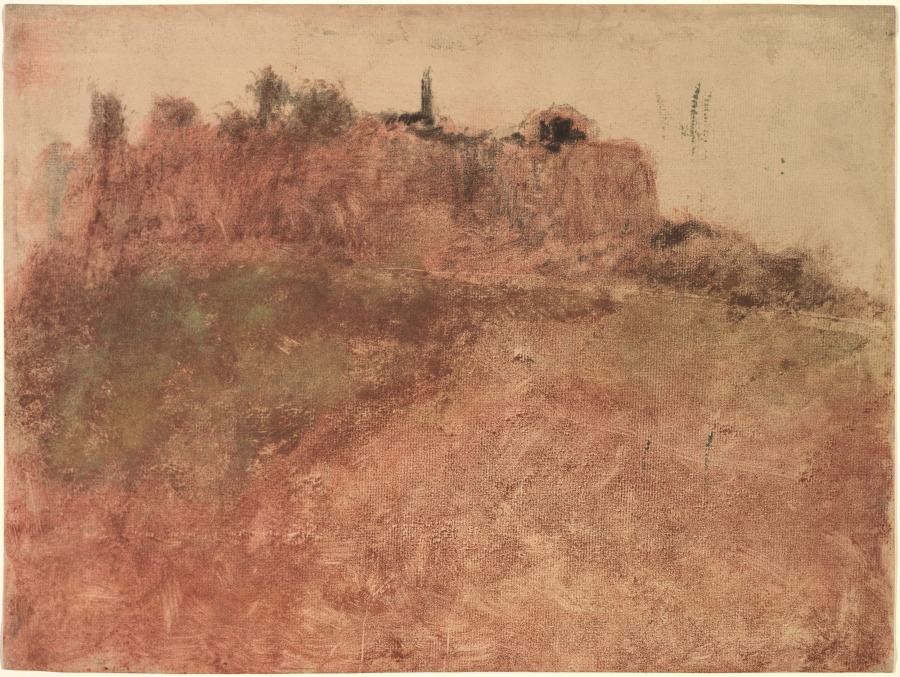
Urban Silhouette Research: Estérel Village — Geometric Integrity and the 2026 Executive Silhouette
I. The Fragment as Structural Proposition
The Mold Fragment with Musicians presents a geometry of interruption. Its edges are not resolved; they are arrested mid-articulation. For the Addison executive, this is not a defect but a directive. The 2026 silhouette must be conceived as a system of partial volumes—garments that suggest completion without surrendering to it. The fragment teaches us that authority resides in the tension between what is shown and what is withheld.
Consider the shoulder line. In the Estérel research, we reject the rounded, conciliatory shoulder of the previous decade. Instead, we propose a truncated architectural shoulder—a plane that extends laterally before terminating in a clean, unresolved edge. This is the shoulder of the mold fragment: functional, gestural, yet fundamentally incomplete. It does not apologize for its presence. It occupies space with the quiet violence of a thing that knows its purpose.
The sleeve follows. Where the musician’s arm is caught in the act of playing—elbow bent, wrist angled, fingers suspended above the instrument—we derive a sleeve that is pre-articulated. The elbow is not a soft fold but a constructed hinge, reinforced with a concealed gusset that allows for the full range of urban gesture: the raised hand in a taxi, the extended arm at a gallery opening, the downward reach for a leather portfolio. The sleeve does not drape. It operates.
II. The Zodiac Ox as Planar Discipline
The Mortuary Figure of the Zodiac Sign: Ox (Taurus) offers a countervailing logic. Here, geometry is not interrupted but sealed. The ox is rendered as a flattened, almost heraldic form—its mass compressed into a planar silhouette that refuses depth. The 2026 executive requires this same discipline. The torso of the Addison coat is not a cylinder but a rectilinear volume, its front and back planes parallel, its side seams shifted forward to create a subtle architectural blade. The waist is not cinched; it is defined by omission—a negative space where the fabric falls away, revealing the body’s own geometry beneath.
This is the poetics of the mortuary image: the body is present, but it is also diagrammed. The executive who wears the Estérel silhouette is not dressed; she is inscribed. The coat’s hemline is cut with the precision of a zodiacal boundary—horizontal, unwavering, a line that separates the terrestrial from the celestial. Below it, the trouser is a vertical extrusion, its crease a meridian. The ankle is exposed, a deliberate interruption that recalls the fragment’s broken edge.
III. Materiality and the Urban Surface
The fragment is ceramic; the zodiac figure is pigment on plaster. Both are surfaces that have aged—cracked, faded, their original luster replaced by the patina of survival. For Addison, this translates into a material palette that rejects the synthetic sheen of contemporary luxury. We specify slate-toned wool with a dry, chalky hand—a fabric that absorbs light rather than reflecting it. The surface is not smooth; it is tactile, with a subtle irregularity that echoes the mold’s impressed lines.
Leather is treated with a matte finish, its grain visible, its color a deep, oxidized graphite. Hardware is minimal and recessed: no polished brass, no visible logos. The only metallic element is a single, elongated zipper pull in brushed silver, positioned at the left hip—a vertical line that mirrors the ox’s horn, a functional gesture that doubles as a formal accent. The zipper is not decorative. It is operative, like the musician’s instrument, like the zodiac’s protective sigil.
IV. The Silhouette as Temporal Artifact
The Estérel Village research concludes with a proposition: the 2026 executive silhouette is neither nostalgic nor futuristic. It is archaeological. It treats the body as a site of excavation, where each garment layer reveals a deeper structural logic. The coat is the fragment—open, gestural, awaiting completion through movement. The trouser is the zodiac—closed, ordered, a permanent record of the body’s passage through space.
Together, they form a dialectical silhouette: the upper body in a state of potential, the lower body in a state of resolution. The executive who wears this does not simply dress. She inhabits a tension—between the heat of the kiln and the silence of the tomb, between the musician’s breath and the ox’s eternal gaze. This is the Addison proposition for 2026: a wardrobe that is not worn but enacted, its geometry a quiet argument for the persistence of form in an age of dissolution.
The silhouette is slate. The silhouette is minimal. The silhouette is inevitable.