Urban Form: Gamin
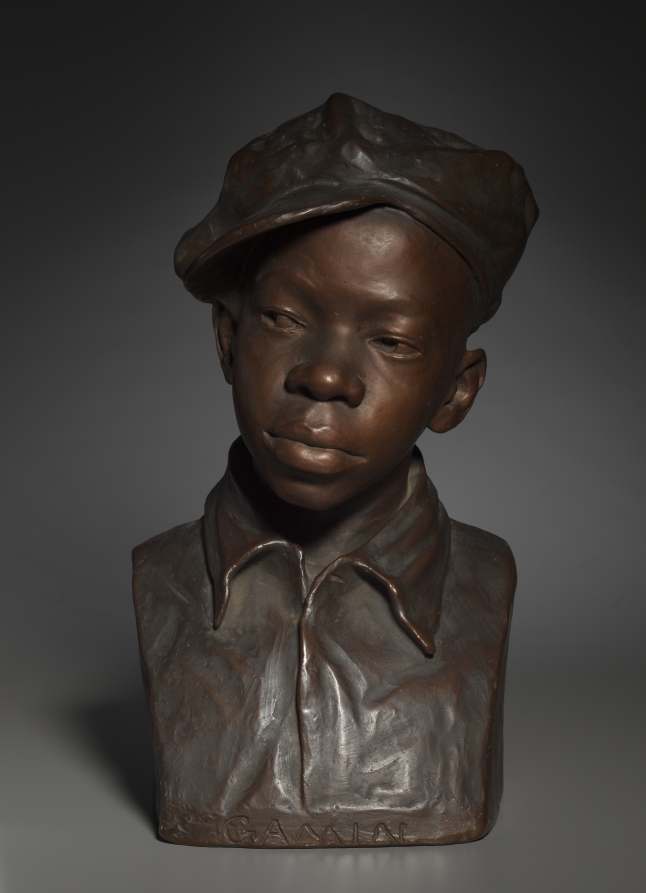
Urban Silhouette Research: Gamin — The Dialectics of Void and Vessel
I. Geometric Integrity: The Amphora as Architectural Prototype
The Gamin artwork presents a dual geometric proposition that destabilizes conventional executive tailoring. The Socratic figure—rendered in the Death of Socrates tradition—occupies a vertical axis of ascending triangulation: the raised hand, the extended arm, the seated torso forming a pyramidal hierarchy that culminates in the gesture of transcendence. This is aspirational geometry—a silhouette that reaches upward, that privileges the apex over the base, that treats the human form as a vector toward the infinite.
Counterposed against this, the Eastern Jar embodies a centrifugal geometry of containment. Its curvature is not aspirational but gravitational—a closed system wherein the widest point (the belly) anchors the form, and the neck tapers not toward heaven but toward utility. The jar does not reach; it receives. Its geometric integrity resides in the tension between surface and void—the ceramic wall that defines emptiness without violating it.
For the 2026 executive silhouette, this dialectic is not decorative but structural. The Addison wardrobe must negotiate between these two geometric imperatives: the upward thrust of ambition and the inward pull of contemplation. The result is a silhouette that is neither purely vertical nor purely volumetric, but architecturally bifocal—capable of projecting authority while retaining interiority.
II. Structural Poetics: The Tailored Void
The jar's emptiness is not absence but potential energy. In Laozi's formulation, the vessel's utility derives from what it does not contain. Translated into tailoring, this suggests a radical proposition: the executive garment must be designed around the negative space it creates—the gap between fabric and body, the interval between shoulder and hip, the silence between gestures.
Gamin's visual language proposes a sculptural minimalism wherein the garment's authority is derived not from embellishment but from the precision of its boundaries. The Socratic himation—draped, unstructured, yet profoundly deliberate—offers a counterpoint to the jar's fired rigidity. One is fluid geometry, the other fixed. The 2026 silhouette must synthesize both: a tailored fluidity that maintains architectural integrity while permitting the body its necessary void.
This manifests in three structural interventions:
1. The Elevated Shoulder: Drawing from the Socratic ascent, the shoulder line is extended and slightly raised—not padded into aggression, but lifted into attentiveness. The geometry is that of a receptive apex, not a combative one.
2. The Suspended Waist: The jar's belly suggests a waist that is not cinched but suspended—a floating point of containment that neither constricts nor abandons the torso. The result is a silhouette that breathes, that acknowledges the body's presence without submitting to its contours.
3. The Terminal Hem: Where the jar meets the earth, where Socrates meets death, the hem must resolve the garment's argument. A clean, weighted line—neither flared nor tapered—that returns the form to gravity.
III. Urban Materiality: Onyx as Philosophical Surface
The selection of Onyx as the chromatic anchor is not incidental. Onyx is the color of polished void—a black that reflects rather than absorbs, that suggests depth without revealing it. In the urban context, Onyx is the color of night architecture, of glass facades at dusk, of the liminal hour when the city's geometry becomes most legible.
Materially, the Gamin proposition demands fabrics that embody the jar's paradox: density without weight, structure without rigidity. Consider:
Double-faced wool crepe—its matte surface absorbs light like unglazed ceramic, yet its drape permits the fluidity of the Socratic himation. The fabric holds shape without announcing its construction.
Technical silk faille—a weave that captures the jar's subtle sheen, its refusal of ornamentation. The fabric's slight stiffness allows for architectural volume while its surface remains restrained.
Bonded leather panels—deployed sparingly at stress points (shoulder, waist, hem) to evoke the jar's fired edge, the moment where soft clay becomes permanent form.
The urban environment for which this silhouette is intended is not the glass tower alone but the interstitial city—the plaza at dawn, the gallery corridor, the restaurant at midnight. These are spaces of transition, of metaxy, where the executive must embody both the Socratic clarity of purpose and the jar's receptive stillness.
IV. The 2026 Silhouette: A Synthesis
The definitive Addison silhouette for 2026, derived from Gamin's dialectic, is characterized by vertical restraint and volumetric generosity. It is a silhouette that does not shout its authority but demonstrates it through the precision of its voids—the space between collar and neck, between cuff and wrist, between hem and floor.
This is not minimalism as reduction but minimalism as concentration. Every line must justify its existence. Every absence must be intentional. The garment becomes a vessel—not for the body alone, but for the wearer's presence, their silence, their capacity to contain without being contained.
In the end, the Gamin research proposes that the executive silhouette of 2026 must answer the same question posed by both Socrates and the jar: How does one exist fully within the awareness of dissolution? The answer, sartorially, is to construct garments that are neither armor nor disguise, but architecture for the living—forms that acknowledge mortality while asserting form.
The void is not empty. The vessel is not passive. The silhouette is not silent. It speaks in the language of geometry, material, and the disciplined poetry of restraint.