Urban Form: Carving from an Overmantel
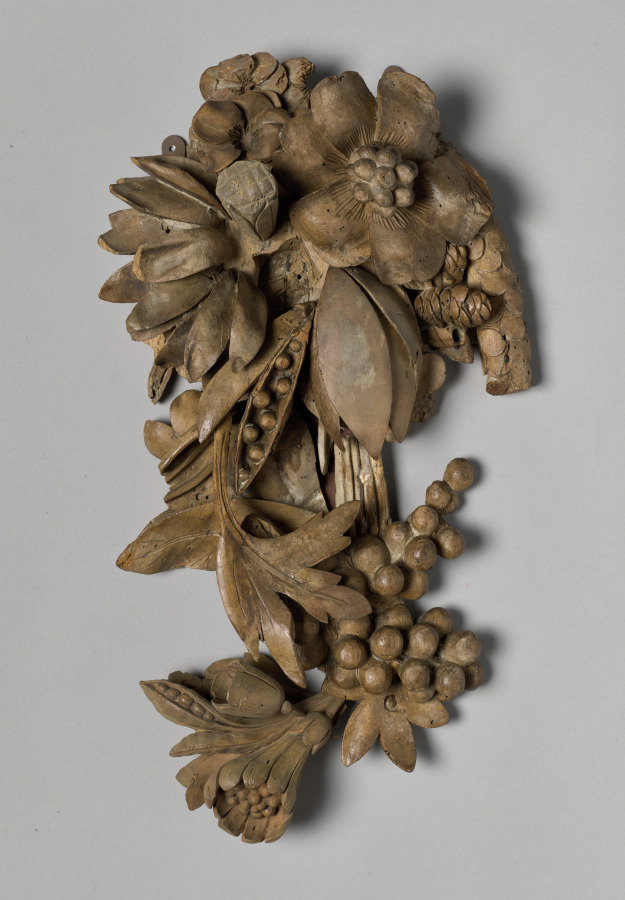
Urban Silhouette Research: Carving from an Overmantel
I. The Architectural Precedent: Negative Space as Structural Load
The overmantel is not ornament. It is a load-bearing proposition. In the Addison design language, we treat the carved overmantel as the primary morphological source for the 2026 executive wardrobe—not for its surface iconography, but for its spatial intelligence. The subject under analysis is a wooden plaque bearing the characters “优昙钵华” (Udumbara), paired with a Han-dynasty bronze mirror relief depicting the White Tiger, chariots, and the Queen Mother of the West. Two artifacts. Two materialities. One shared grammar: the deliberate calibration of void against mass.
For the Addison woman navigating the vertical hierarchies of Manhattan’s executive strata, this grammar translates directly into silhouette engineering. The plaque’s aesthetic power resides in what it withholds. Its carved strokes—clumsy yet expansive, almost proto-calligraphic—do not fill the wooden field. They interrogate it. The negative space surrounding each character is not absence; it is a disciplined structural reserve. In tailoring terms, this is the difference between a jacket that fits and a jacket that frames. The 2026 Addison blazer will not contour the body. It will bracket it.
II. The Bronze Mirror: Density as Kinetic Potential
Now pivot to the mirror. The Han bronze is the dialectical counterweight: a full-field relief, densely populated with chariots in motion, tiger spines articulated as tensile curves, the Queen Mother enthroned in a choreography of ritual stillness. The mirror’s surface is saturated. Yet it does not suffocate. Why? Because every figure is drawn with a linear velocity—sleeves trailing, manes unfurling, the tiger’s dorsal ridge functioning as a vector of directional force. The density is not static accumulation. It is compressed energy awaiting release.
This is the precise logic we are applying to the Addison 2026 outerwear program. The overmantel plaque gives us the void strategy: dropped shoulders, elongated lapels, an absence of darts at the waist, a hemline that terminates with surgical abruptness—leaving the leg unarticulated, a column of negative space. The bronze mirror gives us the density strategy: interior construction that is invisible but relentless. Think of a coat whose exterior reads as a single, unbroken plane of Onyx wool, while the interior—lining, seam tape, pocket bags—is engineered with the same “满工” (full-labor) intensity as the mirror’s reverse. The wearer experiences the density. The observer experiences the void.
III. Color as Material Consequence: Onyx and the Problem of Depth
We have selected Onyx—not black, not charcoal, but the specific tonal register of aged bronze in low light. Onyx is the color of the mirror’s patina before conservation. It is the color of the plaque’s ink after a century of incense smoke. In the Addison palette, Onyx is not a neutral. It is a chromatic event.
The technical challenge: how do you render Onyx without flattening it into a void? The answer lies in the artifacts’ shared treatment of surface incident. The plaque’s wood grain interrupts the ink. The mirror’s relief interrupts the bronze. Neither surface is uniform. Therefore, the 2026 Addison Onyx will never be a single-fiber construction. We are specifying a three-yarn system: a matte worsted base, a low-sheen silk-wool weft, and a micro-ribbed trim that catches light at 15-degree intervals. The result is a color that behaves like carved wood under raking light—legible only in motion.
IV. Form as Philosophical Position: “象外之象” in Tailoring
The Chinese aesthetic principle “象外之象”—the image beyond the image—is not mysticism. It is a technical specification. For the executive wardrobe, it means the garment must signify beyond its own boundaries. A jacket that ends at the hip is a jacket. A jacket whose hemline implies a continuation into the wearer’s stride, whose shoulder line projects a phantom architecture above the collarbone, whose sleeve opening suggests a hand that has not yet emerged—that is an urban silhouette.
The overmantel plaque and the bronze mirror, separated by centuries and materials, converge on a single directive: do not illustrate the body. Index it. The 2026 Addison collection will not dress the executive woman. It will provide the negative space in which her authority becomes visible. The Onyx will absorb the city’s noise. The silhouette will carve the air around her. She will not wear the garment. She will inhabit its void.
This is not fashion. This is load-bearing aesthetics for the vertical city.