Urban Form: Transenna Post
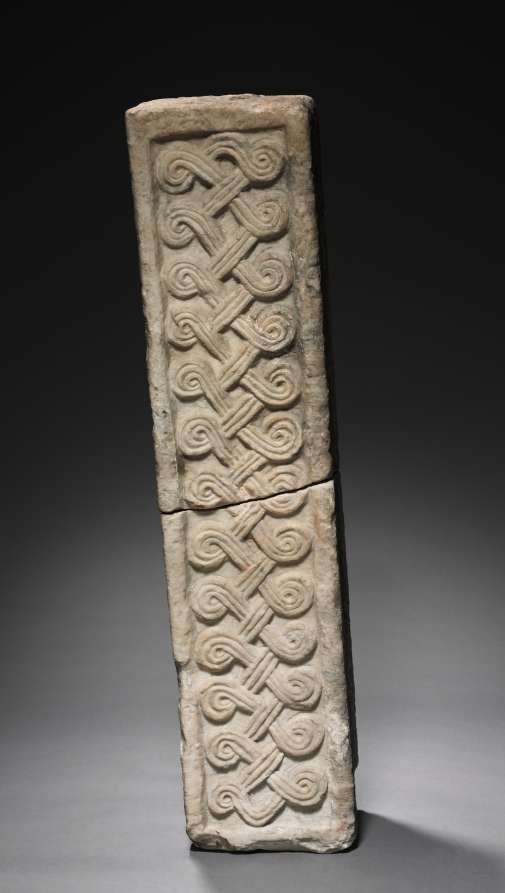
The Transenna Post: Structural Poetics of the Incomplete and the Enclosed
I. Geometric Integrity: The Dialectic of Fragment and Frame
The Addison Fashion 2026 executive silhouette finds its most rigorous theoretical foundation in the unlikely dialogue between two artifacts: the Mold Fragment with Musicians and the Square Mirror with Two Phoenixes and Floral Sprays. These objects—one ceramic, incomplete, tactile; the other bronze, intact, reflective—operate as opposing poles of a single structural argument. The mold fragment presents an architecture of absence: its eroded contours and broken edges constitute a negative space that demands cognitive completion. The square mirror, by contrast, enforces absolute geometric authority—a rigid quadrilateral whose interior surface performs the function of reflection while its reverse carries a narrative of organic movement.
For the 2026 executive, this dialectic translates into a silhouette that is neither wholly resolved nor wholly open. The Transenna Post—our internal designation for this research vector—posits that the contemporary urban garment must function as both container and aperture. The mold fragment teaches us that structural integrity does not require totality; the mirror teaches us that containment does not preclude dynamism. The resulting silhouette is a study in controlled porosity: tailored planes interrupted by calculated voids, rigid outlines softened by the implied movement of the body beneath.
II. The Mold Fragment: Negative Space as Architectural Device
The Mold Fragment with Musicians is, at its core, a study in the poetics of erosion. Its surface—once a precise matrix for casting—now presents a topography of loss. The musicians themselves are barely legible: a raised arm here, the curve of a drum there, the suggestion of a flute's diagonal. Yet this illegibility is not a failure of design; it is the design. The fragment operates as a transenna—a screen or lattice that filters perception rather than presenting it whole.
In translating this to the 2026 executive wardrobe, we propose garments whose structural logic is derived from the fragment's incomplete geometry. Consider a wool-silk overcoat with a shoulder line that dissolves into a raw-edged armhole, or a column dress whose side seam is interrupted by a series of graduated slashes—each one a negative space that reveals the body in motion. The key principle is strategic omission: the removal of material to create architectural tension. The fragment does not mourn its missing pieces; it activates them. Similarly, the Addison silhouette for 2026 will not conceal the body but will frame it through calculated absences.
The materiality of the mold fragment—its coarse, tactile ceramic surface—further suggests a palette of urban materiality that rejects the slick and the seamless. We advocate for bonded wool with a dry, almost chalky hand; for silk organza that has been washed to remove its sheen; for leather that has been tumbled to a matte, mineral finish. These are surfaces that record time, that acknowledge the friction of the city. The executive who wears them does not present a polished facade but a stratified surface—one that invites touch and rewards scrutiny.
III. The Square Mirror: Containment and the Dynamic Interior
The Square Mirror with Two Phoenixes and Floral Sprays offers the counterargument. Here is geometry in its most authoritarian form: the square as absolute boundary, the mirror as instrument of self-scrutiny. Yet the reverse surface—with its phoenixes in flight and floral sprays in asymmetric distribution—introduces a narrative turbulence within the frame. The square does not suppress movement; it contains it. The phoenixes do not escape the bronze; they animate it.
For the 2026 executive silhouette, this translates into garments that are structurally absolute but internally kinetic. A double-faced cashmere coat with a razor-sharp shoulder and a precisely squared neckline, yet whose back panel is constructed from a single bias-cut piece that moves independently of the front. A pencil skirt whose outer shell is rigid and architectural, but whose interior lining is a fluid silk that slides against the body with each step. The square mirror teaches us that containment is not constraint—it is the precondition for controlled release.
The mirror's reflective function also introduces a crucial element of self-awareness into the silhouette. The executive who wears the Transenna Post does not dress for the gaze of others alone; she dresses for her own reflection. The garment must function as a mirror—not in the sense of literal reflection, but in the sense of cognitive feedback. The wearer should feel the architecture of the garment as a second skeleton, a structure that clarifies her own physical presence. This is the essence of minimalist luxury: the garment does not decorate the body; it articulates it.
IV. The Transenna Post: Synthesis and the 2026 Silhouette
The Transenna Post is not a single garment but a system of structural principles. From the mold fragment, we take the logic of the incomplete—the strategic void, the raw edge, the surface that records time. From the square mirror, we take the logic of containment—the absolute boundary, the dynamic interior, the garment as instrument of self-knowledge. Together, they define a silhouette that is simultaneously porous and precise, tactile and cerebral, urban and eternal.
The 2026 executive will wear clothing that does not resolve. She will wear a jacket whose lapel is cut away to reveal the shirt beneath, a trouser whose hem is left raw and unfinished, a coat whose interior is lined in a contrasting color that flashes only when she moves. She will wear slate—the color of the mold fragment's fired clay, the color of the mirror's oxidized bronze, the color of the urban sky at dusk. She will wear garments that are architectural without being rigid, minimal without being empty. She will wear the Transenna Post: a silhouette that is, like the artifacts that inspired it, a container for time, a frame for movement, and a mirror for the self.
This is the definitive urban silhouette for 2026. It is not complete. It is not perfect. It is, instead, alive.