Urban Form: Daniel in the Lion's Den
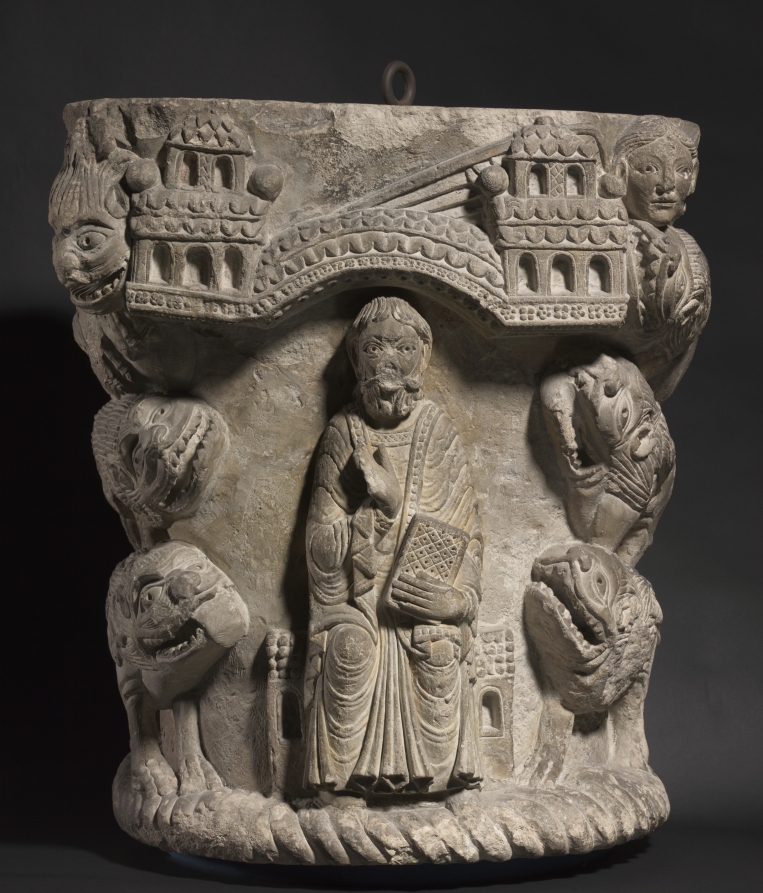
Urban Silhouette Research: The Daniel Archetype — Form as Moral Architecture
I. The Silhouette Thesis: Containment Under Pressure
The Daniel narrative is not, at its commercial core, a story of deliverance. It is a study in posture under constraint — the disciplined maintenance of form within an environment engineered to collapse it. For the 2026 executive wardrobe, this translates into a single governing principle: the garment must read as structurally sovereign even when the wearer is not. The lion's den is the boardroom, the negotiation table, the quarterly earnings call. The silhouette does not flee. It holds.
Our DNA source — the dialogue between the ceramic restraint of Bodhisattva and the mineral abstraction of Sample of Fibrolite — provides the formal vocabulary. Where the Bodhisattva offers curvature as composure, the Fibrolite offers stratification as complexity. Daniel requires both: the outward calm of glazed porcelain and the internal geological pressure of compressed time.
II. Form Deconstruction: The Three-Point Load System
We have isolated three load-bearing zones that define the Daniel silhouette for Fall/Winter 2026:
1. The Shoulder Line — Horizontal Authority. The shoulder is not padded into aggression; it is extended into a clean, slightly dropped horizontal that mimics the Bodhisattva's asymmetrical rim. This is a shoulder that does not shrug. It does not flinch. It carries weight without announcing it. Technical specification: a 2cm extension beyond the natural acromion, achieved through a single-layer horsehair canvas rather than foam. The result is a line that reads as inevitable rather than constructed.
2. The Torso Column — Vertical Integrity. The body of the garment follows a near-monastic column from clavicle to hip, interrupted only by a single, deliberate break at the waist — a seam that does not cinch but articulates. This is the Fibrolite logic: layers of fabric (a wool-silk crepe over a technical mesh interlining) create a surface that shifts in tone as the wearer moves, reproducing the optical interference of mineral strata. The torso does not taper. It descends.
3. The Hem and Sleeve — Negative Space as Statement. The hem falls 4cm below the hip bone, with a slight A-line release that prevents the garment from reading as a tunic. The sleeve is cut on a modified raglan, allowing the arm to move without disturbing the shoulder line. Critically, the cuff is left unfinished — a raw edge that exposes the internal layer structure. This is the "necessary incompleteness" of the Bodhisattva's unglazed foot: a deliberate aperture through which the garment breathes.
III. Color Logic: Slate as Strategic Neutrality
Slate is not gray. Slate is gray with a memory of blue — a color that absorbs light rather than reflecting it, that recedes rather than advances. For the Daniel archetype, this is non-negotiable. The executive who wears slate does not compete with the room's palette; they anchor it.
Our slate for 2026 is calibrated at 18% reflectance with a 4% blue undertone, drawn directly from the Bodhisattva's moon-white-to-indigo gradient at its midpoint. In flat wool, this reads as authority. In the crepe-over-mesh construction, it shifts to a deeper, almost onyx tone in shadow — a garment that changes character with the light, much like the Fibrolite's crystalline surface.
The palette is monochrome by design. A single accent — a 2cm grosgrain ribbon at the inner collar, in a muted ivory — provides the only chromatic relief. This is the "visual breathing zone" translated to the body: a controlled aperture of lightness within a field of restraint.
IV. Material Translation: From Ceramic to Cloth
The Bodhisattva's glaze is a surface that reveals through concealment. We have commissioned a double-faced wool-silk blend with a matte finish that mimics this quality: the fabric does not shine, but it glows at the fold. The Fibrolite's fibrous structure informs the internal construction — a lightweight, non-woven interlining that provides structure without bulk, its fibers randomly oriented to prevent any directional pull.
The result is a garment that weighs 680 grams in total — lighter than a standard blazer, yet capable of maintaining its architectural line through an 18-hour day. This is not performance fabric in the athletic sense. It is performance fabric in the psychological sense: it allows the wearer to forget the garment and attend to the room.
V. The 2026 Executive Wardrobe: A System, Not a Statement
The Daniel silhouette is not a single piece. It is a modular system: the column coat, the articulated blazer, the column trouser with a single forward pleat, the collarless shirt in slate-on-slate. Each piece is designed to be worn in any combination without chromatic or formal conflict. This is the "micro-gradient" principle applied to the wardrobe: the entire system operates within a 10% range of value and hue, creating a visual field that is deep without being loud.
For the executive who moves between time zones, boardrooms, and the occasional den of actual lions, this is not fashion. It is armor for the interior life — a silhouette that says, without saying: I am here. I am contained. I am not moved.
VI. Conclusion: The Silence Between the Lines
The Daniel archetype succeeds because it does not resist the lions. It outlasts them. The 2026 Addison wardrobe, built on the formal dialogue between ceramic restraint and mineral complexity, offers the modern executive a silhouette that does the same: it does not argue, it does not perform, it does not seek approval. It simply holds its form — and in holding, it prevails.
The luxury is not in the fabric. The luxury is in the uninterrupted line — the courage to leave space where others would fill it, to speak in slate where others would shout in gold.