Urban Form: Tightrope Walker
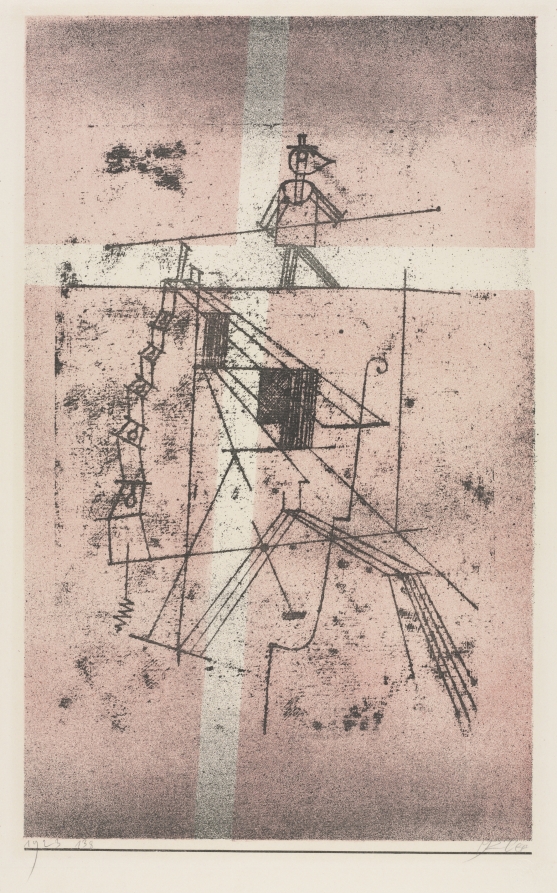
Urban Silhouette Research: The Tightrope Walker
I. The Dialectic of the Interrupted Line
The Addison Fashion 2026 executive silhouette does not emerge from the atelier’s sketchbook but from a far older archive: the Western aesthetic’s foundational tension between the arrested instant and the continuous wave. The internal DNA of this research positions two artifacts in cold opposition—Jacques-Louis David’s The Death of Socrates and the anonymous Waves-Pattern Prunus Vase. The former seizes time at the apex of moral decision; the latter dissolves time into an unbroken, breathing rhythm. Between these poles walks the Addison executive: a figure who must embody both the decisive gesture and the fluid continuum. The 2026 silhouette is, therefore, not a garment but a tightrope—a linear structure stretched between the verticality of rational form and the horizontality of oceanic drift.
David’s composition is architectural in its severity. The philosopher’s raised hand creates a vertical axis; the disciples’ bowed bodies form a descending diagonal; the cup itself is a point of absolute stillness. This is the geometry of the interrupted line—a silhouette that refuses to flow, that cuts the body into zones of light and shadow, that treats the wearer as a monument to be read rather than a surface to be felt. For Addison, this translates into the tailored shoulder: a precise, almost brutalist extension that does not follow the deltoid but rather constructs a new one. The sleeve is set high, the armhole narrow, the line from clavicle to wrist unbroken by softness. It is a silhouette that says: I have made a decision, and I will not revise it.
II. The Prunus Vase and the Poetics of the Unbroken Curve
Against this, the Waves-Pattern Prunus Vase offers a counter-geometry. The vessel’s profile is a continuous convexity—no shoulder seam, no waist suppression, no interruption. Its surface is covered in spiraling wave motifs, each line returning upon itself, refusing terminus. This is the fluid silhouette, and it is the second half of the Addison equation. The 2026 executive cannot afford to be only a monument; she must also be a medium. The wave pattern is not decoration but structural poetics: it demonstrates that repetition can generate form without rigidity, that a closed container can still breathe.
In material terms, this demands a fabric that behaves like glaze—liquid slate, a matte-finish technical wool with a slight memory, capable of holding a sharp shoulder while draping in an unbroken fall from scapula to hem. The Addison atelier has developed a double-faced bonded crepe that achieves precisely this: the exterior is dense, almost mineral; the interior is supple, responsive to the body’s thermal and kinetic rhythms. The result is a garment that reads as one continuous gesture from the front but reveals a hidden architecture at the side seam—a vertical slit that opens only in motion, like the wave that reveals its spiral only when the vessel is turned.
III. The Tightrope Walker: A Silhouette of Suspended Decision
The tightrope walker is not a metaphor of balance but of suspended decision. She exists between the Davidian instant—the raised cup, the irreversible choice—and the ceramic wave—the endless return, the refusal of climax. The 2026 Addison silhouette must therefore operate on two time scales simultaneously. On the macro scale, it presents a clean, almost severe column: narrow lapel, suppressed waist, elongated torso. This is the rational time of the executive calendar, the meeting that begins and ends, the decision that is made and executed. On the micro scale, the garment is alive with minor asymmetries: a single pleat released at the left hip, a cuff that falls a half-inch lower on the right, a collar that stands slightly higher at the back. These are the wave patterns—small, rhythmic deviations that prevent the silhouette from becoming a caricature of control.
This is not eclecticism. It is structural poetics. The Addison executive does not choose between the West’s decisive cut and the East’s continuous drift; she wears both as a single system. The shoulder is David. The hem is the prunus vase. The waist is the tightrope itself—a line so thin it seems to disappear, yet strong enough to carry the entire weight of the silhouette.
IV. Urban Materiality and the Slate Palette
The color logic of this research is Slate—not gray, not charcoal, but the specific blue-gray of wet stone at dusk. It is the color of David’s background, the color of the prunus vase’s shadow, the color of the city’s infrastructure at the hour when the executive leaves the office and the streetlights have not yet fully asserted themselves. Slate is a non-color in the sense that it refuses to declare its temperature; it absorbs the ambient light and returns it as structure. In technical terms, Addison’s slate is a 4% elastane, 96% merino worsted with a calendered finish that produces a faint, almost metallic sheen under direct light but remains utterly matte in shadow. This is urban materiality: a fabric that performs differently in the boardroom, the taxi, the restaurant, the street—without ever changing its essential character.
The geometric integrity of the artwork—both the painting and the vase—lies in their shared refusal of the decorative flourish. David’s brushwork is invisible; the vase’s waves are pattern, not expression. The Addison 2026 silhouette inherits this discipline. There are no visible darts, no exposed zippers, no logos. The garment is a closed system that reveals its complexity only through movement and proximity. The tightrope walker does not announce her balance; she simply walks.
V. Conclusion: The Executive as Vessel and Monument
The definitive Addison silhouette for 2026 is a tailored column with fluid interiority. It borrows the vertical authority of David’s Socrates and the horizontal continuity of the prunus vase. It is slate-colored, architecturally seamed, and materially responsive. It does not resolve the tension between decision and drift; it wears that tension as its primary structural principle. The tightrope walker is not a figure of danger but of poise—the poise of a woman who knows that the line between the interrupted instant and the endless wave is not a contradiction but a silhouette. Addison Fashion does not dress her for the office or the evening. It dresses her for the tightrope—that narrow, luminous path where Western reason and Eastern rhythm meet, and where the executive becomes, at last, both monument and vessel.