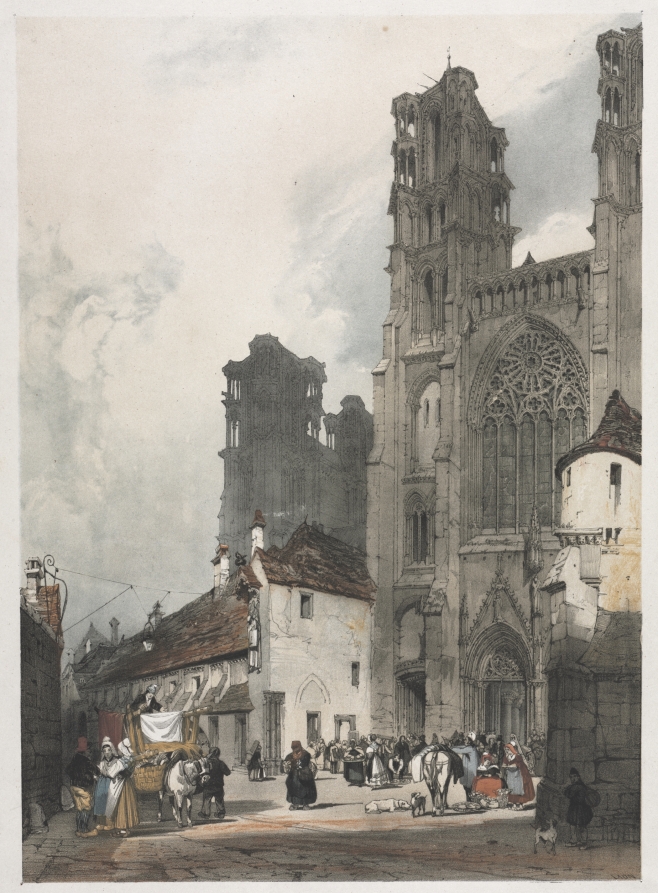
Urban Form: Picturesque Architecture in Paris, Ghent, Antwerp, Rouen: Laon, France
Urban Silhouette Research: Architectural Poetics and the 2026 Executive Form
I. The Geometry of Containment: Laon as Structural Precedent
The subject at hand—the fortified hilltown of Laon, its cathedral compound rising as a monolithic assertion against the Picardy plain—presents a study in architectural containment. The structure does not negotiate with its terrain; it commands it. The cathedral's twin towers, the octagonal lantern, the transept's perpendicular thrust: these are not decorative gestures but load-bearing declarations. For Addison Fashion's 2026 executive silhouette, Laon offers a fundamental lesson in how mass and void can be orchestrated to produce authority without ornamentation.
The geometric integrity of the Laon compound resides in its stacked volumetric logic. Each architectural layer—nave, transept, choir, tower—maintains its own discrete identity while contributing to a unified mass. This is the principle of articulated cohesion: the silhouette must read as a single gesture while revealing its structural components upon closer inspection. The 2026 executive jacket will embody this logic. Shoulder seams will be set with architectural precision, not softened into ambiguity. The chest plane will remain flat and uncompromised, a surface for the play of light rather than the distraction of darts. The waist will not cinch but transition—a subtle inward shift that acknowledges the body without capitulating to it.
II. The Khmer Fragment: Incomplete Geometry as Temporal Strategy
The internal DNA reference—the Cambodian mold fragment with musicians—introduces a critical counterpoint. Here, geometry is interrupted. The circular mold, designed to produce a vessel, now exists as a shard. Its curvature is partial; its edges are fractured. Yet the musicians within remain legible, their postures suspended in an eternal present tense. This is the aesthetics of the unfinished, and it carries profound implications for urban dressing.
The 2026 executive cannot present as a completed statement. The city itself is never finished—scaffolding rises and falls, facades are cleaned and re-soiled, infrastructure is excavated and repaved. To dress for the urban environment is to acknowledge perpetual incompletion. Addison Fashion will therefore incorporate deliberate interruptions into its tailoring: a raw-edged seam left exposed, a closure that does not fully close, a hemline that suggests continuation rather than termination. These are not defects but temporal markers, indicating that the garment, like the city, exists in a state of becoming.
The mold fragment's materiality—terra cotta, fired and broken—also speaks to surface intelligence. The 2026 collection will employ textiles that register time: slate-toned wool with a matte, almost mineral finish; technical fabrics that absorb and deflect light in equal measure; leathers that will patina rather than degrade. The executive silhouette must not gleam. It must absorb.
III. The Mahakasyapa Figure: Verticality and the Ethics of Stillness
The Dunhuang painting of Mahakasyapa holding the reliquary introduces a third geometric principle: vertical stillness. The figure stands. The reliquary is cylindrical, its axis perfectly aligned with the body's central meridian. There is no contrapposto, no dynamic torsion. The composition is a column of devotion, and its power derives precisely from its refusal to move.
For the 2026 executive silhouette, this translates into a radical verticality. The coat will fall in a straight line from shoulder to hem, its drape determined by the weight of the fabric rather than the intervention of the tailor. Trousers will break once, cleanly, at the shoe. Knitwear will follow the body's contours without clinging, creating a parallel plane rather than a second skin. The silhouette must suggest that the wearer is not in motion but in position—rooted, deliberate, unmoved by the city's centrifugal forces.
The reliquary itself—a container for the sacred—reinforces the theme of containment as spiritual practice. The executive carries the self as a vessel carries its contents: with discretion, with gravity, with the knowledge that what is held within is more significant than what is displayed without. Pockets will be deep and internal. Closures will be concealed. Branding will be absent or reduced to a single, almost illegible mark. The garment's value will reside in its structural integrity, not its semiotic noise.
IV. Urban Materiality: Slate as Chromatic Ground
The color directive—Slate—is not arbitrary. Slate is the color of Parisian zinc roofs, of Ghent's canal walls, of Antwerp's industrial heritage, of Rouen's cathedral stone under cloud cover. It is the color of the city's permanent infrastructure, the surfaces that remain when fashion's ephemera have passed. For 2026, Addison Fashion will treat slate not as a neutral but as a chromatic foundation—a ground against which subtle variations in texture and finish will register as significant events.
The collection will explore slate's full range: the cool blue-grey of wet stone, the warmer brown-grey of aged timber, the near-black of deep shadow. These variations will be deployed across a single silhouette, creating tonal depth without pattern or print. The effect will be architectural: a facade that reveals its complexity only upon sustained attention.
V. Conclusion: The Executive as Architectural Fragment
The 2026 Addison executive is neither a complete statement nor a broken one. She is a fragment of a larger urban order—a piece of architecture that has learned from Laon's mass, from the Khmer mold's incompletion, from Mahakasyapa's stillness. She moves through the city not as a participant in its chaos but as a structural element within it: load-bearing, precise, and silent. The silhouette does not follow the body. It contains it. And in that containment, it creates the conditions for meaning to emerge—not from what is shown, but from what is held.