Urban Form: Head of Beethoven
Urban Silhouette Research: The Beethoven Head as Structural Archetype
I. Geometric Integrity: The Fractured Plane as Tailoring Protocol
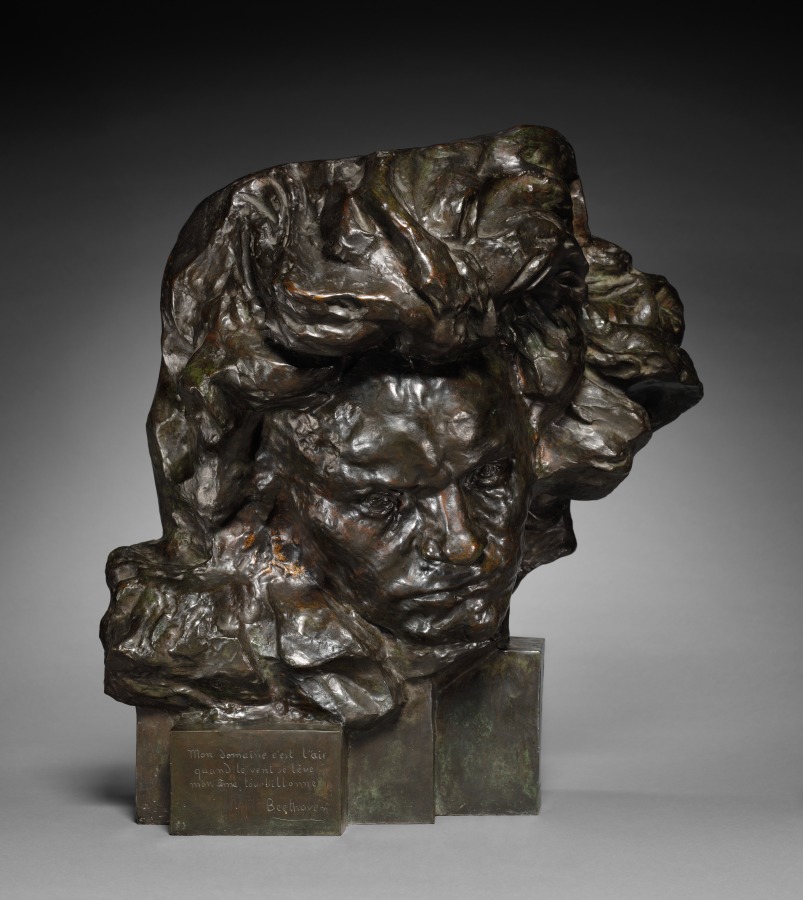
The Beethoven head presents a closed volumetric system governed by asymmetrical mass distribution. The cranium’s occipital curve describes a near-perfect arc, while the facial plane collapses inward—a deliberate negation of frontal symmetry that anticipates the 2026 executive silhouette’s rejection of bilateral conformity. The jawline does not resolve; it terminates. This termination is the point of departure.
In Addison’s architectural vocabulary, the fractured plane is not a defect but a load-bearing gesture. The Beethoven head’s geometric integrity resides in its ability to maintain structural coherence despite the absence of a unified surface. The brow ridge projects forward as a cantilever; the nasal bridge recedes as a negative void. This push-pull dynamic—projection and recession operating within a single cranial envelope—defines the 2026 shoulder line: extended, angular, yet anchored by a compressed cervical axis.
The sculpture’s materiality reinforces this reading. Whether rendered in bronze, plaster, or marble, the surface resists ornamentation. There is no drapery, no contextual framing. The head exists as autonomous architecture—a monolith that has internalized its own structural logic. For Addison’s 2026 tailoring, this translates to garments that operate as self-contained systems: no external fasteners, no decorative stitching, no applied hardware. The closure is internal. The silhouette is the statement.
II. Structural Poetics: The Compression of Volume into Line
The Beethoven head compresses the full complexity of human physiognomy into a reduced set of planar intersections. The forehead, cheekbone, and mandible do not blend; they meet at defined edges. This is planar articulation—a technique Addison has adapted from brutalist sculpture and mid-century architectural drawing. The 2026 executive jacket will not drape. It will fold. Each fold is a decision, not an accident.
The hair—rendered as a series of coarse, directional striations—functions as a textural counterpoint to the smooth facial planes. This is the poetics of controlled disruption. In textile terms, it suggests a matte, dry-handed wool or a bonded cashmere that resists fluidity. The surface should feel carved rather than woven. The hand should register resistance, not yield.
Consider the neck. The Beethoven head’s cervical column is thick, almost architectural in its proportions. It does not taper gracefully; it supports. This is the 2026 collar: high, structured, engineered to frame the jaw without softening it. The collar is not a detail. It is a foundation.
The poetics here are cold. There is no warmth in this geometry. The Beethoven head does not invite intimacy; it commands distance. Addison’s 2026 executive silhouette will adopt this emotional register: authority through withdrawal. The garment does not reveal the body. It replaces it with a superior form.
III. Urban Materiality: Surface as Urban Sediment
The Beethoven head bears the marks of its making. Tool marks, casting seams, and surface pitting are not concealed; they are integrated into the work’s visual language. This is urban materiality—the acceptance of imperfection as evidence of process. The city does not produce flawless surfaces. It produces layered surfaces: concrete stained by rain, steel oxidized by time, glass smudged by contact.
For Addison’s 2026 collection, this translates to fabrics that carry their own history. Slate-toned technical wool with a dry, chalky finish. Onyx-dyed Japanese denim with a warp so dense it reads as a solid. Silver-grey bonded leather that reflects light without gloss. The palette is mineral, not organic. The hand is cool, not warm.
The Beethoven head’s relationship to light is equally instructive. It does not reflect light uniformly. The facial planes catch and redirect illumination, creating zones of high contrast and deep shadow. This is chiaroscuro as tailoring principle. The 2026 executive garment will be designed for urban lighting conditions: the flat glare of a glass tower lobby, the harsh downlight of a parking structure, the diffuse grey of an overcast afternoon. The silhouette must remain legible in all three.
This legibility is achieved through edge definition. Every seam is a structural line. Every dart is a load path. The garment is not assembled; it is constructed. The difference is philosophical. Assembly implies components. Construction implies a unified system.
IV. The 2026 Executive Silhouette: A Synthesis
The Beethoven head offers Addison a complete design protocol for the 2026 executive silhouette. The protocol is as follows:
First, the silhouette must be closed. No external volume. No trailing elements. The form is self-sufficient.
Second, the geometry must be asymmetrical but balanced. The eye should travel across the form, not rest upon it. Symmetry is decorative. Asymmetry is structural.
Third, the material must register time. Surfaces should suggest exposure, not protection. The garment is a record of its own existence.
Fourth, the emotional register must be cold. Warmth is a distraction. The executive silhouette is a tool, not a comfort.
The Beethoven head is not a portrait. It is a typology—a reduced, essentialized form that communicates authority through its refusal to ingratiate. Addison’s 2026 collection will adopt this typology without nostalgia. The past is not a reference; it is a quarry. We extract what is structurally useful and discard the rest.
The result is a silhouette that does not follow the body. It replaces it. The executive of 2026 does not wear a garment. The executive inhabits a structure. The Beethoven head, fractured and mute, has shown us how.