Urban Form: Dancing Figure
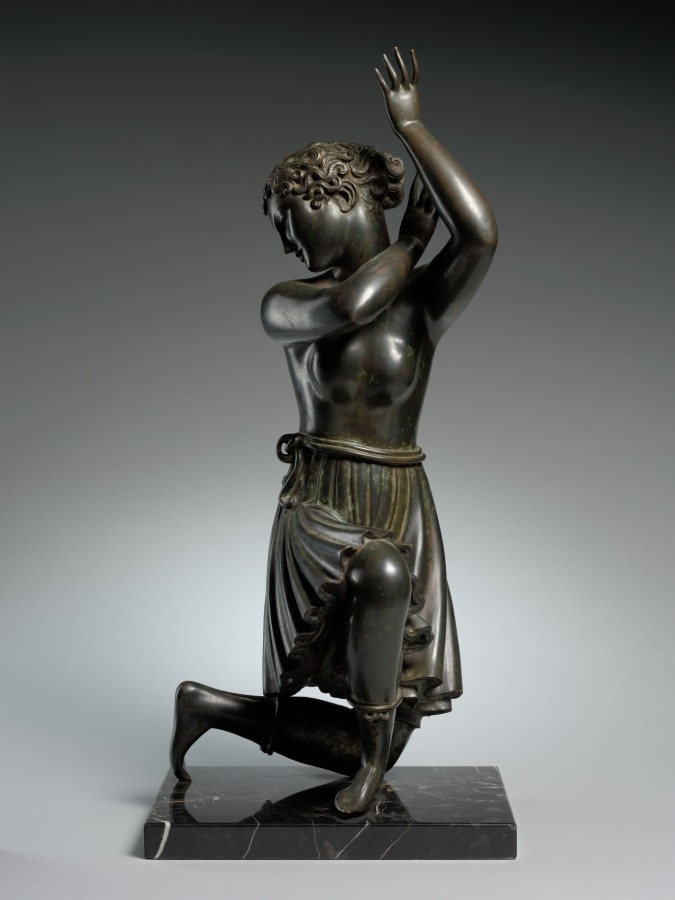
Urban Silhouette Research: The Dancing Figure as Structural Paradigm
I. The Fragment as Formal Proposition
The Mold Fragment with Musicians presents a critical case study in interrupted form. The ceramic matrix—originally a casting tool, now an archaeological remainder—yields a figure whose limbs are truncated, whose garment folds terminate mid-arc, whose lips part without resolution. For the Addison design team, this is not an aesthetic of deficiency but of generative incompleteness. The dancing figure, frozen in a posture of torsion and counter-torsion, offers a kinetic blueprint: the body as a system of opposing vectors, each gesture answered by its negation.
In formal terms, the fragment operates through what we might call asymmetric load-bearing. The raised arm counterbalances the flexed knee; the tilted pelvis redirects the spine's vertical thrust into a diagonal. This is structural engineering at the scale of the human frame—and it is precisely the logic that must inform the 2026 executive wardrobe. The contemporary urban professional does not stand still. She pivots between boardroom and transit hub, between negotiation and transit, between the anchored and the airborne. Her clothing must therefore resolve the same problem the ancient musician's body resolved: how to remain stable while in motion.
II. The Coffin Platform as Counter-Argument
Against this kinetic fragment, the Section of a Coffin Platform: Horizontal Panel proposes an opposing thesis. Here, form is governed by rhythmic repetition and symmetrical containment. The horizontal banding, the serialized beast motifs, the calculated intervals between registers—these constitute a grammar of permanence. Where the fragment breathes, the panel measures. Where the fragment fractures, the panel repeats.
The executive wardrobe requires both grammars. The coffin platform's logic—its modular segmentation, its predictable interval, its refusal of dramatic rupture—maps directly onto the requirements of professional legibility. A suit jacket's button stance, a trouser's break, a collar's spread: these are not expressive choices but structural constants, the geometric armature within which individual identity becomes readable. The panel teaches us that authority is a function of consistency. The fragment teaches us that vitality is a function of interruption.
III. The Interstitial Principle: Negative Space as Design Agency
What unites these two artifacts is their shared reliance on interstitial intelligence—the strategic deployment of void. The mold fragment's reverse side is rough, its front refined; the casting void between them is where the object was born. The coffin panel's registers are separated by bands of empty ground; these gaps are not absences but invitations, spaces where the eye completes the pattern and the mind supplies continuity.
For Addison's 2026 silhouette, this principle translates into engineered negative space. Consider the dancing figure's most radical formal attribute: the gap between torso and extended arm, the air that circulates through the crook of the elbow, the shadow beneath the lifted heel. These voids are not empty; they are active. They create the silhouette's edge as much as the fabric does. In garment terms, this means:
1. The floating shoulder: A shoulder seam displaced 2–3 centimeters outward from the anatomical joint, creating a deliberate air gap that reads as both armor and ease. The wearer's actual shoulder moves freely beneath; the garment's shoulder holds its own architectural line.
2. The interrupted hem: A trouser or skirt hem that does not fall in a continuous line but breaks at calculated intervals—a slit here, a vent there—so that the leg's movement is revealed in fragments rather than in full. This is the mold fragment's lesson: partial revelation is more powerful than total exposure.
3. The segmented bodice: A jacket or coat whose front is divided by seams that do not follow the body's curves but instead impose a horizontal register system—chest, waist, hip—each segment self-contained, each interval deliberate. This is the coffin panel's lesson: order is not the enemy of beauty but its precondition.
IV. Color as Structural Agent: Slate as Mediating Surface
The palette for this silhouette is Slate—not as a neutral default but as a structural agent. Slate occupies the precise midpoint between the mold fragment's earthy, oxidized warmth and the coffin panel's cool, mineralized formality. It is the color of transition: of stone that has been both fired and carved, of sky that is neither day nor night, of the urban surface that reflects without transparency.
In technical terms, Slate's low chroma and mid-value range allow it to function as what color theorists call a ground tone—a surface against which both lighter and darker elements can register without competition. For the executive wardrobe, this means a single Slate suiting fabric can carry:
• Ivory piping or topstitching that reads as archaeological incision—the mark of the tool on the surface.
• Onyx hardware or underlayer that provides the gravitational anchor, the weight that keeps the silhouette from floating into irrelevance.
• Silver accents—metallic thread, matte-finish zipper tape—that introduce the reflective quality of the coffin panel's burnished surfaces without descending into ornament.
Slate also possesses a unique temporal ambiguity. It reads as both ancient (the patina of bronze, the surface of weathered stone) and contemporary (the anodized aluminum of a laptop, the concrete of a Chelsea gallery). This duality is precisely what the 2026 executive requires: a visual language that signals permanence without nostalgia, innovation without novelty.
V. The Dancing Figure as Wearable Proposition
The final translation is from artifact to garment. The dancing figure's posture—torsion, counterbalance, interrupted extension—becomes a pattern-cutting directive. The Addison 2026 jacket will feature:
A diagonal front closure that follows the line of the figure's raised arm, displacing the traditional vertical button stance into a dynamic asymmetry. The closure does not center the body; it activates it.
A back panel constructed from two overlapping layers—one fixed, one floating—that creates a controlled gap at the shoulder blade, allowing the fabric to move independently of the body's rotation. This is the mold fragment's reverse-side roughness made intentional: the garment's interior is as considered as its exterior.
A collar that stands away from the neck by a calculated 1.5 centimeters, its edge unfinished or raw-seamed, referencing the fragment's broken edge without sacrificing the polish required for executive contexts.
The dancing figure does not resolve. It remains mid-gesture, mid-breath, mid-sound. The Addison 2026 silhouette inherits this permanent incompletion—not as a flaw but as a mechanism. The wearer completes the garment. The city completes the silhouette. The void between body and cloth is where the executive lives: in the interval, in the gap, in the space where authority and motion negotiate their ongoing, unresolved, and therefore vital, accord.
— Addison Fashion NYC, Urban Silhouette Research, Cycle 2026