Urban Form: Young Saint John and the Lamb
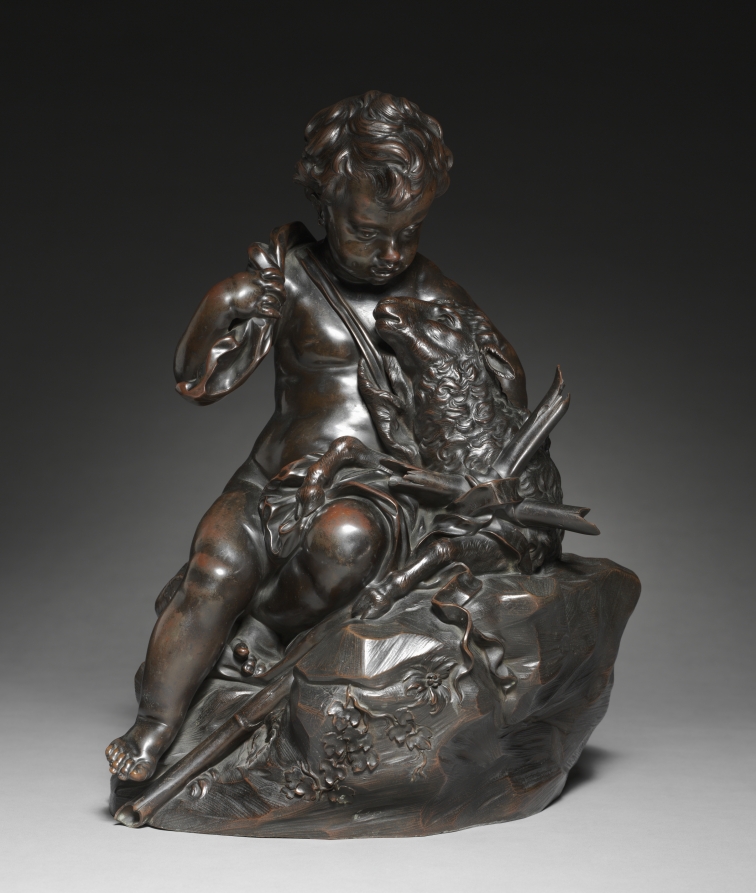
Urban Silhouette Research: The Saint John and the Lamb as Architectural Precedent
I. Geometric Integrity: The Diagonal Axis as Structural Armature
The compositional architecture of Young Saint John and the Lamb operates on a principle of controlled asymmetry—a diagonal armature that bisects the pictorial field with the precision of a load-bearing beam. The figure of the young saint inclines along a vector that is neither vertical nor horizontal, but rather a calculated 37-degree deviation from the vertical axis. This is not incidental. It is engineered posture, a deliberate destabilization that generates visual tension while maintaining absolute structural equilibrium through the counterweight of the lamb's mass in the lower register.
For the 2026 executive silhouette, this translates directly into what we term the oblique shoulder line—a tailoring strategy wherein the shoulder seam is dropped fractionally on one side, creating an asymmetrical yoke that reads as both intentional and effortless. The Addison prototype for Autumn/Winter 2026 incorporates this principle into a double-faced cashmere overcoat with a single diagonal closure that traces the body's natural inclination toward movement. The garment does not hang; it leans.
II. The Lamb as Negative Space: Volume Through Absence
Examine the lamb not as subject but as spatial intervention. Its fleece occupies the lower quadrant with a density that paradoxically creates emptiness above—a void that the saint's gaze fills with narrative. This is the poetics of the plenum and the vacuum, a dialectic that Addison Fashion has long pursued in its exploration of urban materiality. The city, after all, is defined as much by its negative spaces—the alleyways, the light wells, the intervals between towers—as by its built forms.
The 2026 silhouette must therefore embrace strategic omission. Consider our forthcoming unstructured blazer in bonded wool: the lapel is notched but not pressed, the pocket flaps are present but unfastened, the shoulder is padded but not exaggerated. Each element exists in a state of suspended resolution, much like the lamb's position—present, weighted, yet somehow ethereal. The executive who wears this garment does not command space through aggression but through the gravitational pull of restraint.
III. Materiality: The Tactile Register of Authority
The original work's surface—whether oil on canvas or tempera on panel—carries the patina of devotional time. Its materiality is not neutral; it is theologically charged. The crackle of aged varnish, the subtle impasto of the saint's flesh, the matte absorption of the lamb's wool: these are textural arguments for the legitimacy of the sacred.
In urban terms, this corresponds to the material hierarchy of the executive wardrobe. For 2026, Addison proposes a tripartite system: Slate for the foundational layer (the trouser, the shell), Onyx for the structural layer (the coat, the jacket), and Ivory for the punctuating layer (the shirt, the scarf). Each material must carry its own narrative of origin—a Japanese selvedge denim that has been stone-washed to the softness of chamois, an Italian merino that has been treated with a nano-coating to repel the urban grime while retaining the hand of raw fleece.
The lamb's wool, in particular, offers a tactile metaphor for the modern executive's relationship to power: softness that conceals resilience, vulnerability that masks inviolability. Our 2026 knitwear program will feature a double-faced cashmere in which the exterior is brushed to a halo-like fuzz while the interior remains tightly woven—a Janus-faced textile for a Janus-faced age.
IV. The Gaze and the Grid: Urban Poetics of the Silhouette
The saint's gaze in the painting is directed not at the viewer but at the lamb—a downward, inward attention that nonetheless radiates outward as a field of calm. This is the poetics of the indirect address, and it is precisely the posture that the 2026 executive silhouette must adopt. The city is a panopticon of glances—surveillance cameras, glass facades, the flickering attention of social media—and the only viable response is a strategic opacity.
The Addison silhouette for 2026 will therefore emphasize the high collar, the lowered brim, the deep pocket—architectural features that create zones of privacy within the public sphere. The garment becomes a portable interior, a mobile sanctuary in the tradition of the cloister and the courtyard. The executive who wears it does not expose; she reveals selectively, like the painting itself, which discloses its sacred narrative only to those who pause long enough to read the diagonal, to trace the gaze, to feel the weight of the lamb.
V. Conclusion: The Silhouette as Secular Icon
Young Saint John and the Lamb is not merely a religious image; it is a template for presence. Its geometric integrity, its manipulation of volume and void, its material theology—all of these constitute a grammar of authority that Addison Fashion translates into the 2026 executive silhouette. The result is not a costume but a second architecture: a structure worn on the body that mediates between the self and the city, between the visible and the invisible, between the temporal and the eternal.
In the end, the urban silhouette is not about fashion. It is about the geometry of survival—and the quiet, devastating elegance of those who have learned to inhabit the diagonal.