Urban Form: Desk and Bookcase
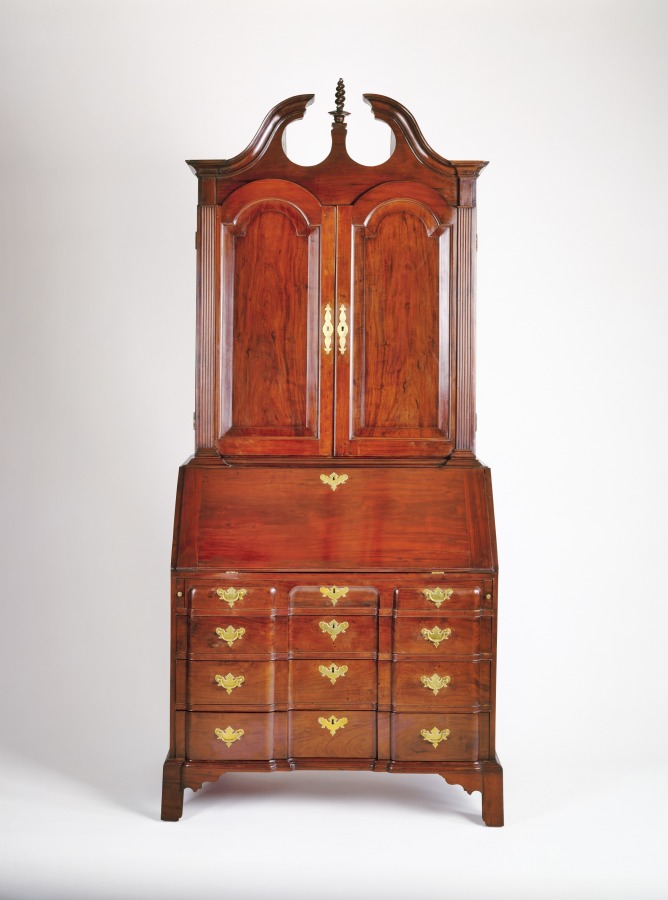
Urban Silhouette Research: Desk and Bookcase as Architectural Prototype
I. The Geometry of Containment
The desk and bookcase does not announce itself. It withholds. In the Addison lexicon, this is the highest form of confidence—the refusal to perform. The object presents a vertical monolith: a lower horizontal plane for labor, an upper vertical volume for accumulation. The geometry is binary, almost brutal in its clarity. A right angle, repeated and extruded, becomes a philosophy of urban existence.
Consider the desk surface. It is a plane of action, a stage for the executive's daily theater. Its edges are not softened; they are calibrated. The bookcase above is a grid of negative space—shelves as intervals, voids as punctuation. Together, they form a silhouette that reads as a single architectural gesture: a plinth and a tower, a foundation and a monument. This is not furniture. This is infrastructure for the self.
The 2026 executive silhouette demands precisely this duality. The modern power figure must operate on two planes simultaneously: the horizontal (negotiation, transaction, the immediate) and the vertical (strategy, legacy, the enduring). The desk and bookcase encodes both. It is a wearable philosophy rendered in wood and shadow.
II. Structural Poetics: The Tension Between Display and Concealment
The genius of this object lies in its oscillation between revelation and reticence. The bookcase displays—spines of knowledge, artifacts of taste, the curated self. The desk conceals—drawers, compartments, the machinery of daily function. This is the same tension that defines the Addison wardrobe: the exterior is a statement, the interior is a secret.
In the Western canon, Jacques-Louis David's The Death of Socrates operates through dramatic disclosure. The philosopher's gesture—finger to the heavens, hand receiving the hemlock—is a public declaration of private conviction. Every line is legible, every shadow instructive. The painting demands to be read. It is the aesthetic of the manifesto.
The desk and bookcase, by contrast, is the aesthetic of the archive. Its beauty is not in the dramatic moment but in the accumulated gesture—the patina of use, the slight misalignment of a drawer, the wear on a shelf edge where a hand has reached for the same volume a thousand times. This is the poetics of the Chest for Storing Garments: the vessel that holds without announcing, that preserves without demanding attention.
For the 2026 executive, this duality is not a contradiction but a requirement. The urban silhouette must be both declarative and withholding—a tailored shoulder that speaks of authority, a fluid drape that suggests interiority. The desk and bookcase teaches us that structure is not the enemy of mystery; it is its precondition.
III. Urban Materiality: The Weight of the Everyday
The material vocabulary of this object is deliberately restrained. Wood—likely oak or walnut—with a finish that does not gleam but absorbs. Metal hardware, if present, is functional rather than ornamental. The palette is Slate: a grey that is neither warm nor cold, neither past nor future. It is the color of concrete at dusk, of a city skyline before rain, of the executive's overcoat in February.
This is urban materiality at its most refined. The desk and bookcase does not reference the pastoral or the exotic. It is resolutely metropolitan—born of density, of vertical living, of the need to impose order on chaos. Its proportions are those of the modern apartment: compact, efficient, unapologetic. It does not sprawl. It ascends.
In the Addison design language, this translates to garments that share the same material intelligence. A wool that holds a crease like a shelf holds a book. A leather that ages into a patina rather than deteriorating. A seam that is not hidden but integrated—a structural element, not a concealment. The 2026 silhouette is not about decoration. It is about the integrity of the joint, the logic of the load-bearing line.
IV. The Silhouette as Philosophical Statement
What does the desk and bookcase tell us about the body that will wear the Addison 2026 collection? It tells us that the executive is a curator of space. She does not occupy a room; she organizes it. Her silhouette is not a shape but a system—a set of relationships between volume and void, between the visible and the stored.
The tailored jacket, in this context, becomes a bookcase: a structured exterior that displays authority while concealing vulnerability. The fluid trouser becomes a desk: a horizontal plane of action, calibrated for movement, unencumbered by excess. The oversized coat becomes the entire object: a monolith of intention, a statement of presence that does not need to shout.
David's Socrates points to the heavens. The desk and bookcase points to the floor—to the ground of daily practice, to the accumulation of small decisions that constitute a life. In the Addison philosophy, both gestures are necessary. The 2026 executive silhouette is not a choice between the dramatic and the domestic, the public and the private, the eternal and the everyday. It is the architecture that holds them together.
This is the final lesson of the desk and bookcase: that form, at its most rigorous, becomes a form of ethics. That the way we structure our objects is the way we structure our selves. And that the urban silhouette, at its most refined, is not a costume but a container for meaning—a quiet, slate-grey vessel for the chaos and clarity of modern life.