Urban Form: The City Fettering Nature
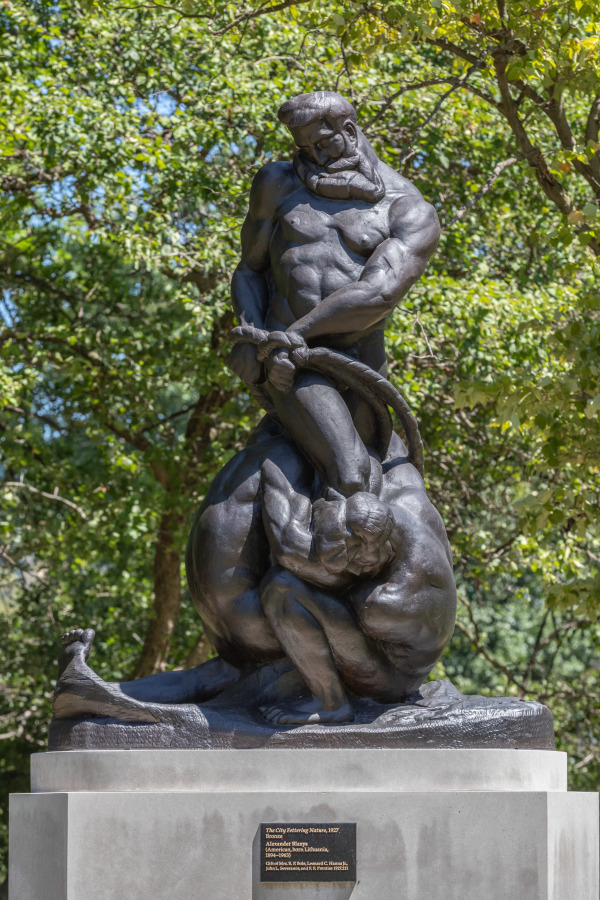
The City Fettering Nature: Geometric Integrity and the 2026 Executive Silhouette
The Addison Fashion Urban Silhouette Research for 2026 proceeds from a single, uncompromising premise: the executive wardrobe must function as a vessel. Not a vessel of ornament, but of containment—a structure that holds the volatile body of the wearer in a state of suspended tension. The two artifacts under examination—the Meiping vase with waves and David's The Death of Socrates—are not decorative references. They are opposing geometric doctrines. One silences time through the perfection of the curve; the other detonates time through the drama of the diagonal. The 2026 silhouette must reconcile both. It must be a garment that, like the Meiping, refuses narrative, yet like the Socratic body, carries the weight of a philosophical event. This is the city fettering nature: the urban environment demands a form that arrests the chaotic body beneath it, transforming motion into architecture.
I. The Meiping Curve: Static Volume as Armor
Consider the Meiping's geometry. Its profile is a continuous, unbroken arc—a single line of force that rises from the foot, swells at the shoulder, and tapers to a narrow neck. There is no seam, no interruption, no concession to the body's articulation. The waves incised into its surface are not decoration; they are a record of suppressed energy. The craftsman has taken the most fluid phenomenon in nature—the ocean swell—and frozen it into a static, vitreous skin. This is the first principle of the 2026 executive silhouette: the suppression of the organic by the geometric.
For Addison Fashion, this translates into a tailoring logic that rejects the natural waist. The jacket is not fitted; it is formed. The shoulder is extended, not padded into a false athleticism, but carved into a soft, architectural slope that mimics the Meiping's shoulder. The torso falls in a single, uninterrupted line to a hem that sits below the hip, creating a columnar volume. The fabric—a dense, matte wool in Slate—absorbs light rather than reflecting it, echoing the celadon glaze's quiet refusal to narrate. The wearer does not move through the city; she occupies it. Her silhouette is a question mark, as the vase is a question mark: is the body inside the garment, or is the garment a shell that has replaced the body? The answer is deliberately withheld. This is the poetics of the object: a silence that commands attention.
II. The Socratic Diagonal: Narrative Rupture and the Tailored Event
Now invert the lens. David's Socrates is the anti-Meiping. Its geometry is not a continuous curve but a fractured field of diagonals. The philosopher's raised arm, the pointing finger, the angle of the cup, the collapsing bodies of the disciples—every line is a vector of moral urgency. The composition is a machine for producing a single, irreversible moment. The neoclassical rigor does not calm the scene; it amplifies the terror by containing it within a grid of perspective and proportion. This is the second principle: the garment as a staged event.
The 2026 executive cannot afford the Meiping's pure stasis. The urban environment is a theater of deadlines, negotiations, and visible crises. The silhouette must therefore incorporate a controlled rupture—a seam, a lapel, a vent that introduces a diagonal of action. Addison Fashion proposes a single, asymmetric closure: a lapel that cuts across the chest at a 17-degree angle, echoing Socrates' pointing arm. This is not a detail; it is a narrative hinge. When the wearer moves, the lapel shifts, revealing a sliver of Ivory silk beneath—a flash of the body's mortality, quickly re-contained. The sleeve is set high and narrow, restricting the arm's swing to a deliberate, almost ceremonial gesture. The wearer cannot gesticulate wildly. She must choose her movements, as Socrates chose his death. The garment is a moral instrument.
III. Materiality: The Urban Surface as Patina
The dialectic between the vase and the painting resolves in the question of surface. The Meiping's glaze is a vitreous skin that repels touch; the painting's surface is a woven field of brushstrokes that invites the eye to travel. For 2026, Addison Fashion specifies a dual-material construction. The outer shell is a bonded wool-cashmere in Slate—dense, water-repellent, and slightly stiff, like the fired clay of the vase. It resists the city's grime and noise. The inner lining, however, is a fluid cupro in Sand, cut on the bias so that it slides against the body. This is the Socratic interior: the private, philosophical self that is always in motion, always questioning. The contrast is not visible to the casual observer. It is a secret known only to the wearer—a private dialectic between the fettered exterior and the fluid interior.
The geometric integrity of the artwork, then, is not a matter of imitation. It is a matter of structural poetics. The Meiping teaches us that volume can be a form of silence. The Socrates teaches us that a single diagonal can carry the weight of an entire argument. The 2026 executive silhouette must be both: a silent volume that, upon closer inspection, reveals a hidden rupture. The city fetters nature—but the garment, if properly constructed, fetters the city in return. It is a portable architecture, a wearable philosophy. The wearer does not simply dress. She assumes a position. She becomes, in the cold light of the urban morning, a living question mark—and that is the highest form of Addison elegance.