Urban Form: Bull's-Head Amulet
Urban Silhouette Research: The Bull’s-Head Amulet as Structural Artifact
I. Thesis: The Amulet as Dialectical Object
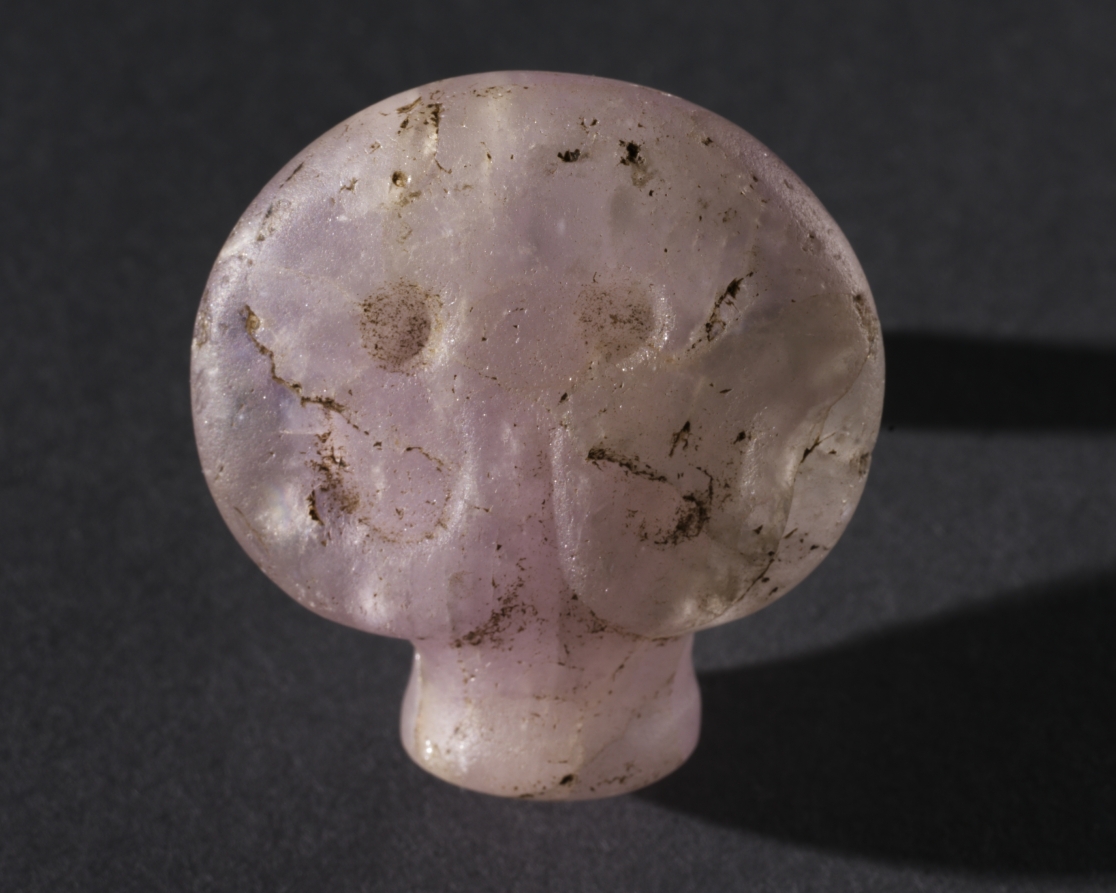
The bull’s-head amulet, when filtered through the twin DNA sources of Jacques-Louis David’s The Death of Socrates and Peter Paul Rubens’ The Hunt, ceases to function as mere ornament. It becomes a compressed dialectic—a wearable contradiction that resolves the static and the kinetic into a single onyx mass. For the 2026 NYC executive wardrobe, this is not decorative archaeology. It is a strategic instrument of silhouette control. The amulet’s formal logic—its horns, its cranial mass, its downward taper—offers a precise vocabulary for the modern minimalist who must project authority without theatricality. This research deconstructs that vocabulary across three axes: mass, aperture, and temporal tension.
II. The Static Axis: Socrates and the Aesthetics of Residual Form
David’s composition is an exercise in terminal stillness. The hemlock cup, the scroll, the slumped torso—each element is a fossil of action, not action itself. The amulet inherits this logic through its cranial volume. The bull’s skull, in its most reductive reading, is a container that has already emptied itself. It is the cup after the poison has been drunk. For the executive wardrobe, this translates into a silhouette that does not announce movement but absorbs it. The amulet should sit at the sternum, its widest point—the horn span—aligned with the clavicular line. This creates a horizontal anchor that stabilizes the verticality of a tailored coat or a column dress. In Onyx, the amulet’s surface must be matte, almost light-absorbing, so that it reads as a void rather than a highlight. The wearer becomes the philosopher: still, composed, and already past the moment of decision.
III. The Kinetic Axis: The Hunt and the Aesthetics of Suspended Velocity
Rubens offers the inverse. The Hunt is not about death but about the millisecond before impact—the hound’s leap, the bow’s tension, the prey’s twist. The amulet’s formal properties can be re-engineered to capture this suspended velocity. The horns, if rendered as sharp, forward-swept vectors, become directional indicators. They point not to the past (the skull’s origin) but to the future (the wearer’s trajectory). In a 2026 executive context, this is critical. The minimalist wardrobe risks passivity; the amulet corrects it. By placing the amulet slightly off-center—perhaps 2–3 centimeters to the left of the sternum—the stylist introduces a subtle asymmetry that mimics the asymmetrical tension of a drawn bow. The Onyx finish should be polished on the horn tips and matte on the cranial dome, creating a gradient of intent: the tips catch light (action), the dome absorbs it (thought).
IV. The Dialectical Synthesis: Form as Temporal Mediator
The amulet’s genius lies in its ability to hold both axes simultaneously. The cranial mass is Socrates—static, residual, philosophical. The horn vectors are The Hunt—kinetic, anticipatory, predatory. For the NYC executive, this duality maps onto the two modes of professional presence: the boardroom (stillness, listening, judgment) and the negotiation (movement, pressure, pursuit). The amulet does not choose between them. It oscillates. This oscillation is achieved through material contrast. Onyx, with its deep black and subtle translucency at thin edges, allows the amulet to shift appearance based on lighting and angle. Under overhead conference lighting, the dome reads as a solid, authoritative mass. Under side lighting—say, from a window during a one-on-one—the horn tips glint, suggesting latent energy. The wearer controls the reading through posture and proximity.
V. Application to the 2026 NYC Executive Wardrobe
The 2026 executive silhouette is defined by reduction without loss of power. The bull’s-head amulet, in Onyx, serves as the single point of density in an otherwise fluid or architectural ensemble. It should be worn over a high-neck knit or a collarless jacket—never over a traditional lapel, which would compete for structural authority. The chain or cord must be minimal: a thin, matte black leather cord or a sterling silver wire, no thicker than 2mm. The amulet’s scale should be calibrated to the wearer’s frame: approximately 4–5 cm in height for a 170 cm frame, scaling proportionally. It is not a pendant. It is a terminal object—the full stop at the end of a sartorial sentence.
VI. Conclusion: The Amulet as Strategic Artifact
The bull’s-head amulet, read through David and Rubens, is not a symbol of death. It is a technology of presence. It compresses the static and the kinetic, the residual and the anticipatory, into a single Onyx form. For the Addison Fashion executive, it offers a rare advantage: the ability to signal both philosophical depth and predatory readiness without uttering a word. In the urban theater of 2026, where every gesture is scrutinized, the amulet is the silent clause that completes the sentence of power. Wear it low. Wear it matte. Wear it as the residue of thought and the vector of intent.