Urban Form: Amor Caritas
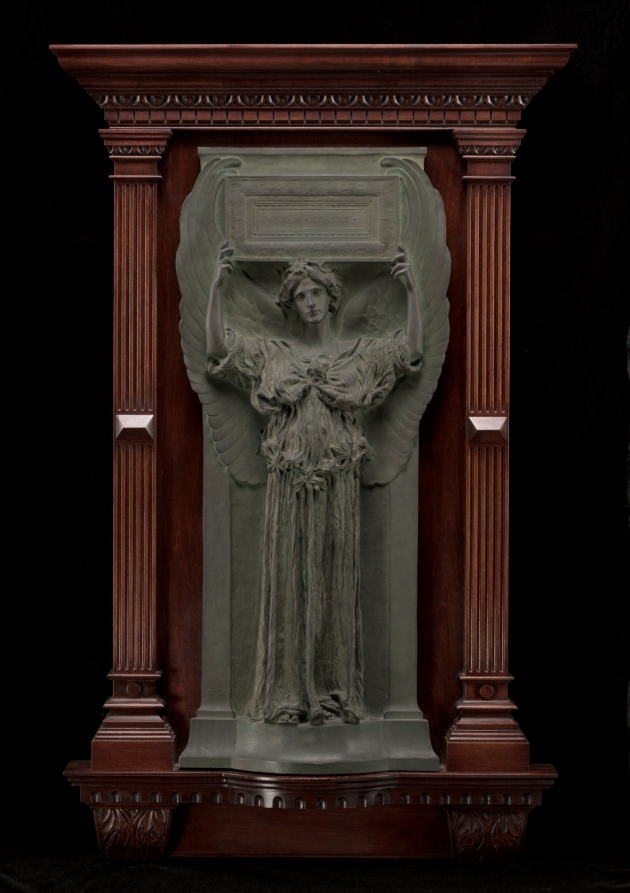
Urban Silhouette Research: Amor Caritas — Structural Poetics of the Void and the Vessel
I. Preliminary Taxonomy: Two Poles of Eastern Aesthetic Gravity
The Addison Fashion 2026 executive silhouette finds its most rigorous conceptual foundation not in Western tailoring traditions, but in the dialectical tension between two Eastern artifacts: the “优昙婆罗花”寺匾 (Udumbara Temple Plaque) and the 兽葡纹镜 (Beast-Grape Bronze Mirror). These objects—one liturgical, one utilitarian—operate as opposing gravitational fields within a shared aesthetic universe. For the Addison design language, they are not historical curiosities but active structural paradigms. The plaque embodies subtractive emptiness; the mirror embodies additive abundance. The 2026 silhouette must synthesize both: a garment that is simultaneously void and vessel, absence and archive.
II. The Plaque as Architectural Negative Space
The Udumbara plaque’s aesthetic logic is one of radical reduction. The flower—microscopic, white, suspended—is not depicted but invoked. Its visual economy is predicated on the viewer’s cognitive completion. In geometric terms, this is a low-density, high-tension field: minimal mark-making generating maximal spatial dilation. The plaque does not occupy space; it curates it. The surrounding void becomes the primary material.
Translated to the 2026 executive silhouette, this demands a Slate palette—cool, recessive, mineral. The shoulder line must be engineered as a floating plane, not a padded mass. Think of a single, uninterrupted wool-cashmere blend panel that drapes from clavicle to hem without interruption, its only structural intervention a laser-cut perforation at the sternum—a void within a void. The armhole is not a seam but a negative aperture, allowing the body to pass through architecture rather than be contained by it. This is the plaque’s lesson: the garment’s integrity is measured by what it refuses to enclose.
III. The Mirror as Recursive Surface Logic
The 兽葡纹镜 operates on an inverse principle. Its reverse face is a dense, centrifugal composition: grape clusters in high relief, beasts in dynamic torsion, vine tendrils forming a closed-loop system. The geometry is radial, recursive, and self-referential. Every element mirrors every other; the whole is a mandala of abundance. The mirror’s function—to reflect the viewer’s face—is doubled by its decorative program: to reflect cosmological order.
For Addison’s 2026 executive silhouette, this translates into surface as archive. The mirror’s lesson is not ornamentation but systemic density. A single-breasted coat in Slate wool can incorporate a micro-embossed grapevine lattice across the back yoke—visible only under raking light, tactile only under the palm. The closure system should echo the mirror’s radial logic: a single Onyx button at the sternum, from which invisible darts radiate outward, structuring the torso without visible seams. The garment becomes a wearable mirror: it reflects the wearer’s authority while encoding a private cosmology of resilience and cyclical renewal.
IV. Dialectical Synthesis: The 2026 Executive as Void-Vessel
The genius of these two artifacts lies in their dialectical interdependence. The plaque’s emptiness is not nihilistic; it is pregnant void (真空妙有). The mirror’s fullness is not materialist; it is symbolic order (器以载道). The 2026 executive silhouette must inhabit both states simultaneously.
Consider a Slate column dress in double-faced cashmere. The front is pure plaque: a single vertical seam, no darts, no waist suppression—a monastic plane. The back is pure mirror: a laser-etched grapevine and beast motif in tonal thread, visible only when the wearer turns. The silhouette is thus Janus-faced: minimal in approach, maximal in retreat. The executive who wears it is both void and vessel—empty of excess, full of intent.
V. Urban Materiality: Slate as Ground, Onyx as Accent
The material palette must remain severe. Slate—a cool, blue-grey mineral tone—serves as the garment’s ground state. It is the color of urban infrastructure: concrete at dusk, wet asphalt, the underside of clouds. It absorbs light without reflecting it, creating a matte field against which the body’s movement becomes the only ornament. Onyx—deep, opaque, near-black—appears only at points of structural decision: the single button, the interior lining edge, the heel of a boot. Onyx is the mirror’s shadow; Slate is the plaque’s silence.
Textiles must exhibit architectural memory: wool that holds a crease like folded paper, silk that drapes like poured water, leather that stiffens at the collar and softens at the cuff. The 2026 executive does not wear clothing; she inhabits a structural argument.
VI. Conclusion: The Silhouette as Philosophical Instrument
The Addison Fashion 2026 executive silhouette is not a trend. It is a geometric integrity derived from the dialogue between the Udumbara plaque and the Beast-Grape mirror. It rejects the false binary of minimalism versus maximalism. Instead, it proposes a third term: the void-vessel, the empty-full, the Slate column that hides a cosmology within its back yoke. The wearer becomes a walking dialectic—cool in approach, dense in meaning, irreducible to either emptiness or abundance. This is the urban silhouette as philosophical instrument: a garment that does not decorate the body but interrogates it, asking whether the executive is the plaque or the mirror, the flower or the beast, the void or the vine. The answer, Addison proposes, is both. Always both.