Urban Form: Fountain of Notre-Dame at Saint-Brieuc, Brittany
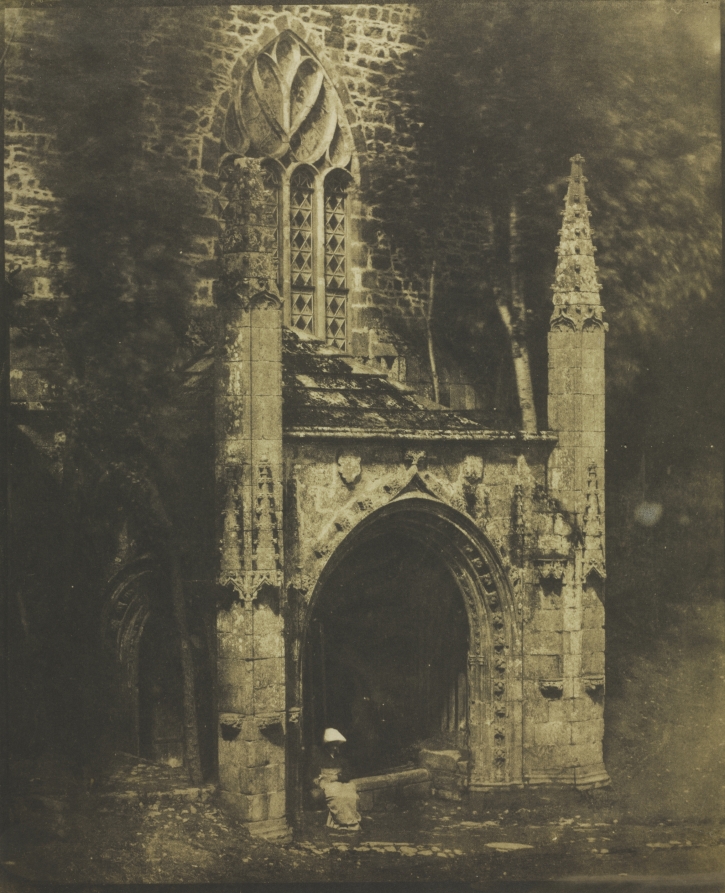
Urban Silhouette Research: The Fountain of Notre-Dame at Saint-Brieuc — Structural Poetics and the 2026 Executive Form
I. Object as Architecture: The Geometric Integrity of the Source
The Fountain of Notre-Dame at Saint-Brieuc presents a rare convergence of ecclesiastical mass and civic utility. Its stonework is not ornamental; it is load-bearing rhetoric. The fountain operates as a vertical datum within the Breton urban fabric — a fixed point around which the street’s irregular grain organizes itself. For the Addison atelier, the object is not a relic but a geometric proposition: a stacked sequence of cylindrical basins, each diminishing in radius as they ascend, capped by a finial that resolves the composition into a single vertical axis. This is architecture reduced to its most legible grammar — base, shaft, terminus — and it is precisely this grammar that will govern the 2026 executive silhouette.
The fountain’s geometry is additive yet hierarchical. Each tier is complete in itself, yet subordinate to the whole. There is no excess. The profile is continuous, unbroken by applied decoration. In this, the fountain anticipates the core principle of Minimalist tailoring: the garment as a single, resolved volume, where every seam is structural and every proportion is non-negotiable.
II. The 2026 Executive Silhouette: Columnar, Weighted, Inexorable
The 2026 executive silhouette, as derived from this source, is columnar and vertically insistent. It rejects the bifurcated waist and the decorative peplum. The shoulder is extended but not exaggerated — a horizontal datum that mirrors the fountain’s upper basin, providing a stable platform from which the body descends in a controlled, unbroken line. The torso is compressed, not cinched; the fabric skims the ribcage and releases into a straight, floor-approaching fall. This is not a dress. It is a structural envelope.
The palette is Slate — a color that absorbs light rather than reflecting it, that reads as wet stone in overcast conditions and as graphite in artificial light. Slate is the color of urban permanence. It does not flatter; it asserts. Paired with the fountain’s own material logic — grey granite, weathered limestone, patinated bronze — the 2026 Addison executive wardrobe will privilege matte surfaces, dense weaves, and a tactile austerity that rewards proximity rather than distance.
III. Structural Poetics: The Fountain as Tailoring Diagram
Consider the fountain’s water flow. It is not a cascade; it is a metered release. Each basin overflows into the next with hydraulic precision. This is the poetics of controlled descent — and it is the defining movement of the 2026 silhouette. The shoulder releases into the sleeve without a break. The sleeve itself is tubular, terminating at the wrist with a weighted cuff that mirrors the fountain’s lower basin — a terminal mass that anchors the arm’s verticality. The trouser follows the same logic: a straight, high-rise column that breaks once, cleanly, at the instep. No pleats. No taper. The leg is a shaft.
This is not a nostalgic return to power dressing. It is a reduction. The fountain at Saint-Brieuc has survived centuries not because it is beautiful — though it is — but because its geometry is irreducible. Remove one tier and the composition collapses. The same test applies to the 2026 Addison executive silhouette: every element must be load-bearing. The collar is a standing band, not a lapel. The closure is concealed, not buttoned. The pocket is welted and flush, not patched. Ornament is replaced by proportion.
IV. Urban Materiality: Slate, Stone, and the Weight of the City
The fountain’s materiality is urban in the most literal sense. It is carved from the same stone as the surrounding buildings. It does not contrast with its environment; it crystallizes it. For Addison Fashion, this suggests a fabric strategy rooted in mineral density: heavy wool crepe, double-faced cashmere, bonded cotton with a dry, chalky hand. These are materials that hold a line without stiffness, that drape with gravity rather than fluidity. They are the textile equivalent of granite.
The color Slate extends beyond the garment into the total silhouette: footwear is a low, squared block in the same tonal register; hosiery is opaque and matte; the bag is a rigid, architectural rectangle — a portable basin, if you will — with a single, unadorned handle. The effect is monolithic. The executive moves through the city as the fountain occupies the square: as a fixed point of reference, a vertical constant in a horizontal chaos.
V. Conclusion: The Fountain as Manifesto
The Fountain of Notre-Dame at Saint-Brieuc is not a decorative object. It is a statement of structural intent. It declares that form can be both civic and personal, both monumental and functional. The 2026 Addison executive silhouette inherits this declaration. It is Minimalist not as a style but as a discipline. It is Slate not as a color but as a condition — the condition of urban permanence, of weight without burden, of presence without noise. The woman who wears it does not enter a room. She occupies it. She is the fountain: columnar, metered, inexorable. And the city arranges itself around her.