Urban Form: Virgin and Child
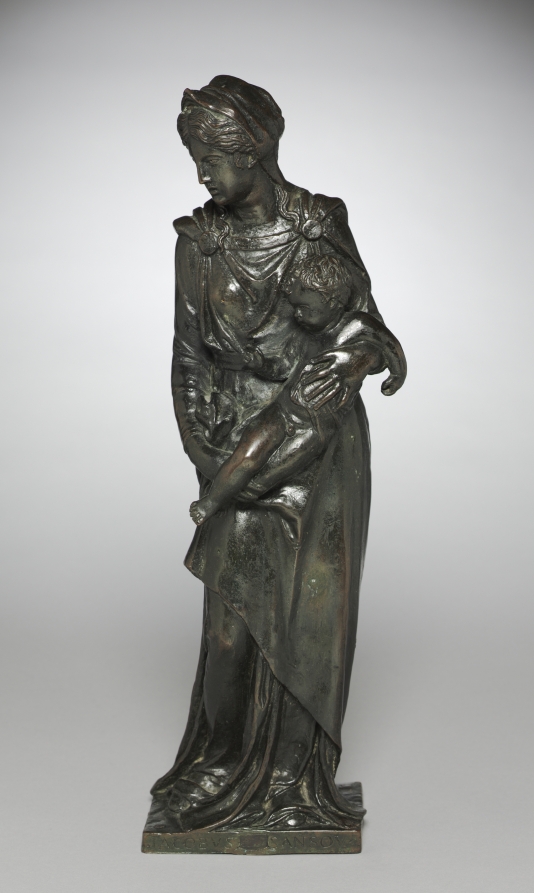
The Addison Urban Silhouette Research: Virgin and Child as Structural Paradigm
Preliminary Taxonomy: Two Sacred Geometries
The Qing dynasty liuli figure of Sudhana and the medieval European reliquary finial constitute opposing poles of architectural thought. The former operates through fluid asymmetry—an S-curve spine that refuses frontal address, redirecting the eye along a serpentine trajectory of becoming. The latter enforces vertical absolutism—a tapered pyramidal stack that terminates in a needle-point of theological certainty. For Addison's 2026 executive silhouette, these two grammars are not reconciled but stratified: the finial supplies the load-bearing logic, the Sudhana supplies the kinetic surface. The result is a garment that stands like architecture and moves like weather.
Geometric Integrity: The Finial as Load Path
The finial's geometry is fundamentally compressive. Its mass decreases as altitude increases—a deliberate distribution of visual weight that mirrors the structural principle of the Gothic buttress. Every tier narrows by a consistent ratio, producing a silhouette that reads as inevitable rather than designed. Translated to tailoring, this yields a shoulder line that is broad but not padded, a waist that tapers without cinching, and a hem that releases into a controlled flare. The integrity lies in the ratio, not the ornament. For 2026, Addison proposes a three-tier construction: a structured shoulder plane in bonded wool, a mid-body in double-faced cashmere, and a lower panel in technical silk that catches light like enamel. The vertical seam becomes the spine of the garment—a single continuous line from nape to hem, unbroken, uncompromised.
The Sudhana Curve: Dynamic Asymmetry as Executive Armor
The Sudhana figure's S-curve is not decorative. It is a narrative device—a body caught mid-pilgrimage, weight shifted, gaze averted, drapery in arrested motion. This is the antidote to the finial's static certainty. For the executive silhouette, the Sudhana principle manifests as controlled asymmetry: a single lapel that extends two centimeters beyond its counterpart, a sleeve that breaks at the wrist at a diagonal, a hem that rises at the left hip and falls at the right. These are not errors. They are deliberate destabilizations that prevent the garment from becoming a uniform. The wearer is not a monument. She is a trajectory.
Materiality: Liuli Light and Enamel Permanence
The liuli material of the Sudhana figure is semi-translucent, its colors fused in the kiln rather than applied to the surface. This suggests a 2026 fabric strategy of intrinsic coloration—yarns dyed at the filament level, woven in gradients that shift under different light temperatures. Addison's Onyx palette is not flat black but a stratified darkness: charcoal warp, ink weft, with a faint bronze undertone that emerges only in direct sunlight. The finial's enamel, by contrast, is opaque and declarative. Its lesson is selective permanence—hardware in brushed gunmetal, buttons in corozo treated to a matte onyx finish, zipper pulls in blackened brass. These elements do not compete with the textile. They anchor it.
Structural Poetics: The Garment as Reliquary
The finial is a container. It holds bone, cloth, the residue of sanctity. The 2026 executive coat must function similarly—not as a shell but as a vessel for presence. The interior construction matters as much as the exterior: bound seams in silk organza, a floating canvas that molds to the wearer's posture over time, pockets positioned at the exact angle of a hand at rest. The poetics are in the invisible engineering. The wearer does not display the garment. She inhabits it.
Urban Materiality: The City as Kiln
The urban environment is the third term in this equation. The finial belongs to the cathedral; the Sudhana belongs to the pilgrimage route. The 2026 executive belongs to the vertical city—a space of glass, steel, and compressed time. The silhouette must negotiate between the reflective (glass facades, wet asphalt) and the absorptive (concrete, wool, shadow). Addison's answer is a matte-against-gloss dialectic: a coat in felted Onyx wool worn over a trouser in liquid-finish cupro, the former absorbing light, the latter redirecting it. The contrast is not decorative. It is environmental intelligence.
Conclusion: The 2026 Executive as Sacred Hybrid
The Virgin and Child—Sudhana and finial—are not opposites. They are sequential states of the same spiritual architecture: the journey and the arrival, the curve and the axis, the kiln and the reliquary. The 2026 Addison silhouette does not choose between them. It wears both—the finial's vertical certainty as the garment's skeleton, the Sudhana's fluid asymmetry as its skin. The executive who wears it is neither monument nor wanderer. She is the point of intersection—a moving axis, a structured becoming. This is not fashion. This is urban liturgy.