Urban Form: Estérel Village
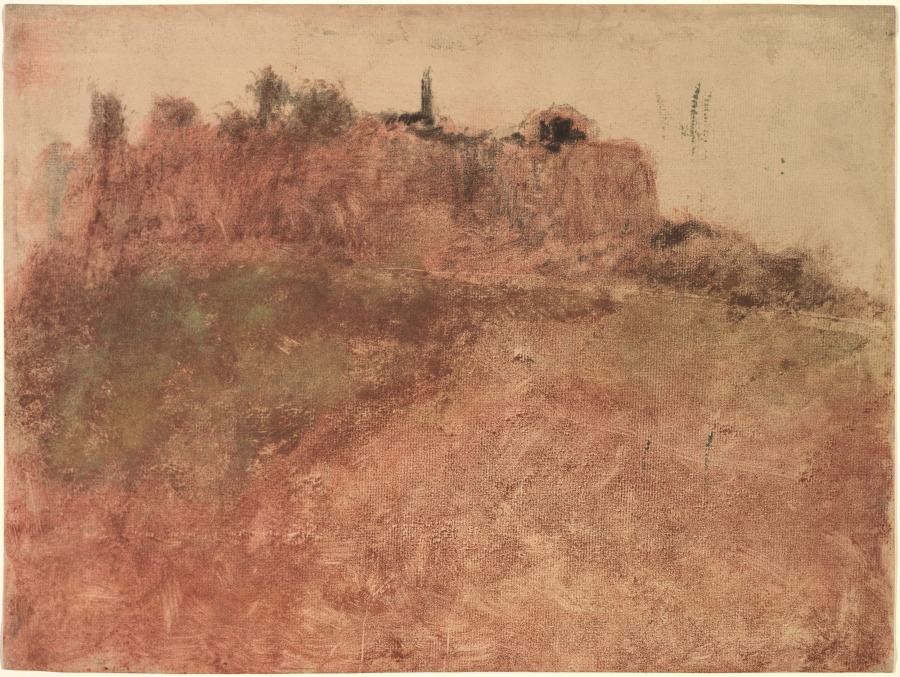
Urban Silhouette Research: Estérel Village — The Udumbara Protocol
I. Geometric Integrity: The Architecture of Absence
The Estérel Village artifact presents a radical proposition for the 2026 executive wardrobe: structure as negation. The "Udumbara Flowers" plaque operates not through additive ornamentation but through a disciplined subtraction of material presence. Its carved surface—layered petals rendered in low-relief wood grain—demonstrates a geometric logic that is simultaneously intricate and austere. The composition refuses symmetry in favor of organic asymmetry, yet maintains rigorous proportional control. Each carved vortex spirals inward toward a vanishing point that never fully resolves, creating what we term suspended geometry—a spatial tension between the visible and the void.
For Addison Fashion's 2026 silhouette, this translates to garments that occupy space without dominating it. The executive form must achieve the same paradoxical density: substantial enough to command a boardroom, yet porous enough to suggest intellectual permeability. The plaque's edge erosion—where lacquer peels and wood grain emerges—informs our approach to controlled deterioration in textile surfaces. We are not designing for permanence but for the aesthetic of time's passage, where wear becomes a structural feature rather than a flaw.
The "Cup and Stand" introduces a countervailing geometric principle: containment through curvature. The cup's rim, subtly inverted like pressed palms, creates a concave aperture that directs the eye downward into negative space. The stand's broad, lotus-platform base provides gravitational stability. Together, they form a vertical axis of receptive geometry—a column of emptiness framed by material precision. This axis, when translated to the body, defines the 2026 executive posture: shoulders squared but not rigid, torso elongated through a central void of unconstructed fabric, hips anchored by structured volume.
II. Structural Poetics: The Dialectic of Transience and Permanence
The Udumbara flower—blooming once every three thousand years—presents an impossible design brief: to crystallize the ephemeral within the durable. The artisan's solution was not to depict the flower literally but to simulate its behavior—the swirling, layered, light-responsive complexity of petals that exist only in the moment of their disappearance. This is process-based ornamentation, where the making is visible in the made.
Addison Fashion's 2026 collection adopts this principle through temporal tailoring. Seams are not hidden but articulated as structural evidence. Darts become architectural notations. The garment reveals its own construction as a form of honesty—a rejection of the seamless illusion that has dominated executive fashion for decades. The silhouette must communicate that it was built, not merely manufactured.
The cup's poetics reside in its functional negation. As a ritual vessel rather than a drinking implement, it exists to receive nothing material—only the intangible. Its beauty is entirely dependent on its emptiness. This is the aesthetics of capacity: the more perfect the vessel, the more profound its void. For the 2026 executive silhouette, this manifests as strategic hollowness—garments that create space around the body rather than adhering to it. The oversized coat that does not swallow but frames. The trouser that falls from the hip in a controlled cascade, neither clinging nor billowing.
The dialogue between plaque and cup—one depicting the impossible, the other embodying the empty—creates a resonant field that the 2026 silhouette must occupy. The executive who wears Addison does not choose between transience and permanence but embodies their suspension.
III. Urban Materiality: The Tactile Vocabulary of Restraint
The Estérel Village artifacts employ a material vocabulary of refined austerity. The plaque's wood is not exotic but common—its value derived from treatment, not origin. The cup's porcelain achieves eggshell thinness through technical mastery, not precious material. This is democratic luxury: excellence through process rather than rarity.
For 2026, Addison Fashion translates this into a textile program of engineered simplicity. We prioritize:
Matte surfaces with micro-texture—wool crepes with subtle slub, silk blends with dry hand, technical fabrics that absorb rather than reflect light. The finish must suggest the plaque's worn lacquer: evidence of handling, of time, of use.
Monochrome depth—the ivory of the cup's glaze, the slate of aged wood, the onyx of shadow. Color exists not as decoration but as tonal architecture, defining form through value rather than hue.
Weight differential—the cup's impossible lightness against the plaque's substantial mass. Garments must play with this contrast: a heavy wool coat over a featherweight silk shell, a structured shoulder against a fluid sleeve.
The urban environment of 2026 demands clothing that performs in compressed spaces—elevators, transit, open-plan offices—where the body is constantly negotiating proximity. The Estérel silhouette provides portable sanctuary: a geometry of self-containment that projects authority without aggression, presence without intrusion.
IV. The 2026 Executive Silhouette: A Synthesis
The definitive Addison silhouette for 2026 emerges from this analysis as a vertical column of controlled volume, punctuated by moments of strategic emptiness. Key structural elements include:
The Udumbara Shoulder—a rounded, slightly extended line that suggests containment rather than aggression. The shoulder seam drops 2cm below the natural joint, creating a subtle cocoon that frames the neck and head.
The Cup Stand Waist—a broad, stabilized midsection achieved through layered construction: a base layer of structured fabric, an intermediate floating panel, and an outer shell that suggests rather than reveals the body's form.
The Plaque Hem—a finish that acknowledges its own edge. Raw-cut wool, hand-rolled silk, laser-sealed technical fabric. The hem is not a conclusion but a threshold—the point where garment meets void.
This silhouette does not seek to flatter. It seeks to frame—to create a spatial context in which the wearer's presence becomes the primary content. Like the Udumbara flower that exists only in its moment of appearing, the Addison executive exists in the interval between structure and dissolution.
The Estérel Village artifacts teach us that the most powerful statement is often the most restrained. The 2026 silhouette is not a proclamation but a condition—an architecture of absence that makes presence possible.