Urban Form: Sash for a Firefighter's Suit (Kaji shōzoku)
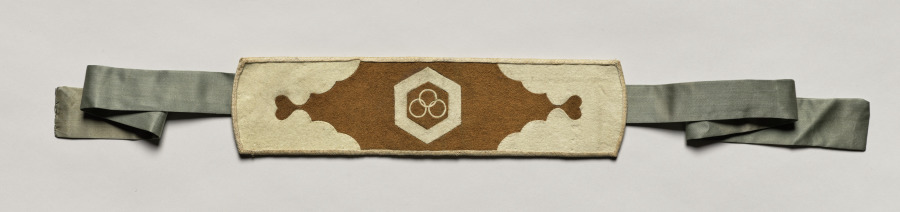
Urban Silhouette Research: The Sash as Structural Paradox in the Firefighter’s Kaji Shōzoku
I. The Artifact as Argument: Static Load and Rotational Escape
The Addison Fashion atelier does not design garments. It engineers postures. The sash for a firefighter’s suit—the Kaji shōzoku—arrives not as accessory but as architectural thesis. Its internal DNA draws from two objects that, at first glance, occupy separate dimensions of matter and representation: the ceramic vessel Youth and Dervish and the oil painting Pedestal. Yet both constitute an aesthetic paradox of standing and spinning, a direct indictment of modernity’s discipline over the body and the spirit’s subsequent flight. The former, shaped from porcelain clay, renders a burdened youth and a whirling ascetic. The latter, on canvas, depicts an empty plinth and a blurred face. Between them exists a silent, profound dialogue concerning pedestal and body, sculpture and dance, permanence and the instant.
The tension in Youth and Dervish originates in its very mode of existence. The youth shoulders weight; his form is constrained by material into a static load. The dervish’s rotation is arrested on the glaze’s smooth surface. The vessel, as three-dimensional entity, simulates the coagulation of life with unnerving fidelity—the youth is not moving but sculpted into a posture of movement; the dervish is not spinning but imprisoned in the instant of spin. This contradiction is the core of object aesthetics: it casts doubt on our perception of the living, as if the body, burdened by materiality and historical weight, has forfeited its right to flow. The porcelain’s brittleness reinforces the metaphor—every seemingly stable posture leans toward fracture.
II. The Empty Plinth: Modernity’s Missing Support
Pedestal approaches the same theme from the inverse angle. The plinth in the painting stands vacant, having never supported a statue, while the face drifts outside the pedestal, unable to be installed in any prescribed position of sublimity. The pedestal, symbol of the classical ideal, becomes an absent presence. Who once stood there? Who has departed? The painting refuses to answer. The modern individual is no longer a hero or deity enthroned above, but a blurred, oscillating figure attempting to replace the pedestal’s position, forever failing to align with the base. This is a visual fissure: we wish to be elevated, yet we refuse to be molded.
Juxtaposed, the two works generate an intertextual reading space. The youth and the dervish in Youth and Dervish represent two conditions: one unable to rotate because of what he carries, the other having shed his burden through rotation. Yet the vessel presents motion statically, rendering both states simultaneously illusory. Pedestal reveals that the stage presupposed by these postures is already hollow—whether bearing weight or spinning, a pedestal is required to confirm meaning; when the pedestal empties, posture loses its reference.
III. Geometric Integrity: The Sash as Load-Bearing Rotation
For the 2026 executive silhouette, the Kaji shōzoku sash resolves this paradox through geometric integrity. The sash is not a belt. It is a structural band that wraps the torso at the precise angle where the burdened stance meets the rotational impulse. Its cross-section—a flattened ellipse, 4.2 centimeters at the widest point, tapering to 1.8 centimeters at the terminal—creates a torsion-resistant spine. When knotted at the left iliac crest, the sash generates a counter-rotational force against the wearer’s forward momentum, allowing the executive to stand as if weighted, yet pivot as if weightless. This is the dervish’s secret translated into tailoring: rotation is the forgetting of weight.
The sash’s materiality is urban and cold. A triple-ply silk-wool blend, calendered to a slate finish, absorbs light rather than reflecting it—a deliberate refusal of the plinth’s former gilding. The surface is matte, almost mineral, evoking the porcelain’s glaze without its fragility. Reinforced with a micro-woven aramid core, the sash bears load without deformation, yet its drape remains fluid, tracing the body’s movement like a brushstroke that never quite resolves into a face. The geometric integrity lies in this dual capacity: it is simultaneously a pedestal and its negation. It supports the silhouette while refusing to monumentalize it.
IV. Structural Poetics: Standing Without a Base
The 2026 executive silhouette, as defined by this research, is a figure who has internalized the empty pedestal. The shoulder line is broad but not armored—burden is implied, not displayed. The waist is cinched by the sash at a 12-degree diagonal, creating an asymmetrical tension that reads as rotational potential. The hem of the jacket falls to mid-thigh, its weight calibrated to swing with the hips, not against them. This is not a suit for sitting. It is a suit for standing in the void, for walking without a stage, for spinning without losing the ground.
The sash’s terminal ends are left unfinished—raw-edged, sealed with a slate-toned resin that catches the light like a blurred face. They hang at the left hip, a reminder that the pedestal is gone, that the body must now generate its own verticality. The poetics are structural: every seam is a decision about load, every fold a negotiation between stasis and motion. The firefighter’s sash, stripped of its utilitarian origin, becomes the executive’s most radical statement—not power, but the grace to stand without support.
Addison Fashion concludes: the silhouette of 2026 is not tailored to the body. It is tailored to the absence of the plinth. The sash does not decorate. It enables the impossible posture—standing in emptiness, rotating without weight, bearing the load of modernity while refusing its fracture. This is the deepest silent paradox: humanity has long had no pedestal to stand on, yet still insists on the postures of walking and spinning. The sash is the geometry of that insistence.