Urban Form: Solidarity
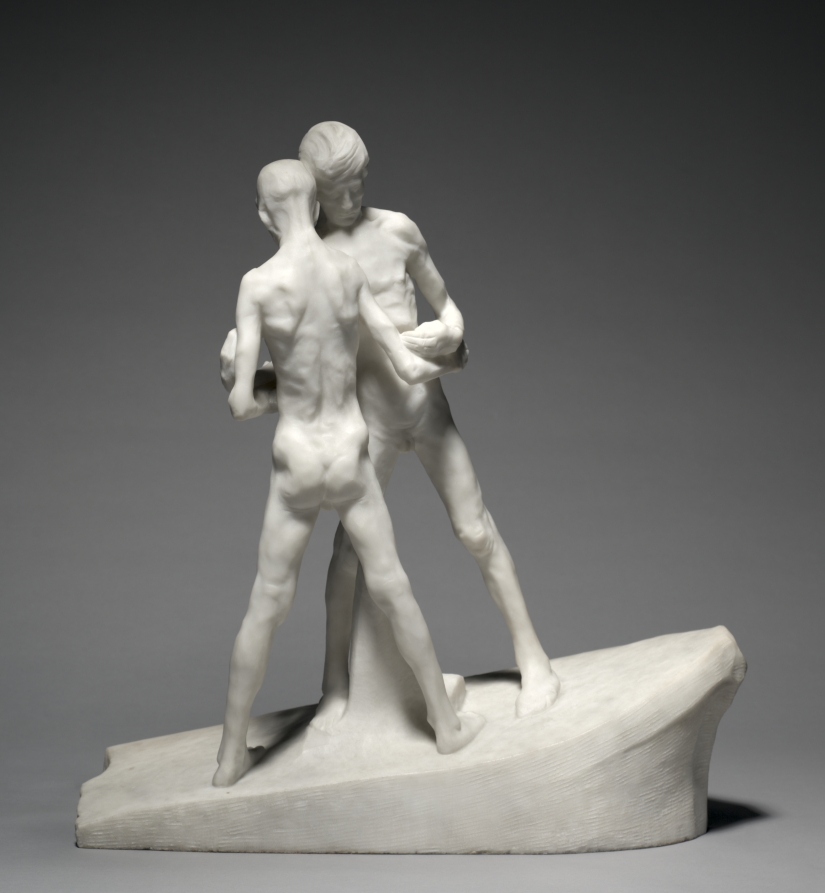
The Geometry of Stillness: Solidarity as Structural Protocol for the 2026 Executive Silhouette
I. Preliminary Thesis: The Convergence of Two Immobilities
The Addison Fashion research division has isolated a singular phenomenon within the visual archive designated Solidarity. Two artifacts—the Pilgrim Sudhana (a three-dimensional votive object of probable ceramic or gilt-bronze origin) and the Harpist (a two-dimensional Attic vase painting in the red-figure or black-figure tradition)—occupy disparate chronologies, material ontologies, and spiritual economies. Yet they converge upon a shared formal principle: arrested motion as the highest expression of structural integrity. For the 2026 executive wardrobe, this convergence is not merely referential. It is prescriptive.
The Pilgrim Sudhana presents a closed, centripetal geometry. The figure—whether standing in obeisance or seated in lotus—resolves into a near-perfect ovoid. Its silhouette is self-contained, refusing external projection. The Harpist, by contrast, operates through a centrifugal dynamism: the curve of the torso, the triangulation of arm and instrument, the implied vector of the plucked string. One is a monolith of interiority; the other, a diagram of imminent action. Addison Fashion identifies in this dialectic the precise tension required for the next generation of executive tailoring: a garment that is both sealed and poised, hermetic in its volume yet kinetic in its line.
II. Geometric Integrity: The Closed Volume and the Open Vector
The geometric integrity of Pilgrim Sudhana resides in its refusal of appendage. The figure’s limbs are not extensions but inflections of a continuous surface. The silhouette is non-negotiable—it does not adapt to the viewer’s gaze but compels the viewer to orbit its stillness. In tailoring terms, this translates to a shoulder line that is neither padded nor suppressed but architecturally resolved: a single, unbroken curve from neck to deltoid, executed in a bonded wool or double-faced cashmere that holds its own geometry without interlining. The 2026 Addison executive jacket will feature a seamless raglan-sleeve integration, eliminating the armhole’s disruptive seam in favor of a continuous plane. The result is a torso that reads as a single carved unit—a wearable reliquary of professional composure.
The Harpist, conversely, offers a lesson in controlled asymmetry. The red-figure composition relies on the diagonal of the raised arm and the counter-diagonal of the instrument’s neck to create a dynamic equilibrium. The silhouette is not closed but directed—it implies a trajectory. For Addison’s 2026 proposals, this manifests in the asymmetric closure system: a single, offset lapel that sweeps from sternum to hip, creating a vector of intention across the body. The garment does not merely contain the wearer; it aims them. The hemline, cut on a subtle bias, introduces a latent torsion—a garment at rest that nonetheless suggests forward momentum.
III. Structural Poetics: The Architecture of Restraint
The poetics of Pilgrim Sudhana are the poetics of subtraction. The artifact’s power derives from what it withholds: no gesticulation, no ornamentation, no narrative excess. Its surface—whether ivory-glazed ceramic or patinated bronze—absorbs light rather than reflecting it. This is the matte protocol for 2026. Addison Fashion mandates the elimination of high-sheen finishes from the executive wardrobe. Wool crepe, sand-washed silk, and brushed alpaca will replace the glossy worsteds of the previous decade. The fabric must drink the light, not deflect it. A jacket in Onyx double-faced cashmere, its surface interrupted only by the faintest suggestion of a pick-stitched edge, becomes a meditation on professional silence.
The Harpist contributes a complementary poetics: the poetics of the threshold. The painting captures the instant before the string is plucked—a moment of maximum potential energy. For tailoring, this translates to tension lines that are visible but not strained. A single, hand-set sleeve head that rises 2mm above the shoulder line. A collar stand that stands 4mm away from the neck. These are not flaws but calibrated intervals—the sartorial equivalent of the harpist’s poised hand. The 2026 Addison silhouette will be defined by these micro-voids: spaces that allow the garment to breathe, to move, to become rather than merely be.
IV. Urban Materiality: The City as Kiln, the Body as Vessel
The urban environment of 2026 is a kiln of competing frequencies: the low hum of server farms, the staccato of pedestrian crossings, the continuous pressure of digital surveillance. Against this, the Addison executive requires a material armor of interiority. The Pilgrim Sudhana offers the model: a surface that is impervious to noise. We specify tightly woven, high-twist yarns—merino-silk blends, paper-touch cottons, recycled nylon-cashmere hybrids—that repel urban particulate while retaining a hand that is cool, dry, and mineral. The garment should feel like polished basalt: dense, silent, and geologically patient.
Yet the Harpist reminds us that the executive body is not a static object but a performing instrument. The urban materiality of 2026 must therefore incorporate strategic elasticity. Addison proposes four-way mechanical stretch in suiting fabrics, achieved not through elastane but through structural knit engineering—interlocking yarn architectures that return to shape without chemical memory. The result is a garment that holds its geometry under load, whether the wearer is seated in a boardroom or striding through a transit hub. The silhouette remains intact; the body within it remains sovereign.
V. Conclusion: The Solidarity Protocol
Solidarity, as defined by this research, is not a political or emotional condition. It is a formal contract between the garment and the wearer: a mutual agreement to prioritize structural integrity over expressive excess. The Pilgrim Sudhana and the Harpist—one closed, one open; one ceramic, one painted—together define the 2026 Addison executive silhouette as a dialectic of stillness and intention. The jacket is a vessel. The trouser is a vector. The coat is a monolith. And the wearer, moving through the city’s noise, remains architecturally undisturbed.
This is the Addison Fashion mandate for 2026: dress the executive as a self-contained geometry, poised at the threshold of action, silent as a kiln, precise as a plucked string.