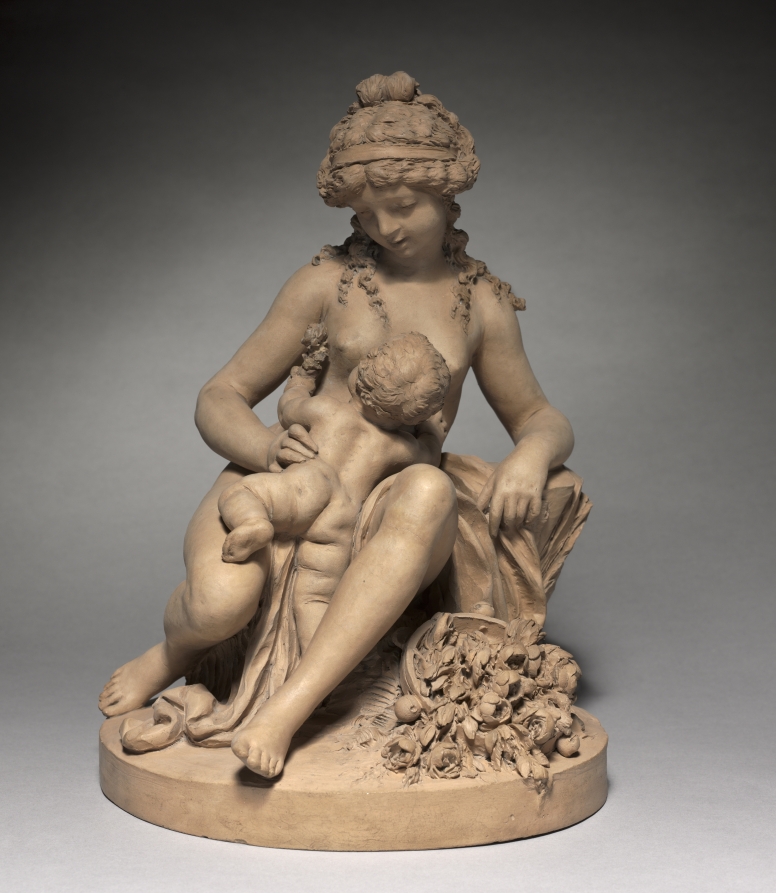
Urban Form: Young Woman and Child at Play
Urban Silhouette Research: The Geometry of Liminality
I. The Architectural Body: Form as Metaphysical Armor
The Addison woman does not dress. She constructs. For 2026, the executive silhouette abandons the soft diplomacy of draped jersey and the nostalgic romanticism of the bias cut. It adopts instead the severe, unyielding logic of the Meiping vase—a form whose beauty resides entirely in its refusal to accommodate the body's organic irregularities. The vase does not embrace. It contains. It disciplines. The shoulder line for Spring/Summer 2026 must echo this ceramic restraint: a rounded cap that tapers with mathematical precision into a narrow, elongated torso, creating an inverted teardrop that suggests both vulnerability and absolute control.
This is not the hourglass. This is the vessel. The Addison pattern block eliminates the waist dart entirely, replacing it with a single vertical seam that runs from clavicle to hem—a spine of construction that mimics the Meiping's continuous profile. The result is a silhouette that reads as monolithic from the front and architectural from the side. The woman inside becomes secondary to the form she inhabits. This is intentional. In the urban theater of 2026—a landscape of glass, steel, and algorithmic surveillance—the executive body must be legible as structure, not as flesh.
II. The Socratic Hem: The Weight of the Unseen
Jacques-Louis David's The Death of Socrates offers the second pillar of the 2026 silhouette: the hem as philosophical threshold. Observe the philosopher's robe. It does not flutter. It does not cling. It falls in columnar folds, each crease a decision, each shadow a refusal of chaos. The garment is not clothing; it is architecture for the departing soul. For Addison's 2026 executive collection, the hemline must achieve this same gravitas. We propose a weighted silk-wool blend—72% virgin wool, 28% mulberry silk—cut on the true bias but interfaced with horsehair braid at the interior hem. The effect is a skirt or trouser that moves with the deliberate slowness of ritual. It does not swish. It processes.
The length is non-negotiable: mid-calf, exposing only the ankle and the architectural heel. This is the Socratic gap—the visible sliver of mortality between the garment's authority and the ground's reality. The urban executive does not run. She arrives. The hem ensures this.
III. The Wave Pattern: Data as Ornament, Ornament as Data
The Meiping vase's wave motif—those dense, interlocking vortices that cover every centimeter of the ceramic surface—provides the textile logic for 2026. In the digital age, we are drowning in waves: market fluctuations, information cascades, the relentless churn of the 24-hour news cycle. The Addison response is not to simplify but to formalize. We translate the vase's wave pattern into a jacquard-woven monofilament that reads as solid slate from three meters but reveals its micro-geometry only upon intimate inspection. This is the new minimalism: not the absence of detail, but the compression of infinite detail into a single, legible plane.
The pattern is applied to the column dress and the structured car coat. It does not decorate. It encodes. Each wave is a data point; each vortex a decision made and archived. The executive who wears it carries her entire professional history on her back—visible only to those with the discipline to look closely.
IV. Materiality: The Urban Palimpsest
The 2026 Addison woman moves through spaces that are layered with time: a Brutalist lobby renovated into a co-working hub; a 19th-century warehouse now housing a biotech startup. Her clothing must acknowledge this palimpsest. We propose a three-layer fabrication system:
Layer One: The Substrate. A matte, slate-grey compact wool with a dry, almost chalky hand. This is the ceramic body—the unglazed truth of the material.
Layer Two: The Glaze. A semi-transparent polyurethane film bonded to the wool at the shoulder and hem. It catches light like the Meiping's celadon glaze—a wet, reflective surface that suggests depth without revealing it. This is the Socratic gaze: directed outward, yet focused on the invisible.
Layer Three: The Wave. A laser-cut micro-perforation pattern applied to the film, creating a moiré effect that shifts with the wearer's movement. From a distance, the garment appears solid. Up close, it dissolves into thousands of tiny apertures—each one a breath, a heartbeat, a moment of doubt.
V. The 2026 Silhouette: A Manifesto in Slate
The definitive Addison silhouette for 2026 is neither soft nor aggressive. It is liminal. It occupies the threshold between the body and the city, between the visible and the invisible, between the philosophical death of the ego and the material life of the garment. It is a Meiping vase worn on the body: a vessel for time, a container for contradiction, a form that does not resolve but endures.
The color is Slate—not grey, not black, but the precise hue of a rain-slicked limestone at dusk. It is the color of urban silence. It is the color of waiting. It is the color of a woman who has learned that the most powerful statement is not to speak, but to stand—immaculate, impenetrable, and utterly, devastatingly present.
This is the Addison woman. This is her armor. This is her wave.