Urban Form: Carving from an Overmantel
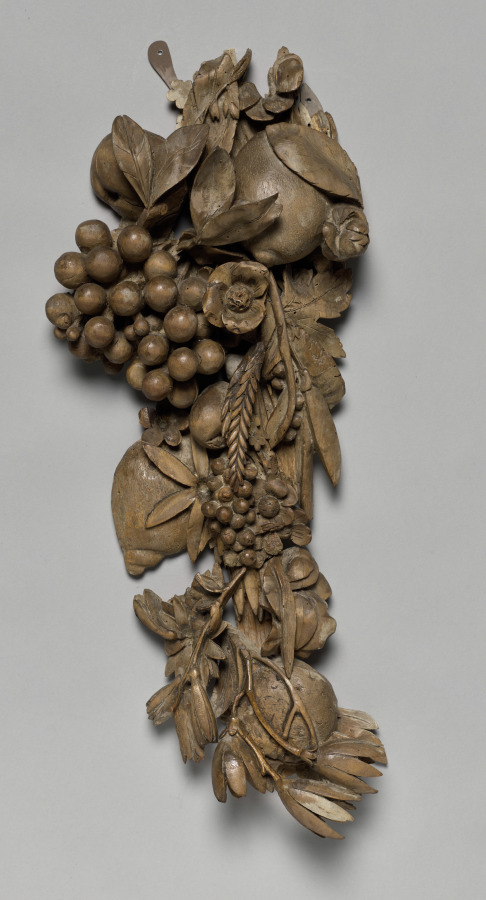
Urban Silhouette Research: Carving from an Overmantel
I. Geometric Integrity: The Architecture of Transcendence
The Bodhisattva and the Amulet in the Form of a Seated Figure with Bovine Head present two distinct yet convergent geometric systems. The Bodhisattva operates on a principle of continuous curvature—an unbroken flow of line from the cranial apex through the shoulders, descending into the drapery folds that cascade like liquid architecture. Its geometry is additive: each element (halo, ushnisha, mudra-bearing hands) layers upon the last, building mass without disrupting the axial spine. The silhouette is columnar yet organic, a vertical monolith softened by the rhythm of textile.
The bovine-headed amulet, by contrast, employs discontinuous geometry. The head is a hard, angular interruption—bovine horns create a horizontal counterforce to the seated body's verticality. The form is subtractive, as if the human figure has been carved away to reveal an animal essence beneath. Where the Bodhisattva integrates, the amulet juxtaposes. Where one achieves unity through flow, the other achieves tension through fracture.
For the 2026 executive silhouette, this dichotomy is instructive. The Addison wardrobe must reconcile columnar continuity with strategic interruption. The shoulder line—our own ushnisha—must remain unbroken, a single architectural gesture from clavicle to clavicle. Yet the torso requires the amulet's logic: a deliberate rupture, a horizontal seam or asymmetric closure that disrupts the vertical fall. This is not decoration. This is structural poetics.
II. Materiality: The Weight of the Sacred and the Utility of the Talismanic
The Bodhisattva's material vocabulary—gilt bronze, jade, lacquer—signals permanence through preciousness. These are substances that resist time, that accrue value through their very resistance to decay. The surface is polished to a high sheen, reflecting light as if the figure itself emanates radiance. This is materiality as theology: the physical object participates in the immaterial truth it represents.
The amulet, conversely, likely employed base materials—faience, bone, low-fired clay. Its power resided not in rarity but in proximity to the body. Worn against skin, warmed by flesh, it functioned as a second dermis. Its surface was meant to be touched, not merely viewed. This is materiality as intimacy, as daily ritual rather than institutional worship.
For Addison's 2026 collections, we propose a synthesis: urban materiality that acknowledges both registers. The outer shell—the coat, the blazer—must possess the Bodhisattva's gravitas. We specify double-faced cashmere in Onyx, its surface matte yet deep, absorbing light rather than reflecting it. This is not the gleam of gilt bronze but the void of polished stone. Beneath, however, the interior layers—the silk crepe blouse, the fine-gauge knit—must possess the amulet's tactile immediacy. These are garments meant to be felt against the skin, their value measured in sensory proximity rather than visual spectacle.
III. The Mediating Silhouette: From Museum Vitrine to Urban Grid
Both objects function as intermediaries—the Bodhisattva between devotee and dharma, the amulet between wearer and unseen forces. The 2026 executive operates in an analogous mediating position: between the private self and the public performance of authority. The silhouette must therefore perform a double function. It must project—commanding space, asserting presence—while simultaneously protecting, creating a boundary between the wearer's interiority and the city's demands.
We propose a silhouette defined by three geometric operations:
First, the vertical axis. The spine of the garment—center-back seam, front placket, the fall of the trouser—must remain uninterrupted. This is the Bodhisattva's column, the axis mundi of the urban body. No horizontal seam may cross this line without justification. The zipper, where present, is concealed. The button stance is offset. The vertical is sacred.
Second, the horizontal interruption. At the hip or waist, we introduce the amulet's logic: a deliberate break. This may manifest as an asymmetric closure, a sculpted peplum, or a belt that functions as armature rather than accessory. This interruption is not decorative but structural—it redistributes weight, creates a new center of gravity, and allows the eye to rest before continuing its vertical descent.
Third, the bovine horn. We translate the amulet's lateral protrusions into shoulder architecture. Not the exaggerated power shoulder of the 1980s, but a subtle extension—a 2cm projection beyond the natural shoulder line, achieved through internal canvassing rather than padding. This creates a horizontal tension that counterbalances the vertical flow, a silent assertion of presence that reads as confidence rather than aggression.
IV. Conclusion: The Overmantel as Urban Armor
The "overmantel" of our title refers to the architectural space above the fireplace—a site of display, of focal gravity, of domestic monumentality. To carve from this space is to extract the essential gesture from the ornamental surround. The 2026 Addison silhouette performs this extraction. It removes the superfluous, retains the structural poetics, and translates the sacred and the talismanic into a single, wearable proposition.
The executive who wears this garment does not choose between the Bodhisattva's compassion and the amulet's protection. She embodies both. She is column and rupture, permanence and intimacy, void and presence. The city is her museum. The grid is her vitrine. And the silhouette—Onyx, Minimalist, architecturally resolved—is her monument to the everyday.