Urban Form: Fragment of a Band with Abstract Pattern
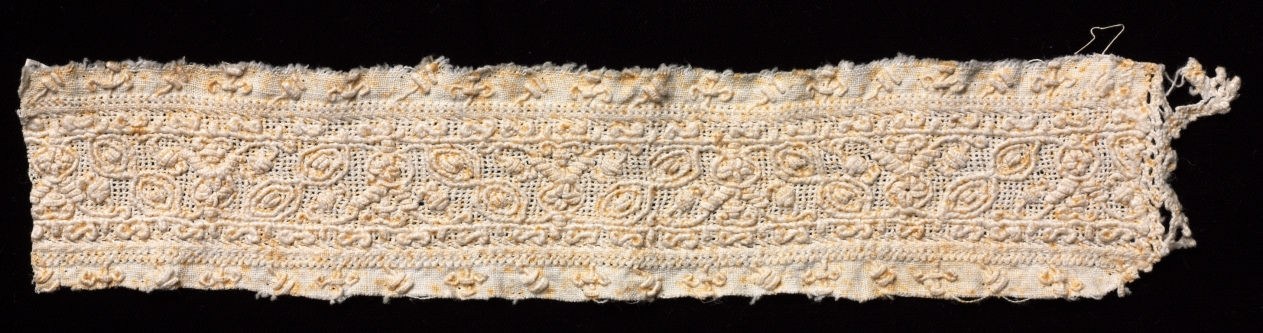
Urban Silhouette Research: Fragment of a Band with Abstract Pattern
I. Geometric Integrity: The Syntax of the Fragment
The artifact under examination—a fragment of a band bearing an abstract pattern—operates not as a decorative remnant but as a compressed architectural code. Its geometry is deceptively austere: a horizontal band, internally segmented by a rhythmic sequence of angular and curvilinear motifs. These motifs do not narrate; they iterate. The repetition is not mechanical but modulated, each unit subtly shifting in proportion, creating a visual cadence that reads as both systematic and organic. This is the geometry of the interval—the space between marks—and it is precisely this negative architecture that defines the 2026 Addison executive silhouette.
The band’s structural logic is one of containment and release. The outer edges are rigid, linear, unyielding—a frame that refuses ornamentation. Within this frame, the abstract pattern unfolds with a controlled asymmetry, its internal vectors pulling the eye laterally while anchoring it to a central axis. This tension between the peripheral boundary and the internal dynamism mirrors the contemporary urban condition: the executive body moving through the city, constrained by infrastructure yet animated by interior complexity. The silhouette that emerges is not a shape but a system of edges—a wearable fragment that encodes movement, pause, and direction.
II. Structural Poetics: From Tahitian Resonance to Nilotic Order
The internal DNA of this fragment reveals a double inheritance. On one hand, the chromatic and gestural freedom of Gauguin’s Ia Orana Maria—its refusal of perspectival depth, its flattening of the sacred into the sensory. On the other, the funerary precision of the Egyptian feline deity—its profile law, its symbolic rigidity, its function as a threshold guardian. The fragment synthesizes these poles: the band’s abstract pattern is neither purely expressive nor purely emblematic. It is both a surface and a sigil.
For the 2026 executive silhouette, this synthesis manifests as a garment that does not drape but constructs. The band’s geometry translates into a shoulder line that is sharp yet slightly displaced—an asymmetrical yoke that suggests movement without sacrificing authority. The torso is columnar, its volume determined by the negative space of the pattern: where the motif recedes, the fabric follows; where it advances, the fabric holds. This is not tailoring as suppression but tailoring as topological mapping. The wearer becomes a carrier of the fragment’s rhythm, their body a vertical extension of the band’s horizontal logic.
The poetics here are cold, urban, and ritualistic. The fragment does not evoke warmth or nostalgia; it evokes the liturgy of the street—the repeated gestures of the commute, the calibrated distances of the boardroom, the silent negotiations of the elevator. Its abstract pattern is a script for these movements, a visual grammar of professional endurance. The Egyptian cat deity guards the threshold between life and death; the Gauguin Madonna sanctifies the everyday. The Addison executive, clad in this silhouette, guards the threshold between the self and the system, sanctifying the act of appearing in public space.
III. Urban Materiality: The Fragment as Armor and Interface
The material translation of this fragment demands a textile that is both rigid and responsive. The band’s geometry suggests a double-faced construction: an outer surface of matte, tightly woven wool or technical silk—Onyx in tone, absorbing light rather than reflecting it—and an inner surface of fluid, body-temperature-responsive mesh. The outer layer carries the abstract pattern as a laser-cut or bonded relief, its edges precise to the millimeter, its depth calibrated to cast micro-shadows that shift with the wearer’s movement. The inner layer provides the negative space: a dark, quiet cavity against which the pattern’s rhythm can be felt rather than seen.
This materiality is urban in its refusal of ornament. There are no buttons, no visible seams, no extraneous hardware. The closure is magnetic, hidden within the band’s own geometry. The silhouette is seamless in its logic, even as its construction reveals the fragment’s segmented origin. The executive who wears this garment does not adorn themselves; they inhabit a system. The abstract pattern becomes a form of urban camouflage—not to disappear, but to signal membership in a tribe that values precision over display, structure over softness, and the cold poetry of the interval over the warmth of the continuous line.
In the 2026 Addison wardrobe, this fragment defines the Minimalist executive silhouette as a mobile architecture. It is a band of meaning wrapped around the body, a horizontal code that verticalizes into presence. The wearer becomes a living fragment—part Tahitian light, part Nilotic shadow—moving through the city as both guardian and ghost, their silhouette a quiet, devastating argument for the power of the incomplete.