Urban Form: Fragment of a Border with Abstract Pattern
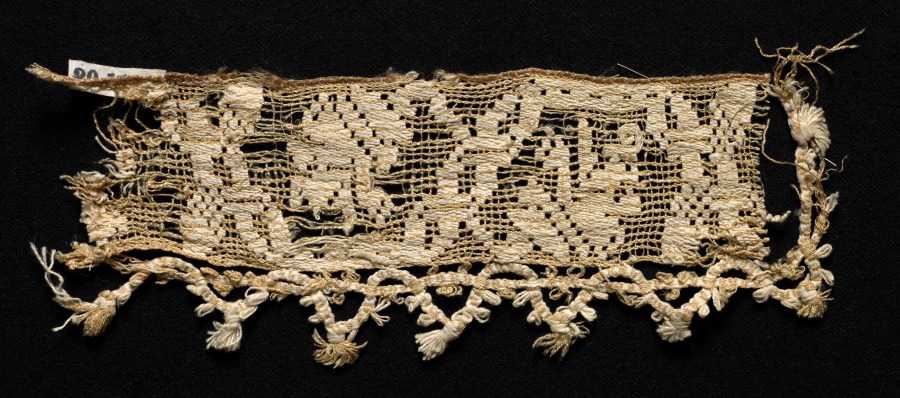
Urban Silhouette Research: Fragment of a Border with Abstract Pattern
Preliminary Geometry: The Border as Structural Threshold
The fragment under examination presents a disciplined abstraction: a border—that most liminal of architectural devices—rendered as a self-sufficient aesthetic object. Its internal logic is not decorative but constitutive. The abstract pattern operates as a rhythmic sequence of interruptions, a calibrated tension between the continuous edge and the discrete mark. For Addison Fashion, this fragment is not ornament. It is a spatial proposition. The border, stripped of its enclosing function, becomes pure structure: a line that thinks, a boundary that generates volume rather than merely delimiting it.
The geometric integrity here is severe and unsentimental. There is no organic drift, no romantic asymmetry. The pattern advances through repetition with variation—each unit of the motif locked into a proportional system that recalls the modular discipline of Japanese kumiko joinery or the serial logic of a medieval illuminated manuscript’s marginalia. Yet the fragment refuses completion. It is a cut, a partial view, and this partiality is its most contemporary gesture. The 2026 executive silhouette will not be a finished statement. It will be a fragment of a larger system, worn with the confidence of someone who understands that authority resides in the unshown as much as the shown.
Structural Poetics: The Udonge Principle and the Chest Paradox
The internal DNA of this research invokes two objects: the Udonge plaque of Kyoto and the medieval European Chest for Storing Garments. Their dialogue is not historical but structural. The Udonge plaque presents a flower that is never depicted—only named. Its materiality is wood and ink, yet its referent is an invisible, three-thousand-year bloom. This is the aesthetics of absent presence. The chest painting, conversely, presents a closed volume whose interior is forever withheld. This is the aesthetics of present absence. Both objects suspend the viewer between what is given and what is implied.
Translated into garment architecture, this duality defines the Addison executive silhouette for 2026. The Udonge principle manifests as negative space engineered into the pattern: a shoulder seam that stops short, a lapel that folds inward rather than outward, a hem that suggests continuation beyond the fabric’s edge. The chest principle manifests as concealed volume: internal pockets, hidden closures, layered panels that reveal their construction only upon movement. The wearer becomes a walking contradiction—visibly structured, internally secretive. This is not deception. It is ontological luxury: the refusal to be fully known.
The fragment’s abstract pattern reinforces this through its own logic. Each motif is a small enclosure—a geometric cell—yet the cells do not close. They abut, overlap, and leave interstices. In tailoring, this translates to open-work seams, floating panels, and articulated joints that allow the garment to breathe without losing its architectural line. The border is no longer a limit. It is a generative edge.
Urban Materiality: Onyx, Slate, and the Weight of Shadow
The palette for this silhouette is Onyx—not black as absence, but black as compressed density. Onyx absorbs light without reflecting it, creating a surface that reads as both matte and deep. In urban environments, where glass and steel fracture light into spectacle, Onyx is a act of visual silence. It does not compete. It commands through withdrawal.
The fragment’s materiality—likely ink on paper or pigment on wood—suggests a similar discipline. The pattern is not glossy. It is matter-of-fact, almost forensic in its clarity. For 2026, Addison will translate this into fabrics with dry hand-feel: high-twist wool, paper-touch cotton, bonded silk that holds a crease like a folded architectural drawing. The goal is not softness. It is resistance—to drape, to trend, to the easy seductions of fluidity.
Yet the fragment also contains a counter-impulse. The abstract pattern’s repetition creates a visual hum, a low-frequency vibration that prevents the Onyx from becoming inert. In garment terms, this is achieved through micro-texture: a jacquard weave that reveals its pattern only at close range, a tonal embroidery that maps the body’s geometry without announcing itself. The executive silhouette must reward proximity. It is not for the crowd. It is for the one who looks.
Silhouette Definition: The 2026 Executive Form
The resulting silhouette is columnar but not rigid. It borrows the fragment’s border logic: a continuous vertical line from shoulder to hem, interrupted by strategic apertures—a slit at the wrist, a vent at the back, a seam that opens into a pleat. The shoulder is extended but unpadded, relying on the fabric’s own weight to create a clean descent. The waist is implied, not cinched, marked by a change in texture rather than a belt. The trouser is wide but not voluminous, its fullness controlled by a deep pleat that falls from the hip like a folded screen.
This is not a silhouette for negotiation. It is a silhouette for pronouncement. It assumes a wearer who has already arrived, who does not need to signal authority through aggression or ornament. The fragment’s abstract pattern teaches that repetition is a form of power—the power to persist without escalation. The Udonge teaches that absence is a form of presence. The chest teaches that concealment is a form of depth.
Addison Fashion’s 2026 executive silhouette is therefore a border fragment worn as a whole garment: incomplete by design, severe in its geometry, silent in its materiality. It does not decorate the body. It edits it. And in that editing, it reveals the only luxury that matters in an over-saturated world: the discipline of the unseen.