Urban Form: Carved Bowl
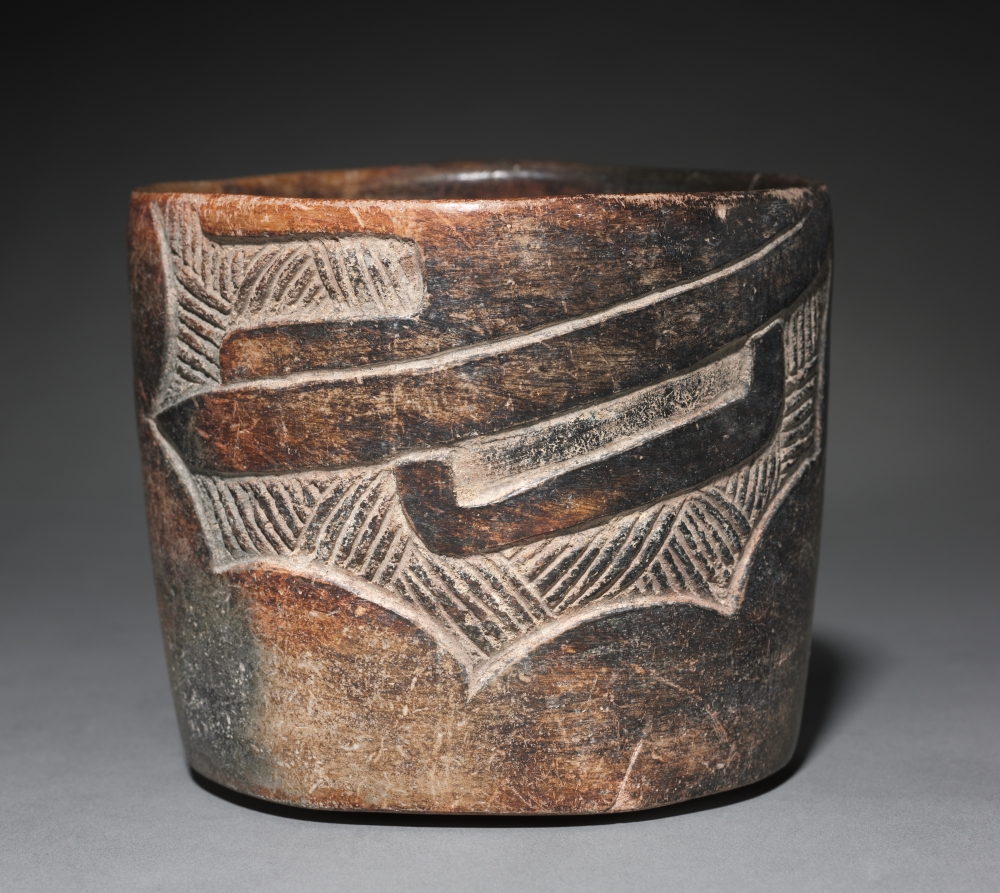
Urban Silhouette Research: Carved Bowl — The Archaeology of the 2026 Executive Form
I. The Fragment as Structural Doctrine
The Mold Fragment with Musicians is not an artifact of decoration. It is a treatise on negative space. The concave incisions — originally tooling marks for ceramic production — constitute the earliest evidence of what Addison Fashion now codifies as gestural architecture: the principle that a garment's authority resides not in its surface but in the voids it carves around the body. For the 2026 executive silhouette, this is foundational. The fragment teaches that a shoulder line is not a seam; it is a structural incision, a deliberate subtraction from the surrounding volume of air.
Observe the geometry. The fragment presents no complete figure, no symmetrical composition. It offers instead a partial arc — a curved plane interrupted by fracture. This is the precise logic of the Addison tailored jacket for 2026: a single, uninterrupted sweep from clavicle to hem, severed at the waist by an asymmetric closure. The break is not failure. It is controlled incompletion, the same aesthetic intelligence that allowed Tang artisans to trust the fragment as a complete statement. The executive does not require wholeness. She requires resonance.
II. The Rubbing as Chromatic Reduction
The Rubbing of a Stone from the Tang-Fang Collection operates on an inverse principle. Where the mold is volumetric, the rubbing is planar. Where the mold is tactile, the rubbing is optical. Yet both arrive at the same destination: the liberation of line from mass. The rubbing eliminates color, texture, and weight, reducing the stone's three-dimensional presence to a binary field of ink and paper. What remains is pure calligraphic velocity — the trace of the brush, the pressure of the chisel, the rhythm of the wrist.
For Addison's 2026 palette, this translates directly into the Slate register. Slate is not gray. It is the color of compressed time — the tonal midpoint between Onyx's absolute authority and Ivory's exposed vulnerability. A Slate wool crepe suit absorbs light the way the rubbing absorbs the stone's volume: it flattens the body's irregularities into a continuous, disciplined plane. The fabric does not drape. It transcribes. Every fold is a brushstroke; every seam is a flying-white gesture, the deliberate thinning of ink that reveals the speed of the hand.
III. The Generative Loop: Mold to Rubbing, Body to Garment
The two artifacts form a closed circuit. The mold is the body before representation — raw, tactile, embedded in the physics of clay. The rubbing is the body after representation — abstracted, flattened, released into the autonomy of the sign. Between them lies the entire process of executive self-presentation: the daily transformation of flesh into silhouette, of presence into impression, of the private self into the public carved bowl that contains and conceals it.
The 2026 Addison silhouette resolves this dialectic through architectural poetics. The shoulder is built with a single internal canvas layer — no padding, no foam — so that the wearer's own bone structure provides the load-bearing geometry. The torso is cut on a subtle A-line, widening by precisely 4.5 centimeters from underarm to hem, creating a negative space between fabric and skin that functions as the garment's acoustic chamber. The body moves within the cloth; the cloth does not cling to the body. This is the mold fragment principle: the garment is the die, the wearer is the molten material, and the resulting silhouette is the frozen gesture of a single, decisive motion.
IV. Urban Materiality and the Ethics of the Incomplete
The contemporary executive operates in a landscape of permanent incompletion — interrupted meetings, fragmented attention, partial information. The Addison 2026 collection does not resist this condition. It formalizes it. A jacket with an unfinished hem — raw-cut, unlined, the warp and weft exposed — is not a defect. It is a rubbing of the wearer's own temporality, a record of the moment before resolution. The Carved Bowl silhouette, named for the ceramic vessel that holds without spilling, that contains without enclosing, is the definitive shape of this ethic.
The bowl is the oldest human technology of containment. The mold fragment is the oldest human technology of reproduction. The rubbing is the oldest human technology of translation. Addison Fashion's 2026 executive silhouette is the convergence of all three: a carved vessel for the urban body, a negative impression of authority, a monochrome transcription of power into poise. The woman who wears it does not announce herself. She resonates — like the silent musicians in the clay, like the vanished stone in the ink, like the bowl that holds nothing but the shape of what it once contained.
Slate. Minimalist. Carved. Complete in its incompletion.