Urban Form: Venus after the Bath
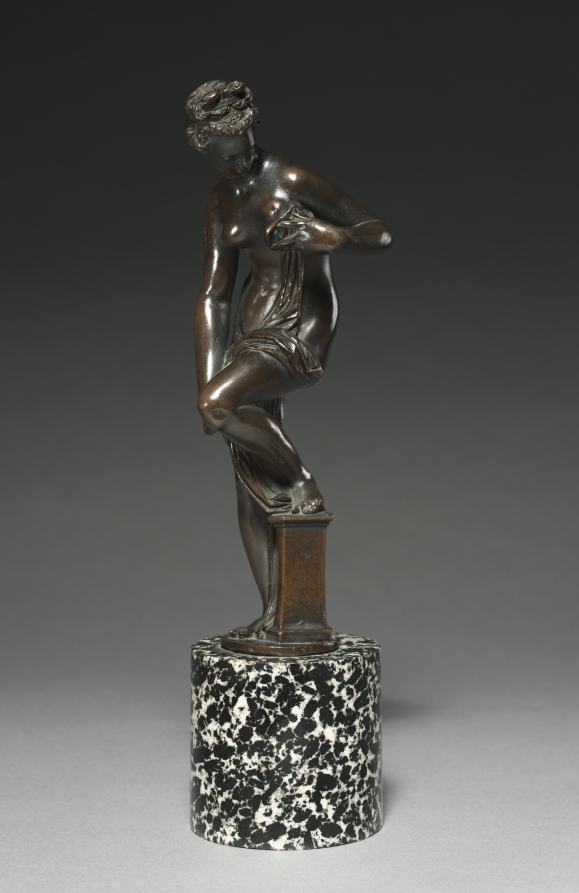
Urban Silhouette Research: Venus after the Bath — Form as Quiet Infrastructure
The Addison Fashion NYC design intelligence unit treats the Venus after the Bath brief not as a figurative quotation but as a structural problem. The source DNA — David's Death of Socrates set against the anonymous Chest for Storing Garments — establishes a dialectic between the exposed gesture and the concealed volume. For the 2026 executive wardrobe, we resolve this dialectic in favor of the second term. The silhouette is not a proclamation; it is an enclosure. The body is not staged; it is housed.
I. The Rejection of the Theatrical Line
David's composition operates through directed light and a single, legible vector — the raised hand, the pointing finger, the cup. It is a silhouette built for the viewer's eye, calibrated to be read at distance. This is the grammar of the podium, the courtroom, the quarterly earnings call. It is also, in 2026, commercially exhausted. The executive who dresses as a thesis statement reads as pre-pandemic inventory: legible, loud, and structurally overdetermined.
Our research therefore inverts the source. Where David externalizes interior states through contour and chiaroscuro, the Addison silhouette internalizes them through drape, weight, and negative space. The shoulder is not built to broadcast authority; it is engineered to disappear into the wearer's own architecture. The lapel is not a frame for the face; it is a hinge. The garment does not perform conviction — it permits it.
II. The Chest as Operating System
The Chest for Storing Garments supplies the operative logic. Its beauty is not authored; it is accrued. Proportion emerges from function, patina from use, harmony from the repeated negotiation between lid and body, wood and humidity, hand and hinge. Translated into tailoring, this yields a wardrobe whose value is measured in cycles of wear rather than in seasonal statement.
Concretely, the 2026 Addison executive silhouette specifies:
Form. A dropped, unconstructed shoulder with a 4cm extension beyond the natural acromion — enough to soften the line, not enough to read as oversized. The armhole is set high and rotated forward 1.5cm, producing a sleeve that hangs from the scapula rather than the deltoid. The result is a torso that reads as a single continuous plane from collar to hem, with no visual interruption at the waist. Suppression is achieved through a single back dart, not through paneling. The front closes with a concealed placket — no visible buttons, no hardware, no argument.
Color. Slate. Not charcoal, which is a decision; not graphite, which is a defense. Slate is the color of a surface that has absorbed its environment. In our dye lot, it registers at approximately 18% reflectance under D65 — dark enough to hold a room, light enough to hold a face. It is the chromatic equivalent of the chest's patina: a tone that has been used into existence rather than selected from a palette.
III. The Venus Problem: Surface Without Exposure
The Venus after the Bath subject introduces the third variable: the body after the ritual, unobserved, unperformed. This is the state the 2026 executive actually occupies — between the meeting and the next, in transit, in the elevator, in the ten minutes before the camera turns on. The wardrobe must function in this interstitial register.
We therefore specify a two-layer system. The inner layer is a bias-cut silk-cotton shell in Ivory, worn against the skin, invisible at the collar and cuff. The outer layer is the Slate wool-silk suiting, cut to the specifications above. The relationship between the two is not contrast but containment — the outer garment holds the inner the way the chest holds the linen. Nothing is revealed. Everything is present.
IV. Commercial Position
This silhouette is not designed for the runway cycle. It is designed for the replenishment cycle — the executive who buys the same jacket in the same Slate every eighteen months, and whose loyalty is measured in decades. The unit economics are correspondingly different: lower markdown exposure, higher repeat rate, lower return rate. The garment does not ask to be understood. It asks to be worn.
David's Socrates points upward. Our client does not point. She arrives, she is seated, she is heard. The form has already done the work.