Urban Form: Apollo Flaying Marsyas
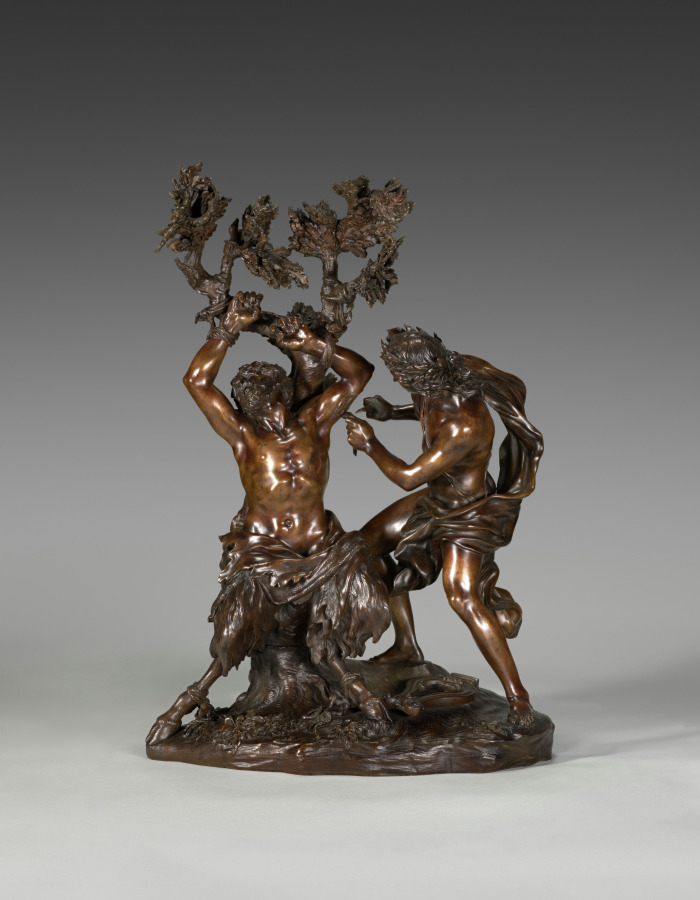
Urban Silhouette Research: Apollo Flaying Marsyas — Anatomical Tension as Architectural Device
I. The Geometric Integrity of Violence
The subject — Apollo flaying Marsyas — presents a proposition that Addison Fashion cannot afford to read literally. The myth is one of punitive dissection: the satyr stripped of his skin for the crime of artistic presumption. Yet within the compositional architecture of the canonical renderings, we do not encounter gore. We encounter geometry under duress. The suspended arm, the inverted torso, the tensile arc of the flaying wrist — these are not narrative gestures. They are structural vectors. The body becomes a scaffold from which the silhouette is hung, and the silhouette, in turn, becomes a thesis on controlled exposure.
Consider the dominant axis: a vertical suspension line running from the raised wrist through the sternum to the counterweighted hip. This is not a natural posture. It is an engineered one — a cantilever in flesh. The 2026 executive silhouette absorbs this principle directly. Where the previous decade pursued softness and drape as signals of authority, the coming cycle demands load-bearing line. The shoulder must read as a joint, not a slope. The waist must register as a pivot, not an hourglass. The garment does not conceal the body; it frames it, the way the flaying frame frames Marsyas — as a subject held in tension, not a victim dissolved in chaos.
II. Negative Space as Executive Territory
The internal DNA references Bodhisattva and Sample of Fibrolite — two works that share a discipline of withholding. The ceramic vessel breathes through its unglazed intervals; the fibrous canvas vibrates in the gaps between mineral strata. Apollo Flaying Marsyas operates on the same principle, but inverted. Here, the negative space is not the calm between forms — it is the void left by removal. The skin is gone; what remains is structure. For Addison Fashion, this translates to a radical proposition: the 2026 executive wardrobe should be designed as if the superfluous layer has already been stripped away.
What remains? Seam architecture. Shoulder engineering. Hem mathematics. A jacket that does not rely on padding to assert presence, but on the precision of its cut. A trouser that does not drape, but articulates — each crease a decision, each fold a refusal. The palette is Slate: not gray, not charcoal, but the specific mineral tone of stone under overcast light. It is the color of the flaying knife's edge, of the exposed tendon, of the moment before the scream becomes form.
III. Urban Materiality and the Tactile Cold
The myth's material logic is one of surface and substrate. Skin is the original textile — the first membrane between self and world. To flay is to reveal the substrate beneath. Addison Fashion's 2026 material research must pursue this same revelation, but through the vocabulary of urban materiality: bonded wool that behaves like stone, silk that has been calendered to a mineral sheen, leather that has been split so thin it reads as parchment. The hand must hesitate. The eye must recalibrate. This is not luxury as comfort. This is luxury as confrontation.
The Sample of Fibrolite DNA is critical here. Fibrolite — sillimanite — is a mineral of extreme metamorphic pressure. It forms in the crucible. The 2026 executive does not dress for the boardroom as a theater of ease. They dress for the crucible of decision. The garment must carry the memory of pressure in its fiber. We propose a fabrication strategy of layered transparency: an outer shell of matte slate wool, an inner membrane of silver-toned cupro, the two bonded at intervals so that movement reveals and conceals the substrate in alternation. The effect is not seduction. It is disclosure under control.
IV. The Silhouette as Verdict
Apollo flays Marsyas because Marsyas claimed equality. The myth is a verdict on presumption. The 2026 silhouette must carry this same verdictal weight — not as aggression, but as unanswerable clarity. The shoulder line descends at a precise 12-degree angle from the acromion, neither padded nor sloped. The sleeve is set high and narrow, the armhole a perfect ellipse. The torso is cut long and lean, the hem falling at the exact midpoint between hip and knee — a proportion that reads as neither tunic nor jacket, but as statement. The trouser is straight, unpleated, the crease pressed to a knife-edge and left to fall where it will.
This is not a costume for power. It is a structure for endurance. The executive who wears it does not need to raise their voice. The silhouette has already spoken. It says: I have been stripped of everything unnecessary. What remains is the architecture of intent.
In the silence between Apollo's arm and Marsyas's exposed ribcage, Addison Fashion locates its 2026 thesis. The body is not the subject. The line is the subject. And the line, held in tension, does not break. It defines.